HomeLatest ProductsVicor Demonstrates Highest Power Density Automotive Solutions

Vicor Demonstrates Highest Power Density Automotive Solutions

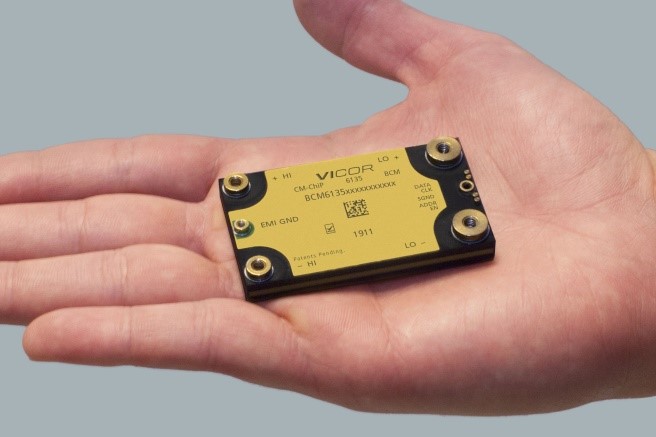
Vicor will unveil three new approaches for powering xEVs at the premiere global automotive engineering event, World Congress Experience (WCX) in Detroit on April 5-7, 2022. Proven Vicor solutions using high-density power modules and new power delivery architectures, deliver up to a 50% reduction in power losses.

Addressing three top electrification topics, Vicor’s presentations offer innovative modular solutions that save simplify power system design and increase scalability and flexibility.


Vicor high-density solutions:

  • Eliminating the 12V Lead Acid Battery: An inventive power architecture that replaces the 12V battery with a “virtual battery,” saving space and weight, and replacing legacy technology; Presenter, Patrick Kowalyk, Automotive Principal Field Applications Engineer (April 5, @10:30am, Room 140B, session PFL710)
  • The Impact of Miniaturized Power Modules on Electrification: Power-dense modules combined with innovative power architectures deliver unprecedented design flexibility, scalability and space savings for xEV development; Presenter, Greg Green, Director, Automotive Customer Programs (April 6, @10:30am, Room 140C, session PFL740)
  • DC Charging Station Compatibility: Higher-voltage primary batteries (800V) create a 400V charging station incompatibility that can be solved with onboard charging using compact, efficient and bidirectional power modules; Presenter, Haris Muhedinovic, Automotive Senior Field Applications Engineer (April 7, @9:30am, Room 260, session AE600)

Vicor’s high-performance, high-density power modules uniquely solve  automotive electrification challenges

As the automotive industry aggressively moves toward full electric vehicles, power system design engineers are grappling with how to design significantly higher power delivery networks. EV’s require up to 20x more electrical power than a traditional internal combustion engine vehicle which requires proportional size and weight increase for the power electronics. Vicor power modules help engineers create high density power delivery networks for EV, PHEV, HEV and BEVs that are lightweight, efficient and offer an easily scalable platform.

ELE Times News
ELE Times Newshttps://www.eletimes.ai/
ELE Times provides extensive global coverage of Electronics, Technology, and the Market. In addition to providing in-depth articles, ELE Times attracts the industry’s largest, qualified, and highly engaged audiences, who appreciate our timely, relevant content and popular formats. ELE Times helps you build experience, drive traffic, communicate your contributions to the right audience, generate leads, and market your products favorably.

Related News

Must Read

Indigenous BMD Programme Advances with Successful Multi-Layered Interceptor Trials

The Indian Ballistic Missile Defence (BMD) Programme introduced by...

Plug-and-Play 90W PoE Solution Streamlines Industrial IoT Deployments

As industrial environments become more automated and connected, demand...

India Cuts Duty to 0% on 85 Electronics Categories, Leading Global Manufacturers to Invest in India

While accelerating towards manufacturing modern semiconductor technologies, India has...

NIDAR 2.0: MeitY Boosts Indigenous Drone Innovation with India’s Homegrown Chips

The Ministry of Electronics and Information Technology (MeitY) with...

Microchip Advances Neural Network Implementation with VectorBlox 3.0 Accelerator SDK

Deploying AI inference in powerconstrained and missioncritical environments such as...

Indian Deep-Tech Startup Meine Electric’s Fast-Charging Iron-Air Battery Clears Independent Validation, Paving the Way for 24/7 Renewable Energy Storage

Indian deep-tech startup Meine Electric has developed the world's first fast-charging iron-air battery system, marking a significant technical advancement for long-duration energy storage (LDES). The technology, which features a proprietary Fast Charge Long Discharge (FCLD) capability allowing the battery to charge in 6 hours and discharge over 18 hours, has been independently validated by Customized Energy Solutions (CES), a US-headquartered global energy services and technology company and the parent organization of the India Energy Storage Alliance (IESA). The independent testing was conducted by the CES Battery Laboratory through a structured testing...