
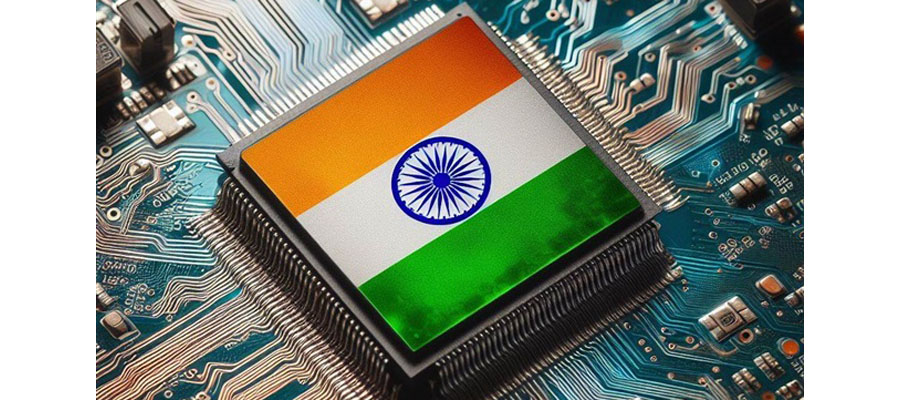
The semiconductor industry is undergoing a massive upheaval, and it affects more than just the little chips that run our gadgets. It has to do with security issues, global domination, and a quickly shifting environment. The $2.75 billion semiconductor facility in Gujarat, India, is being initiated by the US semiconductor giant Micron Technology. With plans to begin operations by December 2024, this substantial investment represents India’s foray into the lucrative and competitive semiconductor manufacturing sector. The ramifications are significant for the larger semiconductor business as well as India’s rapidly growing tech sector.
India, which is well-known for its services and software sectors, is currently making a significant advance in the semiconductor business. With the help of the federal and state governments, Micron’s investment shows that India has the capacity to become a major force in high-end fabrication. This plant is expected to play a significant role in the development of memory modules, solid-state drives, and integrated circuit packages in India. India’s entry into this market might have a significant impact, given the world’s reliance on semiconductors for a variety of applications—from electric cars to smartphones—is growing.




Still, India’s entry into the semiconductor industry is not a standalone story. Taiwan and China, each with a distinct function and significance, dominate the global semiconductor landscape.
Taiwan is a global leader in semiconductor production, accounting for 60% of all chips produced. 90% percent of these chips are regarded as the most sophisticated in the industry. Leading the world in semiconductor production is the Taiwan Semiconductor Manufacturing Corporation (TSMC). Apple and many other IT behemoths depend on TSMC for their semiconductor requirements.
However, the US-China tech competition has now enmeshed the semiconductor business. Competition and security concerns are causing the global supply chain, which is mostly headed by Taiwan’s TSMC, to become increasingly fragmented. Even while TSMC is growing in the US, it will be difficult to duplicate the productivity and highly skilled workforce it has in Taiwan. Taiwan’s situation is further complicated by China’s significant investments in the chip industry on the other end of the spectrum. Because of the need for security and the weight of geopolitical concerns, the semiconductor industry is changing globally.
In these dynamics, the US is crucial because it tries to restrict China’s semiconductor output. The US Bureau of Industry and Security has imposed new export restrictions on semiconductors in an effort to prevent China from obtaining premium artificial intelligence chips. These new regulations significantly weaken China’s military capabilities by creating a static line of control, in contrast to previous export restrictions that sought to put rivals technologically behind.
India is positioned to carve out a role in this changing business, given that its rapidly expanding consumer market is expected to become the third largest in the world by 2027. The investment by Micron Technology represents both the promise of India and the growing importance of semiconductors in our daily lives. Geopolitics and technology are intricately entwined in our complicated world, and India’s entry into the semiconductor business is evidence of the industry’s significant impact on the world we live in.
In conclusion, the semiconductor industry is no longer confined to a few dominant players. India’s involvement in this dynamic and developing industry is both an economic opportunity and a step toward changing the face of technology globally. India’s semiconductor journey may turn into a pivotal moment in the country’s tech future as its tech sector continues to grow.
By Devendra Kumar, Editor in Chief, ELE Times

