
Texas Instruments (TI) is demonstrating new power-management products and designs at the Power Conversion, Intelligent Motion (PCIM) Expo and Conference, May 6-8 in Nuremberg, Germany. At the show, TI is featuring semiconductor advancements for sustainable energy, automotive, USB Type-C and USB Power Delivery (PD), robotics, and motor control, including:
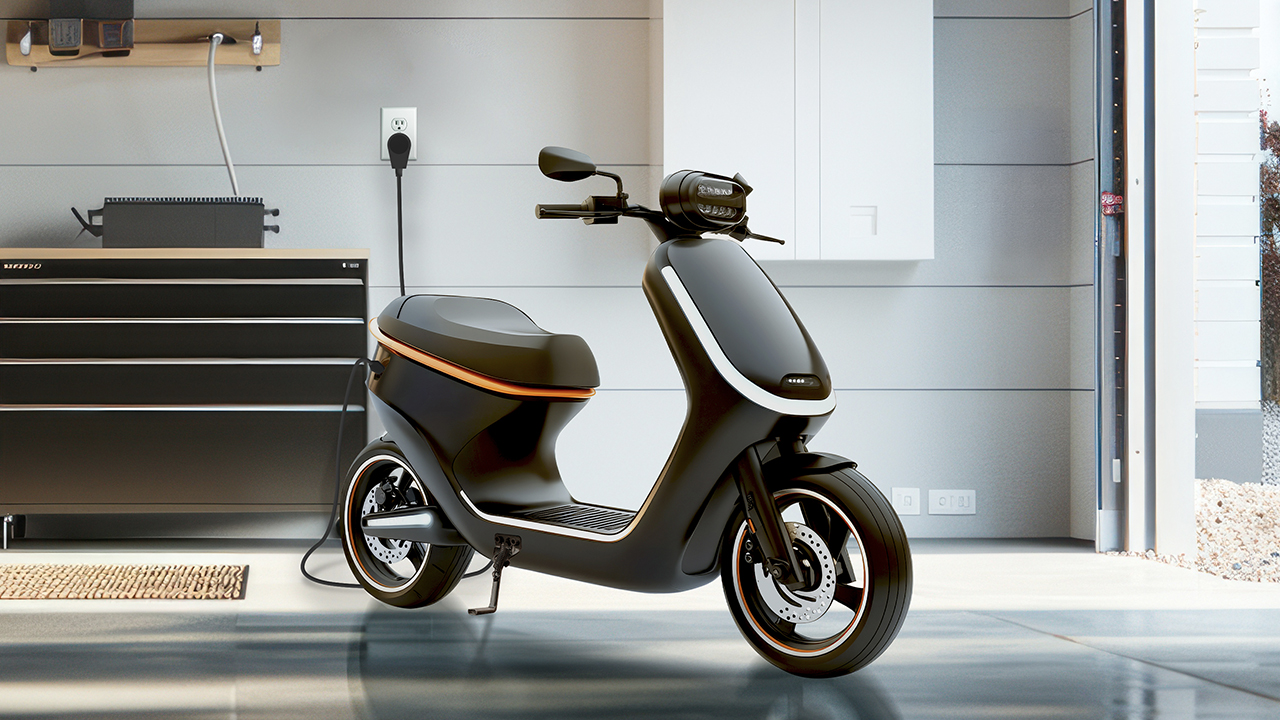
- Industry’s first automotive-qualified inductor-inductor-capacitor (LLC) controller for light electric vehicle charging: TI is debuting its new primary-side LLC controller, the UCC25661-Q1, in a three-stage AC/DC battery charger demonstration for electric two-wheelers. The demonstration showcases how the UCC25661-Q1 controller enables engineers to design a highly efficient and reliable power supply with double the power density using integrated features and TI’s patented Input Power Proportional Control (IPPC).
- 65W dual-port USB PD charger with self-biasing gallium nitride (GaN) flyback: TI is showcasing the industry’s first self-biasing GaN flyback converter, the UCG28826, in a demonstration of its 65W dual-port USB PD charger reference design. Designed for next-generation fast-charging applications, the UCG28826 converter delivers 65W across 90VAC to 264VAC in this reference design, enabling engineers to meet strict efficiency standards, minimize standby power consumption and increase power density.
- Short-circuit detection reference design with Flex: In collaboration with electronics manufacturer Flex, TI is demonstrating a comparison of shunt-based, desaturation and Hall-effect sensor methods for short-circuit detection in automotive onboard chargers and DC/DC converters. Booth visitors will learn how to enhance silicon carbide (SiC) metal-oxide semiconductor field-effect transistor (MOSFET) reliability by optimizing the current-sensing location, method and component selection, and printed circuit board layout to meet end-customer safety requirements.
Why it matters




Rising data consumption levels, shrinking consumer electronics, and a focus on renewable energy and vehicle electrification place unique demands on power engineers to maximize efficiency, push power into smaller spaces, and support higher voltages across all applications.
“TI’s broad portfolio and deep system design expertise on display at PCIM enable power engineers to achieve high performance, reliability and scalability in their next-generation applications,” said Mark Ng, director, Automotive Systems. “In automotive, for example, our power-dense and efficient semiconductors enable nearly every aspect of system design, from improved driving range to optimized charging, and new architectures for a feature-rich experience.”

