

Courtesy: Softeq
In the fast-paced world of robotics, software scalability is everything. The traditional monolithic approach, one massive, tightly integrated software block, has become a liability. It’s slow to develop, hard to maintain, and nearly impossible to scale. For mid-to-large enterprises, this isn’t just inefficient; it’s a business risk.




Enter ROS 2 modular architecture. Built on a component-based system, ROS 2 lets you design robots like LEGO sets: configurable, reusable, and ready to scale. This isn’t just a technical framework; it’s a robotics business strategy that delivers faster iterations, lower costs, and more predictable outcomes.
The ROS 2 Node Approach: A Strategic Advantage
The core concept of ROS 2 is the node. A node is a single-purpose program (or “binary”) that performs one task, such as reading sensor data or controlling a motor. Multiple nodes run in parallel and communicate through topics.
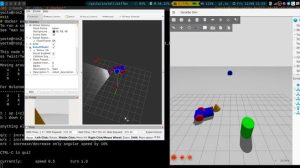
Imagine you’re building a robotic arm. Instead of writing one massive program that handles everything, you can break it down:
- Node 1: Robot State Publisher
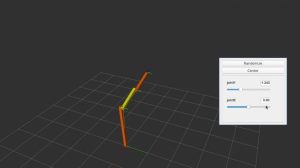
- Node 2: Joint State Publisher (The program that lets you control the joints with a GUI)
- Node 3: Visualisation Tool (RViz)
This modular structure provides clear business benefits:
- Parallel Development– Different engineering teams can work on separate nodes at the same time, reducing project friction.
- Enhanced Reliability– If one node fails, others continue to run. This is critical for enterprise robots where downtime costs revenue.
Simplified Debugging – Each node can be tested independently, streamlining quality assurance.
The Power of Reusability and the Launch System
ROS 2 is not only modular but also highly reusable, a game-changer for scaling robotics projects.
Two key tools drive this:
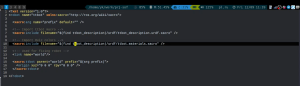
- Launch Files– Instead of manually starting each node, engineers can launch all components with a single Python-based script. This saves time and accelerates productivity.
- URDF and Xacro– XML-based robot “blueprints” that describe links and joints. Swap a robotic arm for a differential drive robot simply by changing the description file—no code rewrite needed.
This flexibility means you can move from prototyping to production faster, test new concepts at lower cost, and repurpose existing codebases across multiple robotics platforms.
Why ROS 2 Is a Business Advantage
ROS 2’s modular architecture goes beyond technical elegance; it delivers measurable business impact. By breaking complex robotics systems into reusable, independent components, companies can cut development costs, move to market faster, and scale without disruption.
- Reduced Development Costs– Less time debugging, more time innovating.
- Faster Time-to-Market– Parallel development and rapid prototyping speed delivery.
- Scalability Built-In– Evolve software alongside business growth without a complete system overhaul.
By embracing ROS 2 modular architecture, you’re not just adopting new software; you’re investing in a future-proof robotics business model designed for resilience, efficiency, and growth.

