

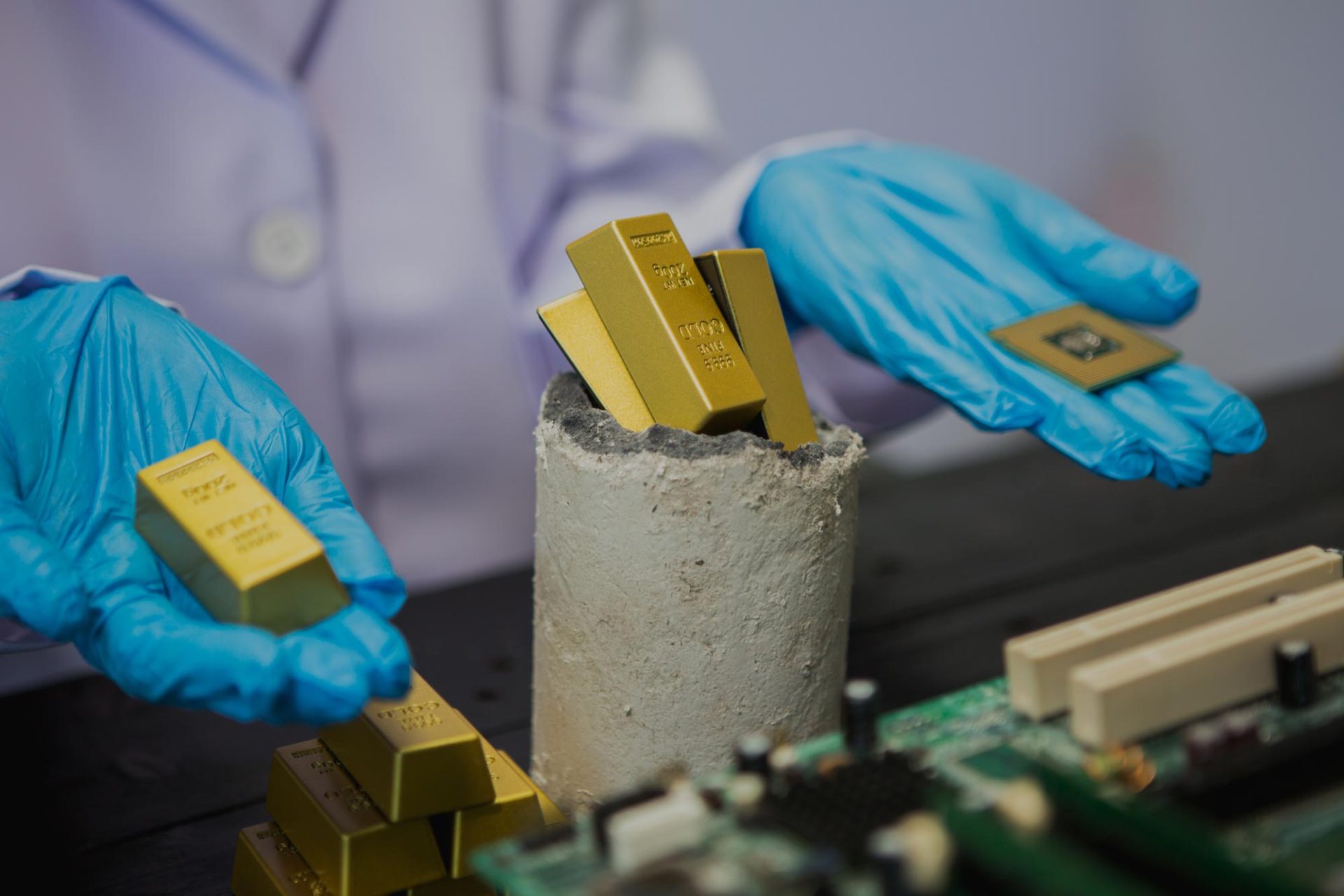
Electronic waste has the potential to be a source of valuable metals because a group of scientists have developed an experimental method for recovering gold from electronic waste. A research group at ETH Zurich has identified an experimental way to selectively recover gold from e-waste and have then gone on to converted the recovered material into a gold containing nugget.
Gold’s properties of electrical conductivity and resistance to corrosion make it ideal for use in components in semiconductor devices. Unfortunately, recovering gold from old computer circuit boards can be challenging, and old methods can use up huge amounts of electricity with and also harmful chemicals which generate hazardous waste and potentially harmful emissions that can pollute the environment and pose risks to human health.



How the Gold Recovery Process Works
A team of researchers at ETH Zurich manufactured a porous protein-based aerogel which is selective in terms of gold ion binding from solutions that contain metals recovered from discarded computer equipment. The team recovered metal material from 20 computer motherboards, dissolved them in an acid solution and tested how selective was the recovered material.
The solution obtained now consisted of several species of metal ions. The researchers then added the aerogel. The aerogel captured the gold ions from the solution. The captured gold was subsequently converted into flakes, and melted to produce a solid gold nugget.
The reported experiment produced approximately 450 mg of a metal nugget from 20 discarded computer motherboards, containing 91% gold and 9% copper, corresponding to approximately 21-22 carats. This research demonstrated a gold absorption capacity on the scale of 166.7 mg/g of aerogel which is considerably high.
Potential for Sustainable E-Waste Recycling
The technology could create a method for extracting precious metals from abandoned PCs and other electronic waste items and help further a circular economy in the process. According to the ETH Zurich economic analysis, the cost of combined material sourcing and energy during recovery of precious metals were substantially lower than the value of the recovered gold under the study’s assumptions.

