

Rohde & Schwarz in collaboration with Qualcomm Technologies, Inc. has completed an early verification step for 3GPP Rel. 17 Search Space Set Group Switching (SSSG). This 5G NR feature, designed to reduce device power consumption, has now been formally submitted for RAN5 verification. This milestone supports the path from standardization to conformance testing and commercial use, while also feeding practical findings back into the standardization process.
Rohde & Schwarz has successfully verified for the first time a 3GPP NR conformance test case for Search Space Set Group Switching (SSSG). Introduced in 3GPP Release 17, SSSG is a power-saving mechanism for user equipment that improves how a device monitors control channel activity while maintaining reliable reception of scheduling information.



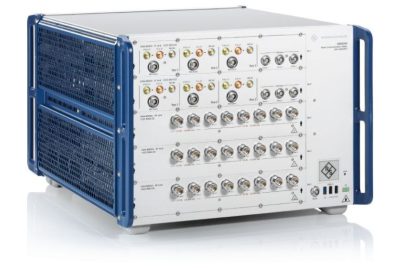
By completing verification of the 3GPP RAN5 NR conformance test case TS 38.523-1 TC 7.1.1.12.5 for SSSG at an early stage, the two companies supported early readiness of this feature across the 5G conformance ecosystem. The verification was carried out using a mobile test platform using Qualcomm X105 5G Modem-RF and the R&S TS-PCT protocol conformance test platform from Rohde & Schwarz, which is based on the CMX500 5G one-box signaling tester. SSSG optimizes the PDCCH monitoring behavior in 5G NR devices. This reduces unnecessary monitoring activity and helps improve power efficiency.
Rohde & Schwarz and Qualcomm Technologies are the first to complete all relevant test aspects for this conformance test case. During the verification work, the companies also identified areas where the underlying conformance specification could be improved and supported the submission of a change request to 3GPP RAN5, the group responsible for conformance test specifications. This links practical verification work with ongoing standardization development.
This combination of test execution and standards input shows how verification work can also improve the quality of future test specifications. For device manufacturers, the wireless chipset ecosystem and certification organizations, it marks a step toward reliable testing of advanced 5G power-saving functions.

