
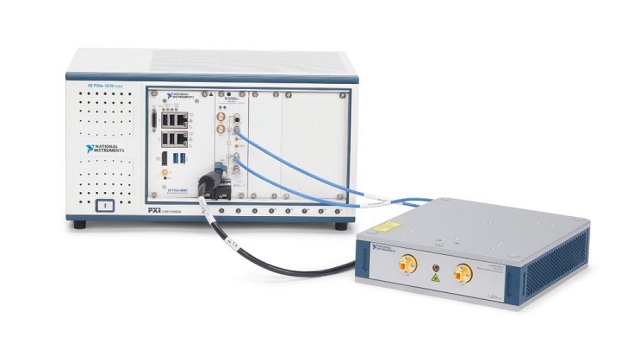
NI, the provider of a software-defined platform that helps accelerate the development and performance of automated test and automated measurement systems, announced new solutions for hardware-in-the-loop (HIL) validation of electric vehicle (EV) powertrain components.
Government mandates for lower emissions and higher efficiency are increasing pressure on automakers to get EVs to market as quickly as possible. For powertrain test engineers, the move to EVs represents new and constantly evolving technologies with rapidly changing test requirements on aggressive schedules.




NI equips engineers with the ability to modify and extend test systems more quickly and efficiently than they can with traditional fixed-function test systems delivered by turnkey vendors. This approach can help accelerate time to market through the flexibility to scale system performance and change the I/O mix as often as necessary in response to rapidly changing test requirements. NI HIL systems are built according to a reference test architecture based on best practices observed by leaders in the automotive industry. The EV reference architecture optimizes HIL test of powertrain power electronics like the traction inverter, DC/DC converter and charger by providing standard starting points for:
- Integrating high-fidelity power electronics and plant models
- Mapping and signal conditioning I/O
- Emulating sensors and loads
- Inserting faults
- Sequencing tests
- Reporting results
High-performance EV HIL systems require coordination from multiple vendors. NI works with companies like OPAL-RT, with its advanced eHS electrical solver and electric machine library, to help ensure seamless high-fidelity model integration. Seamless integration of OPAL-RT models with the test system can help reduce test development times while increasing result resolution, helping customers achieve shorter design cycles and gain better insights from test data.
“We believe this collaboration enables us to develop an end-to-end solution covering the full HIL automotive spectrum, and it offers our clients an economical, modular and scalable solution,” Jean Belanger, CTO and CEO of OPAL-RT, said. “The collaboration facilitates the development of FPGA-based electrical solvers on popular NI hardware platforms, such as PXI and CompactRIO, which enables us to maintain our focus on cutting-edge HIL technologies.
NI is also investing in toolchain integration across the HIL workflow to help ensure that the best tools work well together for its customers:
- NI formed a joint venture with ETAS, ETAS NI Systems GmbH & Co. KG, to provide pre-configured HIL systems.
- NI is collaborating with MathWorks, makers of Simulink software, on model integration.
The NI reference architecture for EV test and NI’s investments in workflow integration better optimize HIL test for fast moving new technology with quickly changing requirements. NI’s flexible user-defined systems help validation teams keep up with the breakneck pace of innovation in automotive by helping them cut test development time and increase test coverage.
To learn more, visit: www.ni.com

