
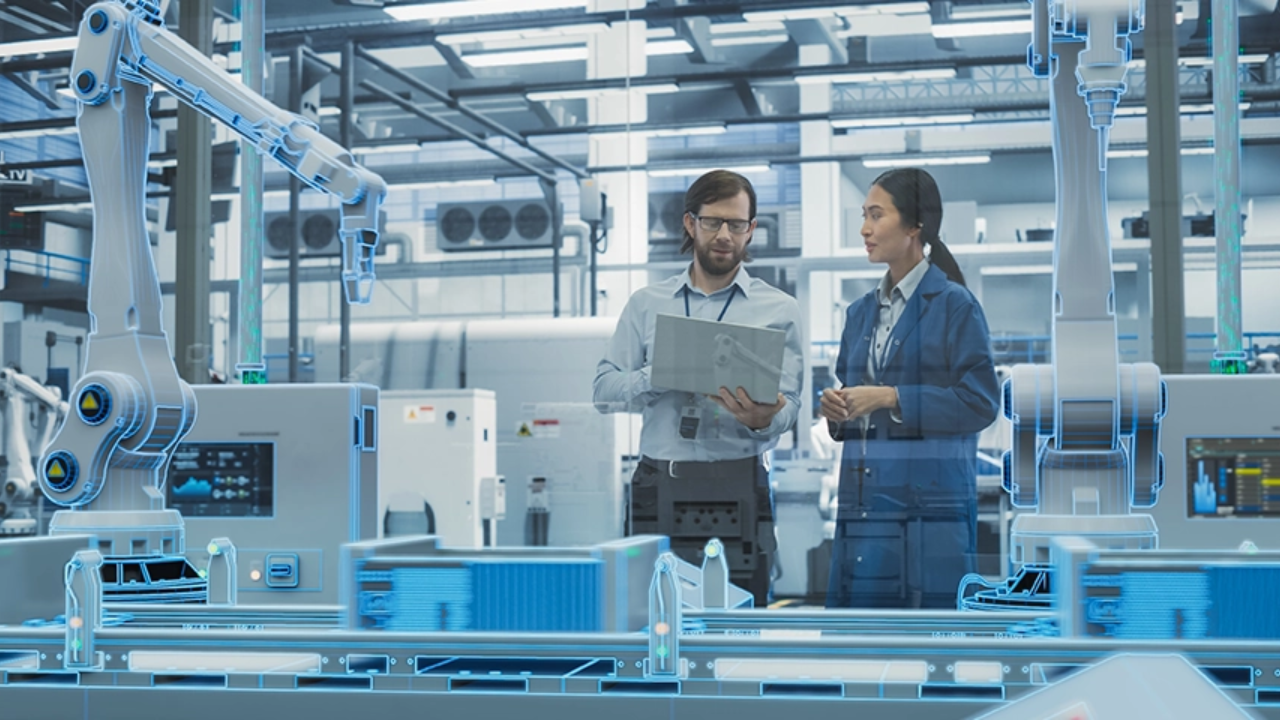
Courtesy: L&T Technology Services
Picture a medical device plant in the quiet hours before sunrise. Laser welders, injection moulding lines, and sterile packaging units run smoothly without interruption. A robotic arm pauses mid-operation — not because something broke, but because it detected a vibration two microns above normal tolerance. Another system automatically reroutes material to a parallel line to avoid delays. No flashes, no warnings, no frantic calls. Just a calm, silent course correction happening beneath the surface.



What once sounded like science fiction is becoming real. This is agentic manufacturing — a world where autonomous, decision-making AI systems work with human engineers to operate plants that sense, interpret, and adjust themselves.
In an industry where precision can mean life or death, the shift toward autonomy is not just efficiency-driven, but rather, mission-critical.
The Shift from Predictive to Agentic Manufacturing
For years, medical device factories invested in predictive analytics: predicting machine fatigue, identifying yield dips, estimating sterilisation cycle times, or forecasting maintenance schedules.
Useful, yes — but limited.
The systems could warn.
Agentic manufacturing changes the dynamic. Instead of machines waiting for a command, AI agents become active decision-makers. They negotiate workflows, adjust tolerances, enforce calibration rules, and reroute production based on real conditions — not static plans.
Each piece of equipment becomes an intelligent node connected to the larger ecosystem. The line does not just observe performance; it acts on it.
A growing body of industry research suggests this shift could reduce production errors, recalls, and downtime substantially — especially in highly regulated categories like surgical instruments, imaging components, diagnostics, and implantables. For companies operating under FDA, ISO 13485, and MDR scrutiny, autonomy becomes not just an operational advantage — but risk reduction.
The Anatomy of an Autonomous MedTech Plant
An autonomous factory does not eliminate people. It elevates them.
Human expertise anchors oversight, validation, and ethics. The AI handles repetitive, high-precision, time-sensitive work where failure margins are measured in microns — not minutes.
On the shop floor, sensors and IoMT systems continuously stream torque, alignment, sterilisation, and environmental data to machine learning models trained to understand acceptable variability. When something drifts — not fails, just drifts — corrective actions trigger automatically:
- A moulding unit modifies pressure to prevent flash formation.
- A packaging station adjusts airflow before seal strength drops.
- A sterilisation line recalibrates exposure time based on humidity fluctuation instead of waiting for lab review.
Meanwhile, digital twins simulate everything from process redesign to regulatory impact before a single screw moves in the physical plant. Nothing is left to guesswork.
Edge AI systems make operational decisions millimetres from the data source, while cloud platforms analyse the bigger patterns across resource use, environmental deviations, batch consistency, logistics flow, and traceability.
It results in something rare in manufacturing: a plant that learns.
The Human–Machine Partnership
There is a common fear that increased autonomy means fewer human roles. But the shift unfolding in medical device operations suggests something different: roles are not disappearing — they are changing.
Instead of reacting to line stoppages or defects, teams become strategists and validators. Operators evolve into supervisors of intelligent systems. Engineers move from manual calibration to designing adaptive control logic. Quality teams spend less time catching errors and more time preventing them.
Agentic systems do not replace human judgment — they support it. They communicate insights in plain language, offer alternatives, and flag ethical or compliance risks instead of blindly optimising for speed.
The most successful factories will be those where human wisdom and machine precision work together — each doing what they do best.
Why Autonomy Matters Now
Medical device manufacturing operates under constant pressure: supply chain volatility, sustainability expectations, workforce shortages, patient safety obligations, and increasing global regulatory complexity.
Static systems simply cannot keep up.
Agentic AI introduces resilience — the ability not just to operate efficiently, but to adapt.
Autonomous systems can:
- Detect micro-defects before they reach inspection.
- Adjust energy use dynamically to reduce waste and peak-demand cost.
- Simulate disruptions before they occur.
- Maintain continuity even when resources, conditions, or regulations shift.
Analyses from industry bodies and research groups estimate that autonomous control can reduce unplanned downtime by as much as 30% and improve throughput by double-digit percentages — numbers that can reshape margins in a cost-controlled industry.
For MedTech, this is not just operational progress. It is regulatory peace of mind.
Engineering the Factory That Thinks
The journey from automated to truly agentic manufacturing is not incremental — it is transformative. It requires engineering systems that do more than follow instructions. They must interpret, respond, justify decisions, and continue to improve.
As autonomy expands, one principle remains constant:
Humans still define the mission.
Machines help execute it — at a level of precision that keeps pace with the standards of modern healthcare.
The autonomous medical device plant is not decades away. It is already emerging — line by line, system by system, decision by decision.
And now that the industry has entered this era, the question is no longer if factories will become agentic — but who will scale them responsibly.

