
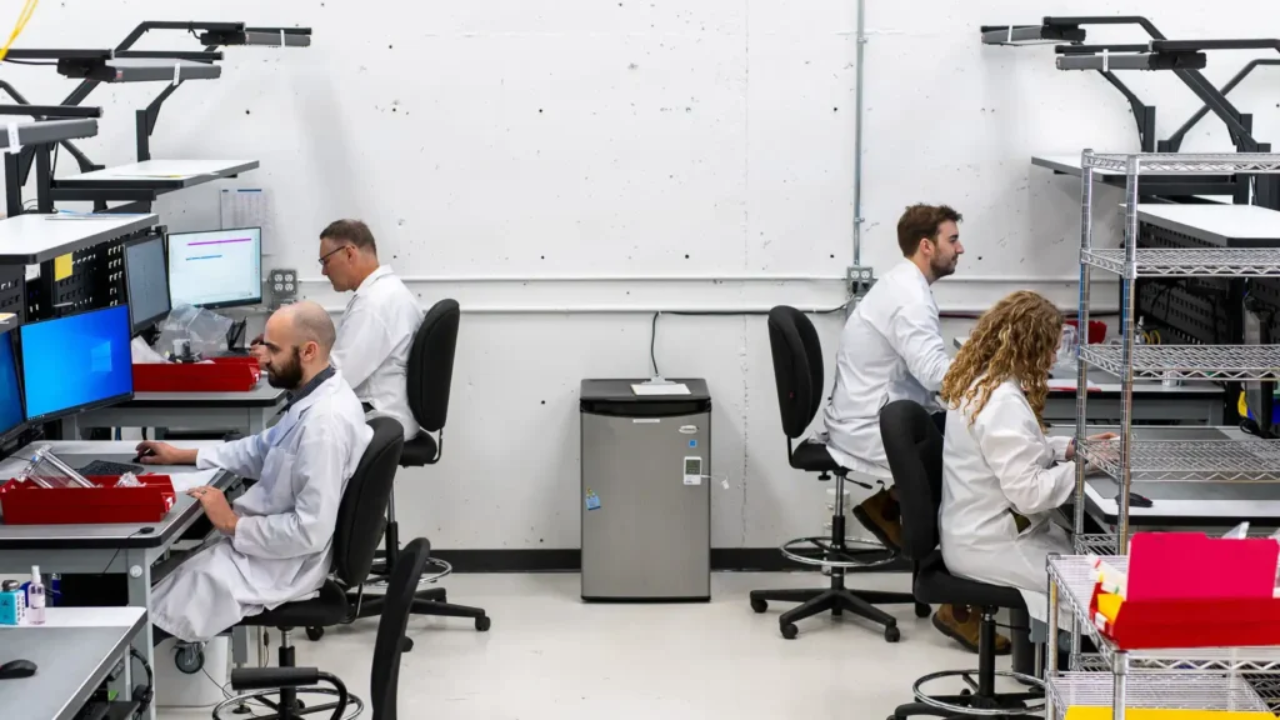
Courtesy: Starfish Medical
In MedTech, success rarely comes from invention alone. Plenty of promising technologies make it through verification and early clinical work, only to stall when the team tries to turn them into something buildable. The science works. The story is compelling. The investors are interested. But the product still can’t be manufactured efficiently or consistently.



That gap between engineering intent and actual process execution is one of the most common failure points in MedTech, and it is exactly where New Product Introduction (NPI) earns its keep. NPI is the connective tissue between design, manufacturability, and stable production. It is the discipline that determines whether innovation becomes a scalable product or an expensive lesson.
Turning Innovation into Something Buildable
NPI is often misunderstood as a late-stage activity or a handoff to manufacturing. In reality, it is the backbone of development once technology feasibility has been established. When NPI is integrated early, teams reduce redesign cycles, improve predictability, and avoid the churn that comes from discovering manufacturability problems after the design is essentially locked.
Many MedTech teams still treat manufacturability as something to deal with later. The consequences are predictable: yield issues, unstable supply chains, last-minute design changes, and long delays that burn credibility with boards, investors, and strategic partners. These are not just technical problems. They are operational bottlenecks that drag down program momentum and erode confidence in the pathway to commercialisation.
A strong NPI approach aligns design and manufacturing early, which makes everything downstream clearer: cost structure, regulatory preparation, and the ability to demonstrate repeatability, an essential component of operational maturity.
Manufacturability as Today’s Reality Check
When a MedTech program reaches the point where scale becomes the next logical step, the first question any sophisticated partner asks is simple: can you actually build this?
That answer comes from the discipline behind your NPI process. Stable bills of materials, controlled documentation, defined test methods, and a clear path to validation are now baseline expectations. Programs fall apart when this foundation is missing.
The point here is not about acquisition psychology or investor optics. It is the operational truth that manufacturability has become a practical readiness benchmark. If the product cannot be built reliably, nothing upstream or downstream works the way it should. A product that is ready to build is a product that can move towards launch, scale, and, ultimately, value.
From Prototype to Production, Without Losing the Thread
The most effective development models treat innovation, manufacturability, and scale as a continuous flow rather than a sequence of disconnected phases.
Early prototypes exist to prove feasibility. As designs mature, NPI and DFM activities turn that feasibility into something manufacturable. Pilot builds, process development, and validation establish readiness for real production.
Handled this way, the transition from engineering to production feels like a progression, not a cliff. Issues surface earlier. Redesign cycles shrink. Teams preserve design intent while building the controls, process clarity, and repeatability required for scale and predictable, value-generating progress.
This continuity is what keeps programs moving. When NPI is a parallel thread instead of a late-stage scramble, timelines stabilise, quality improves, and stakeholder confidence grows.
Designing for Scale, Not Just Function
NPI is not a single milestone, and it is not a manufacturing task. It is a mindset that runs through every stage of development.
Designing for value means thinking about manufacturability, yield, and reliability from the earliest builds, not retrofitting them later. Designing for scale means making decisions that will hold up under real production pressure: component availability, process variation, assembly complexity, quality controls, and cost.
When companies take this approach, progress becomes more predictable. Validation is smoother. Risk is reduced earlier. And the product reaches the point where it can actually be operated, supported, and sustained in the real world.
Manufacturability is not a constraint. It is the mechanism that makes scale possible. Operational maturity creates value only when it is aligned with a validated market thesis. Scaling before this validation is just cost; scaling after it is discipline.

