

Digital Workplace Leaders Can Implement Shared Applications and Practices to Drive Better Business Outcomes
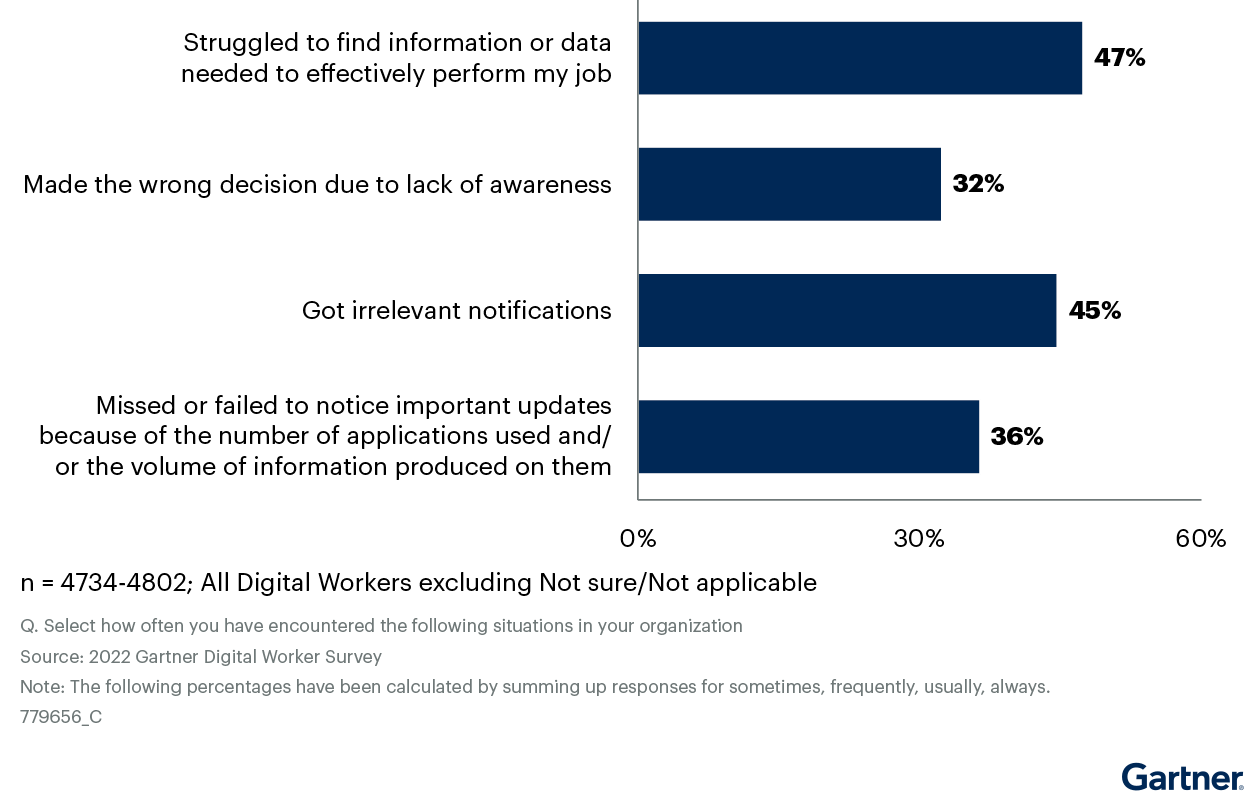
A recent survey by Gartner, Inc. found that 47% of digital workers struggle to find information or data needed to effectively perform their jobs.




“Employees struggle to stay afloat as information and applications flood their digital workplace. Although digital workers are putting in effort to try to efficiently manage this content to try reduce duplication and/or improve knowledge sharing and retention, finding the information needed to do their jobs can often be a challenge,” said Tori Paulman, Sr. Director Analyst at Gartner. “Digital workplace leaders need to create a process for their employees that enables them to agree on applications they use to accomplish work.”
The Gartner survey was conducted from September through November 2022 among 4,861 full-time employees that use digital technology for work purposes, at organizations with 100 or more employees in the U.S., U.K., India and China.
Workers Want the Right Tools to Do the Job
According to the survey, the average number of applications a desk worker, also referred to as a “knowledge worker,” uses is 11, compared to six applications in 2019. Forty percent of digital workers are using more than the average number of applications and 5% of workers use 26 or more applications at work.
On an average, 66% of the respondents agreed that better business outcomes could be achieved if IT provided universally accepted and supported applications and devices to get work done. When a digital workplace applications strategy attempts to solve every challenge with a new application, the result is that digital workers struggle to find information, make the wrong decisions due to lack of awareness, get irrelevant notifications and miss important updates amid the noise (see Figure 1).
Figure 1. Impact of Application Sprawl (Percentage of Respondents)
Workers Would Accept Monitoring That Helps Them Be More Productive
Interest in employee productivity monitoring has grown since the pandemic. These systems are used to see whether employees are active on devices and in applications, or which employees are most productive and whether business outcomes are being met.
While employee productivity monitoring for the purposes at the lowest end of the spectrum is widely distrusted and disliked, 96% of digital workers indicated that they would be willing to accept monitoring in return for assistance in at least one of the options provided. Of the top three options, 34% of digital workers surveyed indicated they would accept monitoring in exchange for awareness of training classes and/or career development opportunities, 33% would accept monitoring for support in finding information to do their job, and 30% would accept monitoring in exchange for proactive outreach from IT support when facing problems with their computer or applications.
Workers Want Their Technology Problems Solved Proactively
The survey found that digital workers’ top six preferred methods for solving issues with the technology they use for work are all through internal IT support, with the top three methods being live phone, chat and email conversations. When asked why, workers stated their top reasons were the expertise of the person solving their issue and the speed of resolution. These findings shifted from 2020, when workers also preferred other methods to solve their issues with digital technology, such as receiving answers on the internet and asking a co-worker.
“Digital workers are now demanding IT support be more proactive, solving problems with computers and applications before they are reported or even noticed,” said Paulman. “Digital employee experience (DEX) tools can help IT teams achieve this by continuously improving device and application performance.
“Digital workplace leaders must step up to lead DEX, and recognize they are an experience leader with a technology toolkit. They should focus on developing the qualities and practices of an employee experience leader, such as building connections across the business and increasing empathy for the way employees experience technology change.”

