
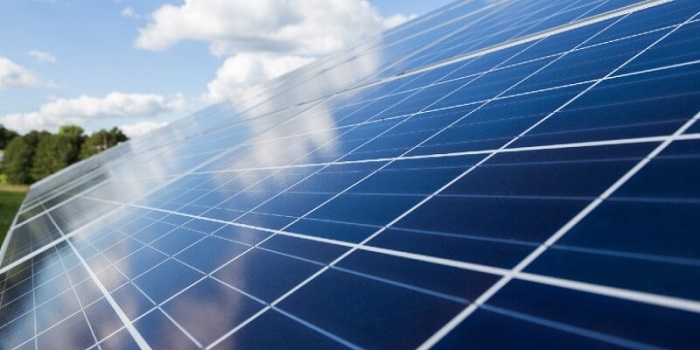
The first detailed global assessment of the electricity generation potential of rooftop solar photovoltaics (PV) technology has been conducted by researchers at MaREI, the SFI Research Centre for Energy, Climate and Marine in University College Cork (UCC), in collaboration with international research partners.
Owing to improved deployment capability and reduced costs, rooftop solar Photovoltaics (PV) technology, such as roof mounted solar panels used in home, commercial and industrial buildings, is currently the fastest deployable electricity generation technology and is projected to supply 25–49% of global electricity needs by 2050. Despite these predictions, a global assessment of the technology’s electricity generation potential and the associated costs remains a challenge.




The research team including lead author Siddharth Joshi, together with UCC colleagues Professor Brian Ó Gallachóir, Dr. Paul Holloway and colleagues at Imperial College London, Columbia University, and Ahmedabad University, assessed the electricity generation potential of rooftop solar PV globally and the associated costs. The authors mapped 130 million km2 of global land surface area to identify 0.2 million km2 of rooftop area using a novel Machine Learning algorithm. This rooftop area was then analyzed to quantify the global electricity generation potential of rooftop solar PV.
The Researchers found that a global potential of 27 petawatt-hour per year can be attained at a cost of between US$ 40–280 per megawatt-hour with the greatest electricity generation potential in Asia, North America and Europe. They indicate that the lowest cost for attaining the potential energy is in India (US$66 per megawatt-hour) and China (US$68 per megawatt-hour), while the UK and U.S. are among the most costly countries. The authors suggest that the electricity generation potential of rooftop solar panels exceeded the global yearly aggregated energy consumption in 2018. However, its future potential will depend on the development and cost of storage solutions for the generated energy.
“For the first time, we can analyze the spatial and temporal characteristics of global rooftop photovoltaics with improved accuracy using a combination of big data, machine learning and GIS. This study can aid in improved representation of rooftop solar photovoltaics in global energy systems,” stated UCC researcher Siddharth Joshi.
The authors conclude that their findings will have important implications for sustainable development and climate change mitigations efforts. Globally, nearly 800 million people were without electricity in 2018, the majority of who are living in rural areas.
Research Prof. Brian Ó Gallachóir commented “this potential of 27 PWh per annum from rooftop solar is very significant. For comparison, our total electricity use in all homes around the world was 6 PWh in 2019. These results are very timely in the context of the global climate change conference in the UK next month. Rooftop solar PV not only helps to reduce emissions but also to involve homeowners directly in the energy transition.”
Senior author Dr. James Glynn commented, “the open data generated in this research helps to quantify, locate and prioritize investment in zero-carbon electricity systems. By mapping the solar PV rooftop potential in high resolution globally, development banks and energy agencies in developing countries are better informed as to the technology’s role in enabling sustainable development towards climate action and affordable and clean energy.”
Dr. Shivika Mittal, Research Associate in Energy and Integrated Assessment Model at the Grantham Institute at Imperial College London, said: “The cost of generating electricity from solar rooftop panels has declined significantly in the last decade. Our new data set will help governments or organizations, business owners to identify solar power ‘hot-spots’ where they can mobilize new investment, and this would help in accelerating the adoption of solar power.”

