
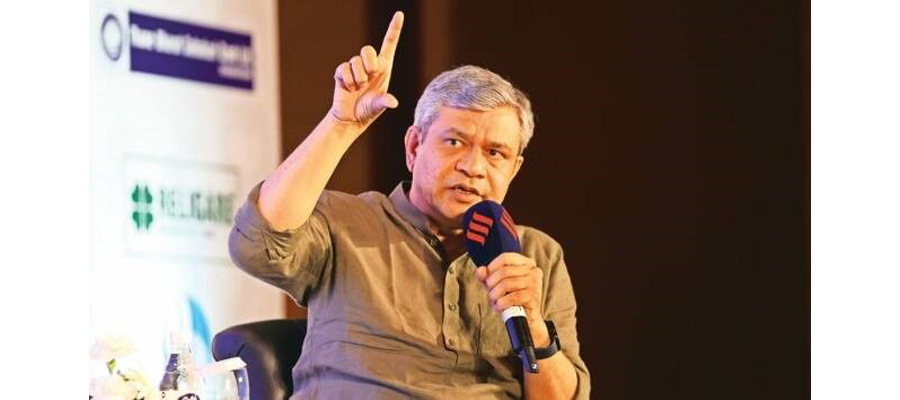
In December 2021, the Centre had announced a $10 billion semiconductor manufacturing plan with a fabrication plant expected to get approval soon.
In December 2021, the Indian government unveiled a $10 billion plan to establish semiconductor manufacturing in the country, with the expectation of soon receiving approval for a fabrication plant. Ashwini Vaishnaw, the Minister of Electronics and Information Technology, expressed confidence that India would become the world’s largest semiconductor manufacturing destination within the next five years, provided the right ecosystem is developed. He acknowledged the complexity of semiconductor manufacturing, highlighting the need for specialized chemicals, gases, a reliable power supply, and ultra-pure water to ensure uninterrupted production.




Despite the potential, Vaishnaw acknowledged several challenges that must be addressed to initiate and sustain semiconductor manufacturing in India. He recognized the tendency of people to adopt a cautious approach when a new industry is established. Nevertheless, the government remains committed to fostering a favorable environment for the semiconductor industry to thrive.
Ashwini Vaishnaw, who also serves as the Minister of Railways, shared plans for expanding the Vande Bharat train series. The government intends to launch a sleeper version of the train for distances exceeding 500 km by March 2024. The Vande Bharat train series comprises the Vande Metro for distances up to 100 km and the Vande Bharat chair car for journeys between 100-500 km. The sleeper and metro versions are currently in the design phase, with the metro expected to be introduced in January and the sleeper by March of the following year. The government aims to connect every state with Vande Bharat trains and has initiated the production process for 400 trains. The plan is to roll out at least two trains per week, eventually reaching the target of one train every third day.
Furthermore, the Railways Ministry is undertaking the construction of new rail tracks at an unprecedented pace, while also upgrading existing ones. Last year, a record-breaking 5,200 km of rail tracks were built, averaging 14 km of new tracks daily. Comparatively, a decade ago, this figure stood at only three to four km per day. Additionally, around 8,000 km of old tracks are renewed and upgraded each year. The new and upgraded tracks are designed to handle significantly higher speeds. While older tracks were originally designed for speeds of 70-80 km per hour, the upgraded tracks can accommodate speeds of approximately 130 km per hour, with a significant portion capable of handling speeds exceeding 160 km per hour.
Ashwini Vaishnaw emphasized the government’s commitment to investing substantial funds in India’s rail network over the next decade. He stressed the importance of allocating a minimum of Rs 3 lakh crore annually, for at least the next 15 years, to ensure the growth and modernization of the rail infrastructure.
Vaishnaw also mentioned the complexities associated with manufacturing Vande Bharat trains, particularly due to the intricate machinery involved. Perfecting the designs and supply chains took approximately 6-7 months.
To conclude, the Indian government announced a $10 billion semiconductor manufacturing plan in December 2021, aiming to make India the largest semiconductor manufacturing destination globally within the next five years. Ashwini Vaishnaw highlighted the challenges involved in establishing the semiconductor ecosystem and emphasized the government’s commitment to creating a conducive environment. Additionally, he provided insights into the expansion of the Vande Bharat train series and the significant investments being made in India’s rail network to enhance connectivity and speed.

