
HomeNewsIndia NewsAtom Sized 2d semiconductors make flexible electronics a reality

    Atom Sized 2d semiconductors make flexible electronics a reality

    Researchers at Vienna University of Technology have built a flexible microprocessor using the transition-metal dichalcogenide (TMD). Like the “wonder material” graphene, TMD can be formed into layers that are only one atom thick, making a surface that is as close to two-dimensional as we can physically get. This ultra-thin surface is what makes the processor flexible.

    According to Network World, the processor is not as powerful as our current standard. In fact, it is only a one-bit processor with 115 transistors and is only capable of executing four instructions.

    However, in the paper the researchers published in the journal Nature, they point out that this is “a first step towards the development of microprocessors based on 2D semiconductors.”

    The circuit is 100 times larger than current ARM processors, but the large size was partially intentional.

    “They deliberately chose an overly large feature size for their manufacturing process to reduce the effects of holes, cracks, and contamination in the molybdenum disulfide film and to make it easier to inspect the results with an optical microscope,” said Network World.

    Multi-bit design and miniaturization should both be fairly straight forward. However, the researchers say they will have to figure out a way to lower contact resistance before they can manufacture on the sub-micrometer scale.

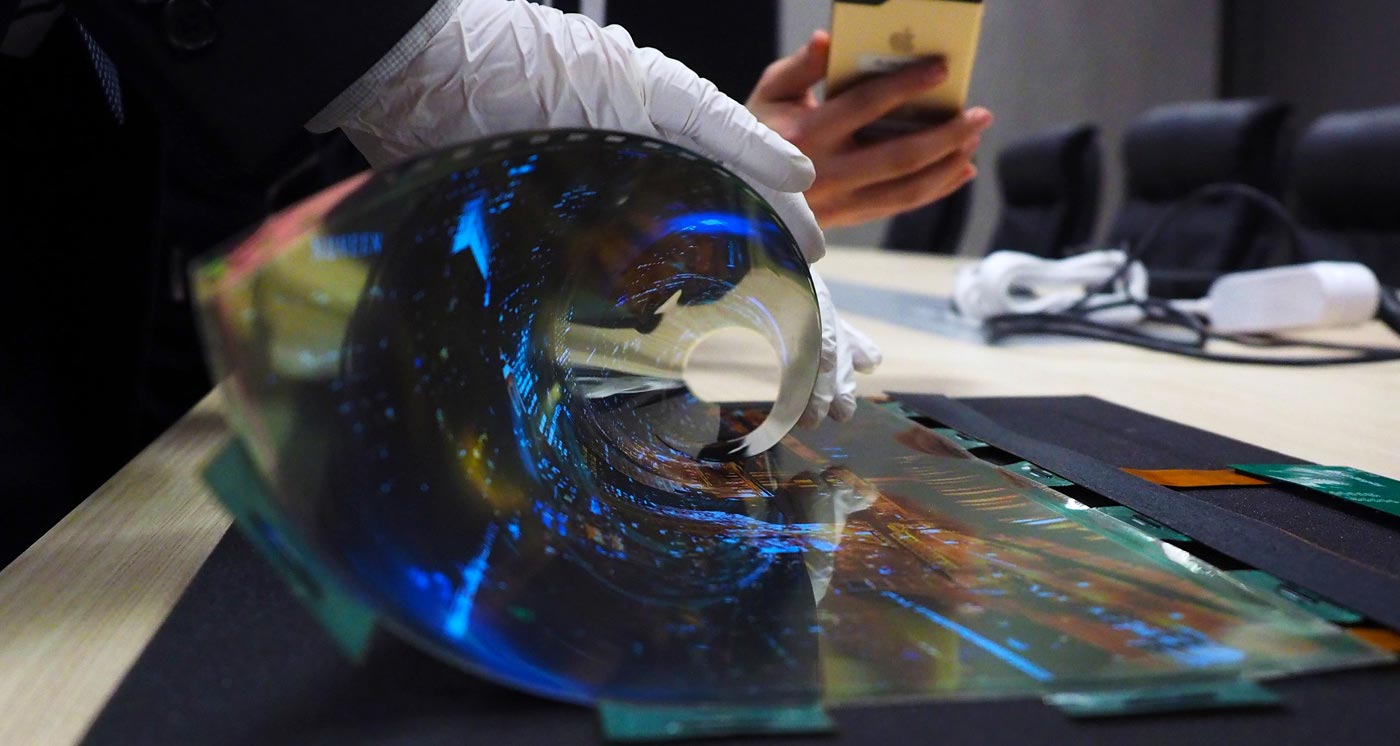
    Further development should go much faster than modern microprocessor design since much of the same theoretical and practical applications used in the production of silicon chips can be applied to working with TMD. Furthermore, Samsung and others are already looking into ways to make flexible and ultra-thin phones. Companies like Corning and LG already have bendable and roll-up screen prototypes developed.

    Part of the reason we do not already have these technologies available is due to the brittle nature of silicon chips. It does not take much flex to cause them to crack. If developers working on TMD technology can catch up to current silicon processors, we might start seeing some of these concepts make it to market.

    http://webcache.googleusercontent.com/search?q=cache:http://www.techspot.com/news/69065-microprocessors-only-one-atom-thick-make-flexible-electronics.html&gws_rd=cr&ei=GnYAWcfmN4XQvgSYj6TwDA

    ELE Times Bureau
    ELE Times Bureauhttps://www.eletimes.ai/
    ELE Times provides a comprehensive global coverage of Electronics, Technology and the Market. In addition to providing in depth articles, ELE Times attracts the industry’s largest, qualified and highly engaged audiences, who appreciate our timely, relevant content and popular formats. ELE Times helps you build awareness, drive traffic, communicate your offerings to right audience, generate leads and sell your products better.

    LEAVE A REPLY

    Please enter your comment!
    Please enter your name here

    Related News

    Must Read

    Dell Technologies’ 2026 Predictions: AI Acceleration, Sovereign AI & Governance

    Dell Technologies hosted its Predictions: 2026 & Beyond briefing...

    NAL-CSIR Advances Field testing of Indigenous Defence Tech

    The Council of Scientific and Industrial Research (CSIR)-National Aerospace...

    Toyota & NISE Test Mirai Hydrogen FCEV in India Conditions

    Toyota Kirloskar Motor (TKM) and the National Institute of...

    Nissan Powering EV Component Plant with Repurposed Batteries

    Nissan Australia has launched the Nissan Node project, a...

    KEC, Powernet & Wise Integration Co-Develop AI Server SMPS Power Solutions

    Wise Integration (France), Powernet (Korea) and KEC (Korea) will...

    FAMES Pilot Line R&D Advances: 400°C CMOS Enables 3D Integration Goals

    CEA-Leti, the coordinator of the FAMES Pilot line, has achieved...

    Keysight & KT SAT Nail Industry First GEO-to-LEO Multi-Orbit NTN Handover!

    Keysight Technologies, Inc., in collaboration with KT SAT, has...

    Nuvoton Emphasises Need to Strengthen Taiwan-Israel R&D Collaboration

    Nuvoton Technology showcased its leadership in international expansion by...

    element 14’s DevKit HQ: A One Stop Development Kit Solution

    Engineering is all about trying and testing. According to...

    USB-IF Hardware Certification to Anritsu for USB4 2.0 Test Solution

    ANRITSU CORPORATION gets certified by the USB Implementers Forum...


