
Texas Instruments (TI) introduced several new power management chips that enable designers to boost efficiency and shrink power-supply and charger solution sizes for personal electronics and handheld industrial equipment.
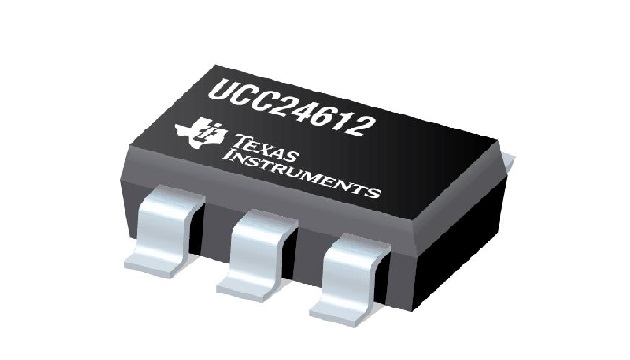
Operating at up to 1 MHz, TI’s new chipset combines the UCC28780 active clamp flyback controller and the UCC24612 synchronous rectifier controller to help cut the size of power supplies in AC/DC adapters and USB Power Delivery chargers in half. For battery-powered electronics that need maximum charging efficiency in a small solution size, the bq25910 6-A three-level buck battery charger enables up to a 60 percent smaller-solution footprint in smartphones, tablets and electronic point-of-sale devices.




“Consumers want faster charging in a smaller footprint. These new solutions not only accomplish that, but also enable designers to do more than they could before with less power,” said Steve Lambouses, TI vice president, High Voltage Power.
Explore these new power-management devices and learn about other ways TI is giving engineers the power to innovate, design and learn by visiting booth No. 501 at the Applied Power Electronics Conference (APEC) in San Antonio, Texas, March 4-8, 2018.
Active clamp flyback chipset meets modern efficiency standards
Designed to work with both gallium nitride (GaN) and silicon (Si) FETs, the UCC28780’s advanced and adaptive features enable the active clamp flyback topology to meet modern efficiency standards. With multimode control that changes the operation based on input and output conditions, pairing the UCC28780 with the UCC24612 can achieve and maintain high efficiency at full and light loads.
Double the power density: The chipset delivers efficient operation at up to 1 MHz, enabling a size reduction of 50 percent and higher power density than solutions today.
- High efficiency: Multimode control enables efficiency up to 95 percent at full loads and standby power of less than 40 mW, exceeding Code of Conduct (CoC) Tier 2 and U.S. Department of Energy (DoE) Level VI efficiency standards. For designs above 75 W, engineers can also pair the chipset with a new six-pin power-factor correction (PFC) controller, the UCC28056, which is optimized for light-load efficiency and low standby power consumption to achieve compliance with mandatory International Electrotechnical Commission (IEC)-61000-3-2 AC current harmonic limit regulations.
- Simplified design: Using features such as adaptive zero voltage switching (ZVS) control, engineers can easily design their systems with a combination of resistor settings and controller auto-tuning.
Three-level buck battery charger enables higher charging efficiency
Leveraging an innovative three-level power-conversion technology, the bq25910 enables up to 50 percent faster charging compared to conventional architectures by dramatically reducing thermal loss. For more information, see www.ti.com/bq25910-pr.
- Small solution size: With integrated MOFSETs and lossless current sensing, the bq25910 reduces printed circuit board (PCB) space and allows designers to use small 0.33-µH inductors, saving even more space.
- Faster charging: The bq25910 enables 95 percent charging efficiency, which could take a standard smartphone battery from empty to 70 percent charged in less than 30 minutes.
- Flexible system design: A differential battery-voltage sense line enables fast charging by bypassing parasitic resistance in the PCB for more accurate voltage measurements, even if the battery is placed away from the charger in the system.
For more information on availability and pricing, visit ti.com.

