
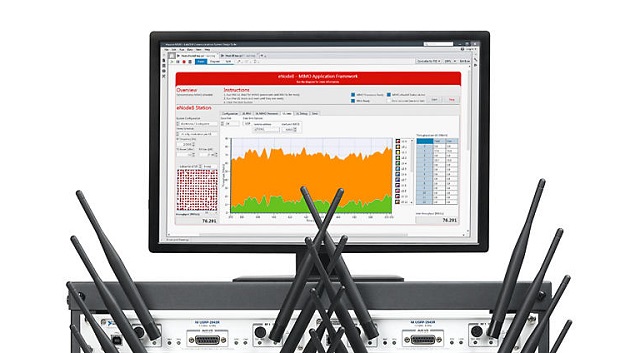
NI, the provider of a software-defined platform that helps accelerate the development and performance of automated test and automated measurement systems, announced two series of new millimeter wave (mmWave) radio heads for the mmWave Transceiver System. The new radio heads, which cover spectrum from 24.25 GHz to 33.4 GHz and 37 GHz to 43.5 GHz, are targeted at wireless researchers prototyping 5G New Radio (NR) systems.
As the first phase of 5G NR wraps up and the 3GPP finishes defining the communications protocol, the standards body also has identified specific frequency bands intended for 5G. Additionally, various regulatory bodies across the globe have begun the process of allocating spectrum for mmWave 5G mobile access. The coverage offered by these new radio heads enables researchers in countries like the United States, South Korea, Japan, Europe and China to quickly prototype 5G systems at the different frequency bands being considered.




NI provides engineers with the tools they need to prototype communications systems that help decrease the overall time to develop and introduce new technologies. In 2016, NI announced its mmWave Transceiver System, which features modular mmWave frequency software defined radio (SDR) technology designed for 5G and advanced wireless communications. Since then, NI has continued to release new mmWave radio heads to provide additional frequency coverage in line with the 3GPP. The new radio heads are completely compatible with the mmWave Transceiver System, including the baseband subsystem and software. They are also interchangeable with the previously released radio mmWave heads, which means the existing software can be reused with minimal changes.
“The commercialization of mmWave technology is accelerating, and there is a growing global consensus that it will be a critical technology to achieve the goals set forth by the 3GPP for 5G,” said Professor Theodore (Ted) Rappaport, founding director of NYU WIRELESS and the David Lee/Ernst Weber Professor of Electrical Engineering at the NYU Tandon School of Engineering. “While 28 GHz leads in early deployments, 39 GHz is another important frequency band that is being explored and is quickly gaining popularity. These new radio heads from NI will help us expand mmWave research and expedite commercialization,” he adds.

