
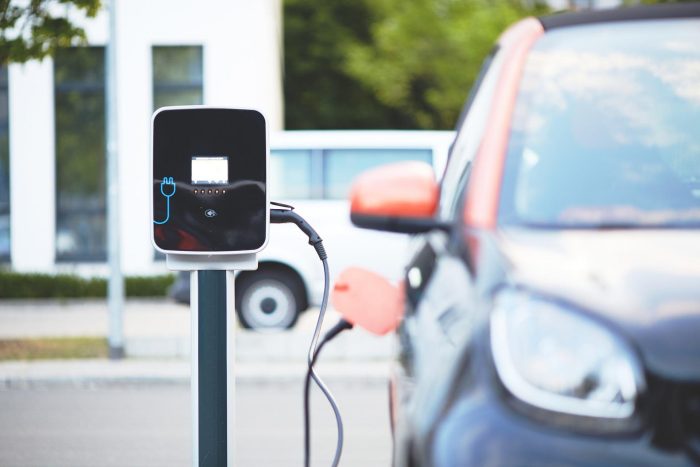
Despite the growing popularity of electric vehicles, many consumers still hesitate to make the switch. One reason is that it takes so much longer to power up an electric car than it does to gas up a conventional one. But speeding up the charging process can damage the battery and reduce its lifespan. Now, scientists report that they’ve designed superfast charging methods tailored to power different types of electric vehicle batteries in 10 minutes or less without harm.
The researchers will present their results at the fall meeting of the American Chemical Society (ACS).




“Fast charging is the key to increasing consumer confidence and overall adoption of electric vehicles,” says Eric Dufek, Ph.D., who is presenting this work at the meeting. “It would allow vehicle charging to be very similar to filling up at a gas station.” Such an advance could help the U.S. reach President Biden’s goal that by 2030, half of all vehicles sold should be electric or hybrid.
Charging the lithium-ion batteries that fuel electric vehicles is a delicate balancing act. Ideally, drivers want to power up as quickly as possible to get back on the highway, but with current technology, speeding up the process can cause damage. When a lithium-ion battery is being charged, lithium ions migrate from one side of the device, the cathode, to the other, the anode. By making the lithium ions migrate faster, the battery is charged more quickly, but sometimes the lithium ions don’t fully move into the anode. In this situation, lithium metal can build up, and this can trigger early battery failure. It can also cause the cathode to wear and crack. All of these issues will reduce the lifetime of the battery and the effective range of the vehicle—expensive and frustrating consequences for drivers.
One solution to this conundrum is to tailor the charging protocol in a way that optimizes speed while avoiding damage to the many different types of battery designs currently used in vehicles. But developing optimal protocols requires a huge amount of data on how various methods affect these devices’ lifetimes, efficiencies, and safety. The design and condition of batteries, as well as the feasibility of applying a given charging protocol with the current electric grid infrastructure, are also key variables.
To address these challenges, Dufek and his research team at Idaho National Laboratory now report the use of machine learning techniques that incorporate charging data to create unique charging protocols. By inputting information about the condition of many lithium-ion batteries during their charging and discharging cycles, the scientists trained the machine learning analysis to predict lifetimes and the ways that different designs would eventually fail. The team then fed that data back into the analysis to identify and optimize new protocols that they then tested on real batteries.
“We’ve significantly increased the amount of energy that can go into a battery cell in a short amount of time,” says Dufek. “Currently, we’re seeing batteries charge to over 90% in 10 minutes without lithium plating or cathode cracking.”
Going from a nearly dead battery to one at 90% power in only 10 minutes is a far cry from current methods, which, at best, can get an electric vehicle to full charge in about half an hour. While many researchers are looking for methods to achieve this sort of super-fast charging, Dufek says that one advantage of their machine learning model is that it ties the protocols to the physics of what is actually happening in a battery.
The researchers plan to use their model to develop even better methods and to help design new lithium-ion batteries that are optimized to undergo fast charging. Dufek says that the ultimate goal is for electric vehicles to be able to “tell” charging stations how to power up their specific batteries quickly and safely.

