
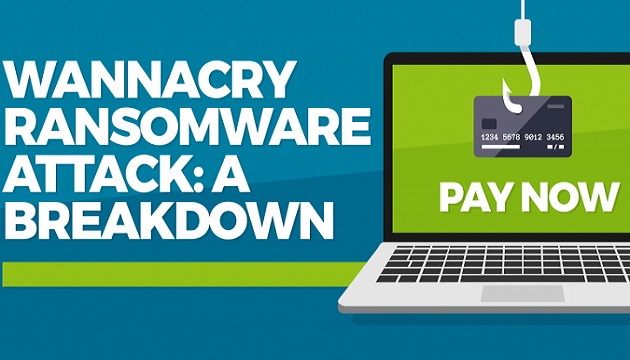
Ransomware is one of the biggest muddles grown for web. It is basically a malicious software, or a malware which encrypts documents on a computer or across the network. The victims can regain the access to their encrypted documents only after the payment of some amount as ransom to the criminals who are behind the ransomware. But, the ransomware attack could be prevented. There are few things to be kept in mind:
- A training for employees on how to spot an incoming malware attack would help.
- Picking up little indicators like poor formatting or that an email purporting to be from ‘Microsoft Security’ is sent from an obscure address which doesn’t even contain the word Microsoft within it might save your network from infection.
Ransomware and the Internet of Things




IoT devices have a poor reputation for security. As more and more devices are rolling out into the market, they’re going to provide billions of new attack vectors for cybercriminals, potentially allowing hackers to hold your connected home or connected car hostage. There would be a possibility, that hackers could infect medical devices, putting lives directly at risk.
How ransomware infects the cloud?
The ransomware can infect the cloud-based systems through pretty much the same channels as on-premise solutions: phishing, infected software, and websites. The most common types of cloud ransomware include Microsoft Office macros, JavaScript exploits and droppers, PDF exploits, Linux malware, and backdoors.
When an unauthorized access is obtained by hackers to a cloud service provider, they can launch a ransomware attack that will directly affect every customer using that service. In this case, the consequences of the attack can be disastrous for a cloud service provider as all customers’ data will be encrypted.
There are many cases when hackers use cloud-based systems as a channel for spreading ransomware. Cloud service providers should monitor what kind of data is uploaded to their systems in order to prevent ransomware from spreading.
Protecting the cloud from ransomware
Since there is an increasing number of ransomware attacks in the cloud, there are many ways to withstand this new type of cybersecurity threat. Listed below are the several approaches that may help you detect an attack or even prevent it from happening and defend your cloud-based system against ransomware:
Regular scanning
Scanning the entire system for vulnerabilities and perform penetration tests regularly. In this way, it could be ensured that all susceptible parts of the system are reconfigured or patched to address new exploits and vulnerabilities in time.
Intrusion detection and prevention monitoring
Deploy intrusion detection systems and intrusion prevention tools to continuously monitor your system. These tools can help you detect possible threats and terminate them in a timely manner.
Sandboxing
Creating sandboxes for all applications integrated into your cloud environment to record and analyze their behavior in a safe manner and using the information gathered from these sandboxes to determine what a malicious file intended to do and how it could affect the system.
Behavior analysis
Behavior analysis tools are helpful in detecting a ransomware attack at an early stage. The main benefit of a behavior-based approach is that it detects core behavioral traits that are common to most variants of ransomware: suspicious setup procedures and data encryption.
File integrity monitoring
Increase the chances of detecting ransomware by deploying file integrity monitoring tools. These tools can help in detecting massive file modifications and block the application that attempts to make these changes.
Proactive alerting
Creating an alert system so that any suspicious user or application activities could be found. An attack from spreading further across the cloud could be stopped.
Multi-layered protection
Using of traditional signature-based antivirus and heuristic analysis methods to improve malware detection in the cloud would be helpful. It’s important to deploy a multi-layered protection strategy to increase the possibility of detecting novel malware strains.
As ransomware continues to evolve, it’s therefore crucial for the employees to understand the threat it poses, and for organisations to do everything possible to avoid infection, because ransomware can be crippling and decryption is not always an option.

