
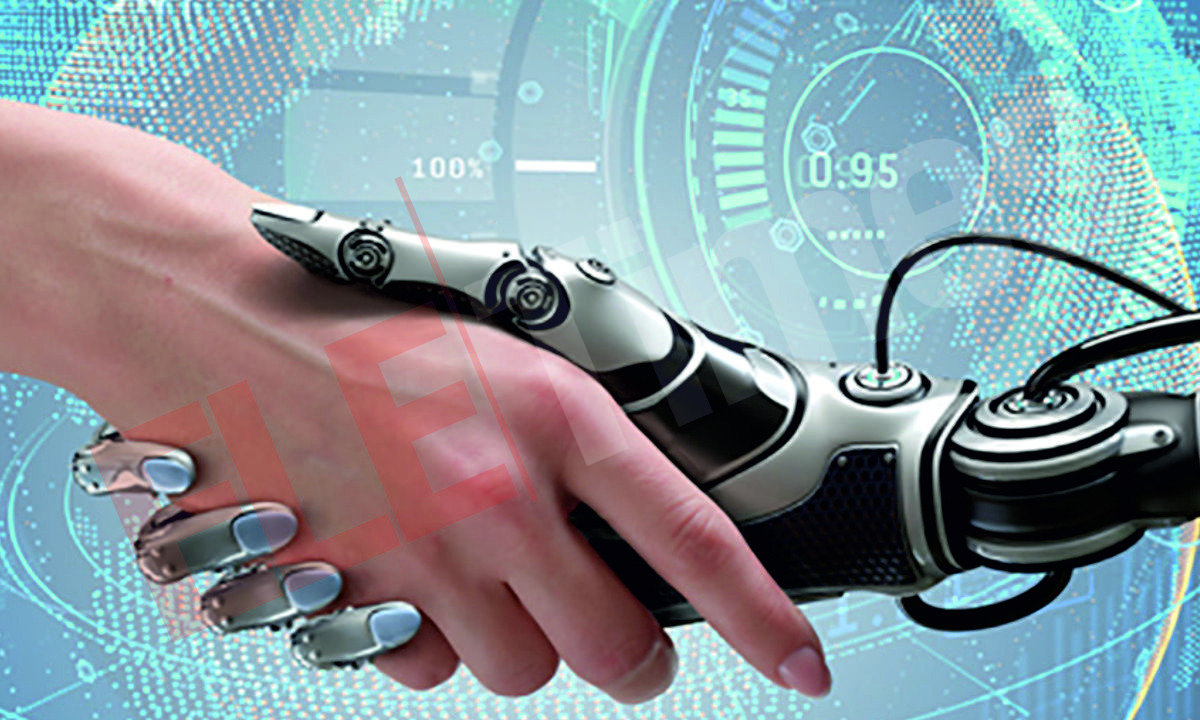
Introduction- From Mechanical Inputs to Force-Sensitive Interfaces
Human–Machine Interfaces (HMIs) have transformed dramatically in the past few decades. Early systems relied on mechanical switches, levers, and tactile buttons, robust but limited in design flexibility. The capacitive touch revolution brought sleek glass panels, multi-touch gestures, and sealed surfaces to smartphones, automotive dashboards, and industrial equipment.




However, capacitive technology has well-known drawbacks: poor performance in humid environments, false triggers, difficulty working with gloves, and limited ability to distinguish intentional versus accidental touches. Engineers have long sought the next leap in interaction technology.
That leap is force sensing the ability of HMIs to detect not just whether a surface is touched, but how firmly it is pressed. This evolution unlocks richer interaction, robust operation across challenging environments, and freedom from restrictive material choices. As Dr. Mark Weiser, often regarded as the father of ubiquitous computing, once said:
“The most profound technologies are those that disappear. They weave themselves into the fabric of everyday life until they are indistinguishable from it.”
Force sensing is enabling precisely this an interaction layer so intuitive and adaptable that it becomes invisible, yet indispensable.
Technology Fundamentals- How Force Sensing Works
Force sensing is fundamentally about converting mechanical load into an electrical signal. Two primary sensing principles dominate the market: piezoresistive and capacitive force sensing.
Piezoresistive Force Sensors
- Operate by measuring a change in electrical resistance when a material deforms under load.
- Typically use a full-bridge Wheatstone configuration, where four resistive elements form a balanced circuit.
- When force is applied, resistance changes unbalance the bridge, producing a measurable voltage signal.
- Advantages: High sensitivity, strong signal-to-noise ratio (SNR), good temperature compensation, suitability for MEMS fabrication.
- Considerations: Requires calibration to account for long-term drift and environmental conditions.
Capacitive Force Sensors
- Detect changes in capacitance caused by the displacement of conductive plates.
- Well-suited to applications where transparency or minimal deformation is required.
- Limitations: Susceptible to interference from humidity, dust, and certain materials; reduced performance with thick overlays.
MEMS Integration- Driving Miniaturization and Reliability
MEMS (Micro-Electro-Mechanical Systems) fabrication has transformed force sensing by enabling:
- Micron-scale sensing elements for compact integration.
- Tight tolerances and reproducibility, ensuring low hysteresis and predictable linearity.
- On-chip integration of low-noise amplifiers (LNA) and analog-to-digital converters (ADC), minimizing latency and reducing PCB real estate.
- Lower power consumption, which is vital for battery-powered devices.
By combining the sensing element, amplifier, and ADC into one package, designers can reduce complexity, improve EMC (Electromagnetic Compatibility), and speed up time-to-market.
Engineering Performance Metrics
Top engineers evaluating force sensors look beyond basic operation and focus on specific metrics:
- Sensitivity- The smallest detectable change in force; expressed in mV/V/N or equivalent.
- Linearity-The degree to which output correlates proportionally with applied load across the sensing range.
- Hysteresis– Difference in output between loading and unloading at the same force; lower values mean more repeatable performance.
- Power Consumption– Measured in µW or mW; critical for mobile and IoT devices.
- Temperature Stability– Resistance to thermal drift over wide operational ranges.
- Latency– The delay between applying force and obtaining a usable output; must be minimal for real-time feedback systems.
- Durability and Fatigue Life– How well the sensor maintains calibration after repeated load cycles.
Reference Example- Qorvo’s Integrated Force Sensor
Qorvo’s full-bridge piezoresistive MEMS force sensor exemplifies current best practice in integration:
- Architecture: MEMS sensing die + low-noise amplifier + on-chip ADC.
- Performance: Sensitivity up to 50× that of traditional capacitive sensing.
- Thermal Stability: Full-bridge layout compensates for temperature-induced resistance changes.
- Size: Compact footprint for easy integration in constrained spaces.
- Noise Reduction: Common-mode noise rejection inherent to Wheatstone bridge design improves measurement reliability.
This level of integration reduces external component count, simplifies PCB layout, and delivers predictable performance across demanding environments such as automotive cabins or factory floors.
Capacitive vs. Force Sensing – A Technical Comparison
| Aspect | Capacitive Sensing | Force Sensing |
| Pressure Detection | Detects touch only | Detects both light and firm presses |
| Material Options | Requires conductive/transparent surfaces | Works through metal, wood, plastic |
| Environmental Resistance | Sensitive to moisture, gloves, humidity | Performs in wet, dusty, or extreme conditions |
| False Triggers | Higher risk in contamination | Lower, needs deliberate pressure |
| Durability | Surface wear impacts function | Can be sealed for long service life |
Integration Considerations for Engineers
Force sensing delivers new possibilities, but integration requires careful planning:
- Overlay Material– The stiffness, thickness, and elasticity of the cover layer affect force transfer and sensor response.
- Mechanical Coupling– Poor coupling between the overlay and sensor leads to inconsistent readings.
- Calibration & Compensation– Initial factory calibration and in-field software compensation mitigate drift and account for production tolerances.
- Signal Conditioning– Filtering and amplification tailored to the application’s dynamic range are essential for maintaining high SNR.
- Power Management– Sleep modes, duty cycling, and event-driven activation preserve battery life in portable designs.
- Interface Protocols– Support for standard digital interfaces (I²C, SPI) ensures compatibility with a wide range of MCUs and SoCs.
Application Spectrum
Force sensing’s unique combination of precision, environmental resilience, and material flexibility makes it valuable across sectors:
1 Automotive
- Smart dashboards without mechanical buttons.
- Steering wheel controls that differentiate between light navigation and firm command inputs.
- Surfaces resistant to dust, vibration, and thermal cycling.
2 Wearables & Consumer Electronics
- Waterproof, gapless designs that still respond to fine pressure variations.
- Wearables that maintain tactile accuracy under sweat, rain, or glove use.
3 Industrial Controls
- Equipment interfaces operable with gloves, in oily or dusty conditions.
- High durability in mission-critical control systems.
4 Medical Devices
- Sterile, sealed surfaces for hospital environments.
- Precise force detection for surgical robotics and diagnostic equipment.
Market Dynamics & Growth Drivers
The demand for rugged, low-maintenance HMIs is accelerating, driven by:
- Industry 4.0 and increased automation.
- Automotive electrification, requiring cleaner, smarter control surfaces.
- Wearable health tech, where reliability and waterproofing are paramount.
- IoT proliferation, pushing for sensors with low power consumption and high integration.
Future Directions
Force sensing is evolving toward multi-modal, adaptive HMIs:
- AI-Assisted Sensing– Systems that learn individual user habits, adjusting sensitivity dynamically to reduce false positives.
- Sensor Fusion– Combining force sensing with capacitive, optical, and haptic elements for richer interaction profiles.
- Standardization Efforts– Creating performance benchmarks and interoperability guidelines to accelerate adoption.
- Ultra-Low-Power Designs– Extending sensor battery life into multi-year ranges for IoT nodes.
Conclusion-Toward a New Input Paradigm
Force sensing is not just a technical upgrade, it fundamentally changes how devices interpret human intent. For engineers, it represents:
- Greater control over input granularity (light vs. firm presses).
- The ability to design HMIs for challenging environments without sacrificing aesthetics.
- Reduced maintenance through sealed, wear-resistant surfaces.
As the technology matures, the combination of MEMS precision, integrated signal processing, and intelligent software adaptation could make force sensing a standard HMI layer in everything from cars to medical devices. In many cases, the future of interaction will not be whether a device was touched but how it was touched.

