
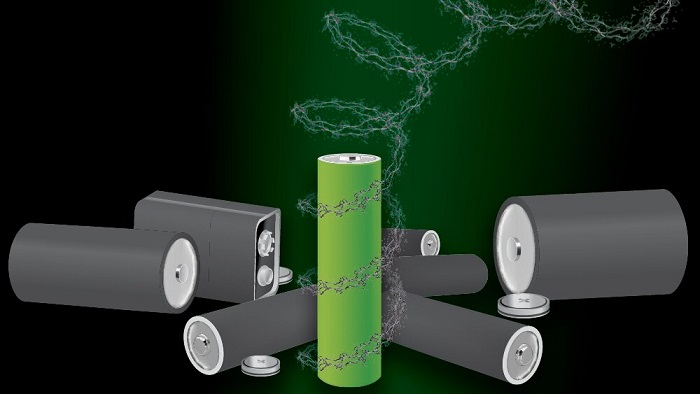
The introduction of lithium-ion (Li-ion) batteries has revolutionized technology as a whole, leading to major advances in consumer goods across nearly all sectors. Battery-powered devices have become ubiquitous across the world. While the availability of technology is generally a good thing, the rapid growth has led directly to several key ethical and environmental issues surrounding the use of Li-ion batteries.
Current Li-ion batteries utilize significant amounts of cobalt, which in several well-documented international cases is mined using child labor in dangerous working environments. Additionally, only a very small percentage of Li-ion batteries are recycled, increasing the demand for cobalt and other strategic elements.




A multidisciplinary team of researchers from Texas A&M University has made a breakthrough that could lead to battery production moving away from cobalt. They outline their research into a new battery technology platform that is completely metal-free. This new battery technology platform utilizes a polypeptide organic radical construction.
By moving away from lithium and working with these polypeptides, which are components of proteins, it really takes us into this realm of not only avoiding the need for mining precious metals but opening opportunities to power wearable or implantable electronic devices and also to easily recycle the new batteries. They [polypeptide batteries] are degradable, they are recyclable, they are non-toxic and they are safer across the board.
The all-polypeptide organic radical battery composed of redox-active amino-acid macromolecules also solves the problem of recyclability. The components of the new battery platform can be degraded on demand in acidic conditions to generate amino acids, other building blocks, and degradation products—one of the major breakthroughs in this research, according to Lutkenhaus.
The big problem with lithium-ion batteries right now is that they’re not recycled to the degree that we are going to need for the future electrified transportation economy. The rate of recycling lithium-ion batteries right now is in the single digits. There is valuable material in the lithium-ion battery, but it’s very difficult and energy-intensive to recover.
The development of a metal-free, all-polypeptide organic radical battery composed of redox-active amino-acid macromolecules that degrade on demand marks significant progress toward sustainable, recyclable batteries that minimize dependence on strategic metals.

