

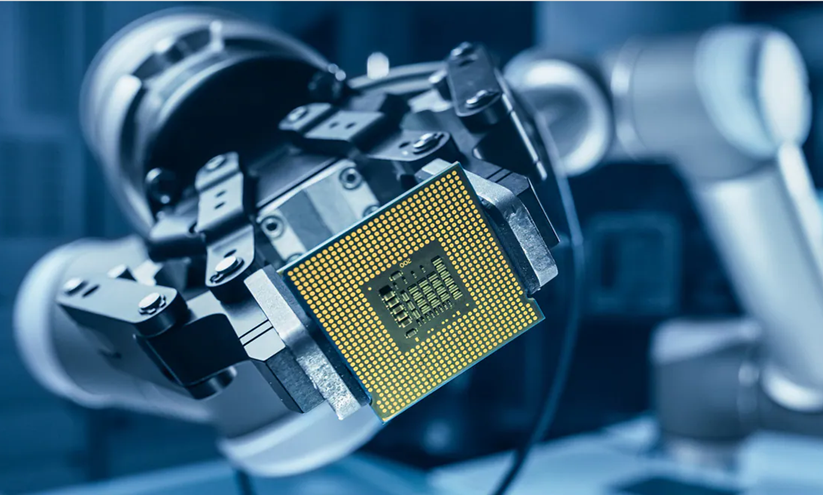
Semiconductors are the backbone of modern electronics, enabling faster, smaller, and more power-efficient devices. As India moves towards becoming a global hub for semiconductor manufacturing and design, the demand for cutting-edge chip technology is rising. The integration of advanced fabrication techniques, AI-driven chip design, and the push for indigenous semiconductor production are set to transform India’s electronics ecosystem.
The Need for Faster and Smaller Electronics
The electronics industry is driven by the demand for compact and high-performance devices, including smartphones, wearables, automotive electronics, and IoT devices. Key trends pushing the semiconductor industry forward include:



- Moore’s Law Advancements: Continuous scaling down of transistor sizes following the path of Extreme Ultraviolet Lithography (EUVL) for enhanced patterning precision and increased transistor density.
- AI and Edge Computing: Implementation of neuromorphic computing architectures using emerging materials like Resistive RAM (ReRAM) and Phase-Change Memory (PCM).
- 5G and Beyond: Deployment of compound semiconductors such as Gallium Nitride (GaN) and Indium Phosphide (InP) for high-frequency, high-power RF applications.
- Energy Efficiency: Adoption of tunnel field-effect transistors (TFETs) and spintronic devices for ultra-low-power computing.
Key Semiconductor Technologies Driving Miniaturization
1. Advanced Node Process Technologies
With the shift to 5nm, 3nm, and upcoming 2nm process nodes, semiconductor manufacturers are pushing the limits of physics. These smaller nodes provide:
- Increased effective channel mobility by integrating high-k metal gate (HKMG) stacks and strained silicon engineering.
- Improved electrostatic control over transistors through stacked nanosheet transistors.
- Higher integration density through Self-Aligned Quadruple Patterning (SAQP).
2. FinFET and GAAFET Transistor Architectures
- FinFET (Fin Field-Effect Transistor) technology dominates sub-10nm nodes, offering superior gate control through multi-gate designs.
- GAAFET (Gate-All-Around FET) represents the next evolution, transitioning towards nanosheet transistors, reducing leakage currents and enhancing threshold voltage tuning.
3. 3D Packaging and Chiplet Architecture
- 3D stacking (TSV – Through-Silicon Via) allows for vertical integration, minimizing signal propagation delays and interconnect parasitics.
- Chiplet-based designs using advanced heterogeneous integration enable diverse functional blocks to be assembled with high-bandwidth interconnects such as UCIe (Universal Chiplet Interconnect Express).
India’s Semiconductor Roadmap
India is aggressively pushing for semiconductor self-sufficiency through initiatives like Semicon India Program and partnerships with global leaders. The focus areas include:
- Domestic Fab Development: India is investing in semiconductor fabs with partnerships involving TSMC, Intel, and GlobalFoundries.
- Design and IP Development: Indian startups and research institutions are working on AI-powered EDA (Electronic Design Automation) tools leveraging machine learning for physical design optimization.
- Material Advancements: R&D in wide-bandgap semiconductors like SiC (Silicon Carbide) and GaN (Gallium Nitride) for high-efficiency power electronics.
Key Players and Initiatives in India
- ISMC Analog Fab: A proposed semiconductor fab with Israeli collaboration focusing on mixed-signal and RF chip manufacturing.
- Vedanta-Foxconn JV: Focused on setting up a 28nm technology node semiconductor fab in India.
- Tata Electronics: Exploring advanced semiconductor packaging and system-in-package (SiP) solutions.
- India Semiconductor Mission (ISM): A government-backed initiative to accelerate semiconductor fabrication, design, and advanced packaging capabilities.
Challenges and Future Outlook
While India is making significant strides in semiconductor manufacturing, challenges remain:
- Supply Chain Dependencies: Reliance on foreign suppliers for high-purity silicon wafers and photolithography tools.
- Skilled Workforce: Need for specialized talent in quantum computing, cryogenic electronics, and advanced packaging.
- High CAPEX Requirements: Semiconductor fabs require multi-billion-dollar investments with long ROI cycles.
Despite these challenges, India’s semiconductor sector is set to grow rapidly with government support, strategic partnerships, and technological innovations. The move towards faster, smaller, and more efficient semiconductors will drive India’s electronics industry forward, making the country a key player in the global semiconductor race.
Conclusion
The evolution of semiconductors is enabling smaller, faster, and more efficient electronics, shaping the future of computing, connectivity, and automation. With India’s push towards self-reliance in semiconductor manufacturing and the adoption of next-gen technologies like AI-driven chip design, 3D stacked transistors, and advanced node fabrication, the country is poised to become a global semiconductor powerhouse. As investments grow and expertise expands, India’s role in the semiconductor revolution will only strengthen, paving the way for a digitally empowered future.

