
Self-charging smartwatches and health trackers could be a step closer following the development of tiny mechanical devices powered by movement, a study suggests.
The new mechanisms—which are twice as powerful as similar existing devices—could offer an energy-efficient and sustainable alternative to batteries used in wearable technologies, researchers say.




Edinburgh engineers have developed a technique to create versatile materials that generate electricity by harnessing the energy produced by the movement of the human body.
The method—devised by a team of three Ph.D. students—creates so-called piezoelectric materials more quickly and efficiently than previous techniques, potentially making it easier to scale up production.
Powerful devices
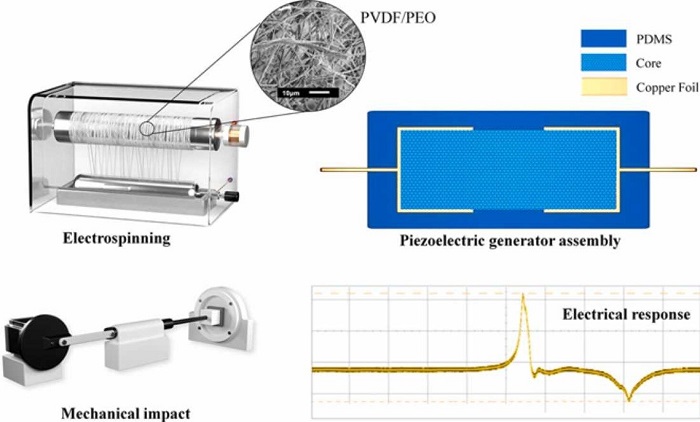
The team devised this new approach by tweaking the chemistry used in the production of ultrafine fibers of a material called PVDF, a versatile substance that generates electricity when pressure is applied to it.
By using a high-voltage power supply the researchers can make 3D sponge-like materials from the fibers, which are then cut into 1 cm2 piece, fitted with electrodes and wires, and encased in silicon.
Tests of the devices’ power output show they can produce 40 microwatts of electricity per square centimeter—twice as much as the most powerful type of existing piezoelectric generator.
Reduced waste
Further development of the structures could extend the life of—or even replace—conventional batteries in wearable technologies, helping to reduce electronic waste and energy consumption, researchers say.
The materials could also have applications in the next generation of smart textiles and be woven into products such as motion-sensing clothes and t-shirts that monitor breathing and heart rate.
“With an ever-growing interest in the development of electronic wearable devices and implants, the generation of electronic waste and the limitations associated with battery capacity remain some of the key challenges to overcome. The materials we have developed bring us one step closer to the sustainable development of wearable electronics,” says Ph.D. student Francisco Diaz Sanchez.

