
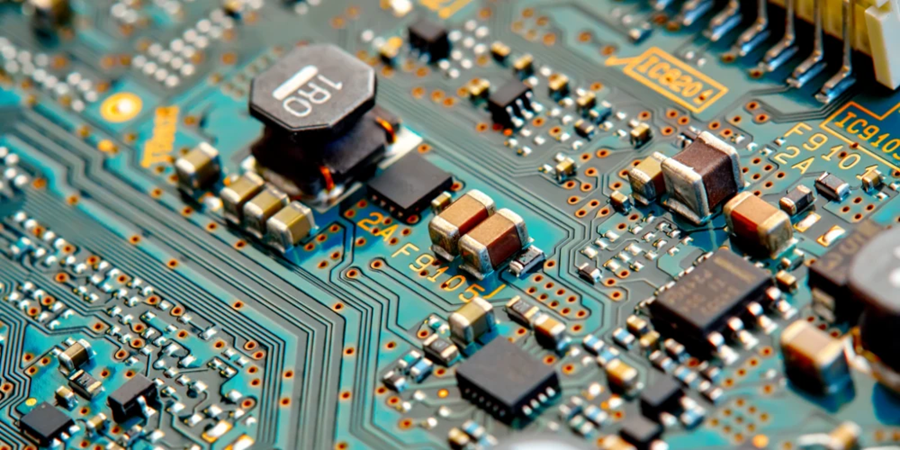
Integrated circuits (ICs) have revolutionized modern electronics, serving as the backbone of countless devices. Broadly, ICs are categorized into two main types: Analog ICs and Digital ICs. Understanding their differences and specific applications is essential for selecting the right components for various electronic systems. This article delves into the distinctions and comparisons between analog and digital ICs, highlighting their respective advantages, limitations, and use cases.
What are Analog ICs?




Analog ICs process continuous signals that vary over time and are used to manage real-world data such as sound, light, temperature, or pressure. These integrated circuits are crucial in scenarios that demand high precision and uncompromised signal quality.
Key Features of Analog ICs:
- Continuous Signal Processing: Operate with signals that have infinite values within a range.
- Signal Amplification and Conditioning: Amplify or modify analog signals for further processing.
- High Sensitivity: Analog ICs are ideal for handling small changes in signal amplitude.
Common Examples:
- Operational amplifiers (op-amps)
- Voltage regulators
- Analog-to-digital converters (ADCs)
- Audio amplifiers
What are Digital ICs?
Digital integrated circuits process discrete signals, encoding information in binary format, where data is represented as sequences of 0s and 1s. These ICs are integral to modern computing and communication systems.
Key Features of Digital ICs:
- Binary Signal Processing: Work with two distinct states, high (1) and low (0).
- Logical Operations: Perform arithmetic, logical, and control operations efficiently.
- Noise Immunity: Digital ICs demonstrate greater resilience to noise, making them more reliable in environments with high interference.
Common Examples:
- Microprocessors
- Memory chips (RAM, ROM)
- Logic gates
- Digital-to-analog converters (DACs)
Comparison Between Analog ICs and Digital ICs
| Aspect | Analog IC | Digital IC |
| Signal Type | Continuous signals | Discrete signals (binary) |
| Processing | Processes real-world, variable data | Processes binary data |
| Complexity | Simpler design | Higher complexity in circuits |
| Noise Sensitivity | More vulnerable to interference and distortions | More resistant to interference and noise disruptions |
| Applications | Audio, sensors, signal conditioning | Computing, storage, digital communication |
| Power Consumption | Generally higher for amplifiers | Lower for logic circuits |
| Accuracy | Depends on precision of components | High for binary operations |
| Speed | Limited by signal amplitude and frequency | Faster due to digital switching |
Hybrid ICs: Bridging the Gap
Modern systems often necessitate a combination of both analog and digital capabilities to function seamlessly. For instance, smartphones rely on analog ICs for signal acquisition (microphones, cameras) and digital ICs for processing (processors, memory). Hybrid ICs, which combine analog and digital components, are increasingly popular for such integrated applications.
Example:
- Analog-to-Digital Converters (ADCs) convert continuous analog inputs into a digital format, enabling their use in computational and processing systems.
- Digital-to-Analog Converters (DACs) take processed digital data and convert it back into analog signals for practical, real-world output.
Applications of Analog ICs
- Audio Equipment: Analog amplifiers and equalizers enhance sound quality in audio systems.
- Power Management: Voltage regulators and power amplifiers manage and stabilize power supplies.
- Sensors and Instrumentation: Analog ICs process data from temperature, pressure, and motion sensors.
Applications of Digital ICs
- Computing Devices: Microprocessors and memory chips drive computers and smartphones.
- Communication Systems: Digital signal processors (DSPs) enable data encoding, modulation, and transmission.
- Automation and Control: Logic circuits and microcontrollers power robotics and industrial automation.
Advantages and Disadvantages
Analog ICs:
- Advantages:
- Superior for real-world signal processing.
- Ideal for use in scenarios where maintaining high signal accuracy and integrity is essential.
- Disadvantages:
- More susceptible to interference and signal degradation.
- Larger power consumption for certain tasks.
Digital ICs:
- Advantages:
- High accuracy and noise immunity.
- Efficient for high-speed operations and complex computations.
- Disadvantages:
- Limited in handling real-world signals directly.
- Conversion to and from analog signals may introduce delays.
Conclusion
Analog and digital ICs serve distinct yet complementary roles in modern electronics. While analog ICs excel in processing real-world signals with precision, digital ICs dominate areas requiring speed, accuracy, and computational power. The synergy of these technologies, often realized in hybrid ICs, is driving innovation across industries such as healthcare, automotive, consumer electronics, and communication. Understanding the strengths and limitations of each type enables engineers and designers to create optimized and efficient electronic systems tailored to specific applications.

