
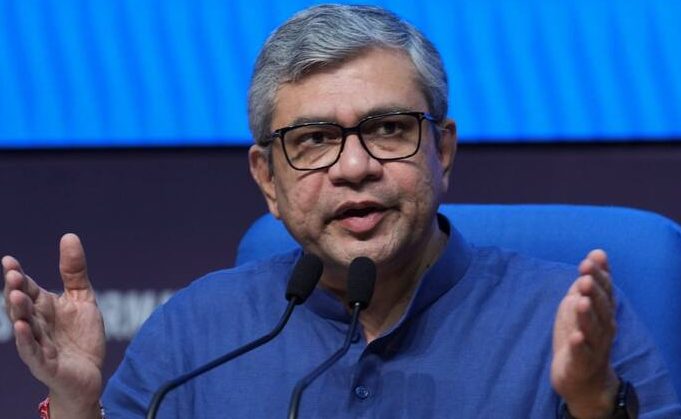
Union Minister Ashwini Vaishnaw inaugurated India’s first tempered glass manufacturing facility in Noida, marking a major milestone in the country’s electronics manufacturing ecosystem.
Noida now owns the distinction of having inaugurated India’s first tempered glass manufacturing unit, a step ahead in the electronics manufacturing journey.




The plant built in collaboration US technology giant Corning is owned and operated by Optiemus infracom. The factory will manufacture tempered glass for smartphones and other electronic devices, which is used as a protective layer and is used extensively.
Optiemus has emerged as a key player in India’s electronics manufacturing ecosystem, known for its strategic partnerships and innovation, Minister Vaishnaw described Optiemus, “a new gem in India’s fast-growing electronics manufacturing ecosystem,” and further stated that production of covered glass with Corning’s collaboration is slated to begin before the end of this year.
Investment and Production Capacity:
The Noida facility has been built with an initial investment of ₹70 crore and is, and it is furnished with an annual capacity of 2.5 crore units. In addition to supporting domestic manufacturing, the plant is projected to generate more than 600 direct jobs in the area.
Optiemus has set forth expansion plans of a larger scale. In the second phase of growth, the company aims to significantly increase its capacity to 20 crore units per year for the domestic market as well as for exports.
Phase 2 Expansion:
For the next phase, the company wishes to open another plant in Noida with an annual capacity of 10 crore units. In addition, a new plant in southern India with a capacity of 15 crore tempered glass units is planned. An additional ₹800 crore is earmarked for this expansion, with the southern plant receiving more than ₹450 crore.
In addition, the company plans to launch its own brand of tempered glass, RhinoTech, in September 2025. Emphasizing domestic manufacturing, a ‘Made in India’ tag will be attached to the product. RhinoTech will have consumer-friendly features. For instance, it will be covered by a one-year warranty with unlimited replacement, which is bound to add value to the product in the market.
While speaking at the event, Minister Vaishnaw focused on the achievements of India’s electronics sector. In the past 11 years, this sector’s production value has increased six times, reaching ₹11.5 lakh crore. Exports have also grown to more than ₹3 lakh crore, and the industry supports 25 million jobs both directly and indirectly across the country.
The inauguration of this factory marks India’s entry into the tempered glass manufacturing industry, which was previously reliant on imports. The impact of this development is the expected improvement of the supply chain for smartphones and other electronic devices, which is in line with the government initiative to make India a global hub for electronics production.

