
HomeNewsIndia NewsNew 3D-printed plastics with embedded high performance electrical circuits to develop smart...

    New 3D-printed plastics with embedded high performance electrical circuits to develop smart structures

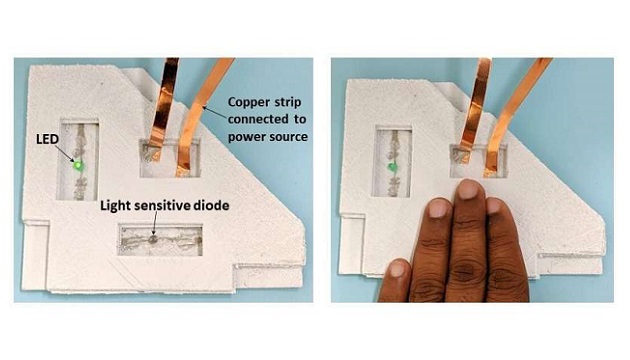
    High-performance electrical circuits have been embedded inside 3D-printed plastics by Rutgers engineers. These 3D-printed plastics could lead to smaller and versatile drones, which are better-performing small satellites, biomedical implants and smart structures. They used pulses of high-energy light to fuse tiny silver wires, resulting in circuits that conduct 10 times more electricity than the state of the art, according to a new study.

    They used pulses of high-energy light to fuse tiny silver wires, resulting in circuits that conduct 10 times more electricity than the state of the art. By increasing conductivity 10-fold, the engineers can reduce energy use, extend the life of devices and increase their performance.


    “Our innovation shows considerable promise for developing an integrated unit — using 3D printing and intense pulses of light to fuse silver nanoparticles — for electronics,” said senior author Rajiv Malhotra, an assistant professor in the Department of Mechanical and Aerospace Engineering in the School of Engineering at Rutgers University-New Brunswick.

    Embedding electrical interconnections inside 3D-printed structures made of polymers, or plastics, can create new paradigms for devices that are smaller and more energy-efficient. Such devices could include CubeSats (small satellites), drones, transmitters, light and motion sensors and Global Positioning Systems. Such interconnections are also often used in antennas, pressure sensors, electrical coils and electrical grids for electromagnetic shielding.

    The engineers used high-tech “intense pulsed light sintering” — featuring high-energy light from a xenon lamp — to fuse long thin rods of silver called nanowires. Nanomaterials are measured in nanometers (a nanometer is a millionth of a millimeter — about 100,000 times thinner than a human hair). Fused silver nanomaterials are already used to conduct electricity in devices such as solar cells, displays and radio-frequency identification (RFID) tags.

    Next steps include making fully 3D internal circuits, enhancing their conductivity and creating flexible internal circuits inside flexible 3D structures, Malhotra said.

    ELE Times Research Desk
    ELE Times Research Deskhttps://www.eletimes.ai
    ELE Times provides a comprehensive global coverage of Electronics, Technology and the Market. In addition to providing in depth articles, ELE Times attracts the industry’s largest, qualified and highly engaged audiences, who appreciate our timely, relevant content and popular formats. ELE Times helps you build awareness, drive traffic, communicate your offerings to right audience, generate leads and sell your products better.

    Related News

    Must Read

    IIIT Hyderabad’s Smart Approach To Sand Mining Enforcement, Incorporating AI in Trucks

    ‘Truck art’ or the hand-painted ‘Horn Ok Please’, ‘Use...

    Applied Materials, CG Power, Lam Research, Larsen & Toubro, and Micron Join the IDTA

    The India Deep Tech Alliance (IDTA) announced that Applied...

    Manufacturing Breakthroughs in Chip Packaging Are Powering AI’s Future

    Courtesy: Lam Research With all the attention being given to...

    Powering the Future: How High-Voltage MLCCs Drive Efficiency in Modern Electronics

    Courtesy: Murata Electronics Power electronics is undergoing a profound transformation....

    Redefining the human experience with intelligent computing

    Courtesy: Qualcomm Enabling the devices, vehicles and machines that define...

    The Forest Listener: Where edge AI meets the wild

    Courtesy: Micron Let’s first discuss the power of enabling. Enabling...

    Solution Suite Concept: Software-Based Refrigerator

    Courtesy: Renesas Imagine a world without cold storage—medicines would spoil,...

    The V2X Revolution: Satellite Integration, Quantum Security, and 5G RedCap Reshape Automotive Connectivity

    Imagine your car negotiating traffic with satellites, quantum-encrypted handshakes,...

    20 Years of EEPROM: Why It Matters, Needed, and Its Future

    ST has been the leading manufacturer of EEPROM for the 20th...

    Modern Cars Will Contain 600 Million Lines of Code by 2027

    Courtesy: Synopsys The 1977 Oldsmobile Toronado was ahead of its...

