
HomeNewsIndia NewsNewly developed thin-film monolithic image sensor captures light in the NIR and...

Newly developed thin-film monolithic image sensor captures light in the NIR and SWIR

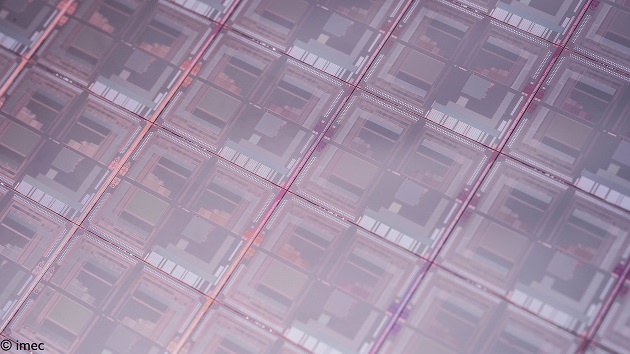
Imec has developed a thin-film monolithic image sensor that captures light in the near-infrared (NIR) and short-wavelength infrared (SWIR).

Based on a monolithic approach, the process promises an order of magnitude gain in fabrication throughput and cost compared to processing today’s conventional IR imagers, while at the same time enabling multi-megapixel resolution.


To date, infrared image sensors are produced through a hybrid technology: the crystalline semiconductor detector and the electronic readout are fabricated separately and then interconnected at pixel or chip periphery level.

This is an expensive and time-consuming process with a low throughput, resulting in sensors with a restricted resolution that often require cooling to reduce the signal noise under dark conditions.

This prevents a widespread use of IR imagers in consumer applications. For some time, researchers have been looking at various monolithic approaches. Imec’s approach paves the way to high-resolution, low-cost, wafer-based SWIR imagers.

Imec’s IR imagers consist of a thin-film photodetector pixel stack based on quantum dots deposited directly on top of an electronic readout.

They are manufactured in a monolithic process compatible with wafer-based mass production.

The pixels embed newly developed high-performance low bandgap quantum dot materials that match or even surpass the performance of inorganic light absorbers. The stacks have been carefully engineered and can be tuned to target a spectrum from visible light all the way up to 2µm wavelength.

Test photodiodes on silicon substrate achieve an external quantum efficiency above 60 percent at 940nm wavelength, exceeding the state-of-the-art, and above 20 percent at 1450nm, allowing for uncooled operation with dark current comparable to commercial InGaAs photodetectors.

The prototype imager has resolution of 758×512 pixels and 5um pixel pitch.

ELE Times Research Desk
ELE Times Research Deskhttps://www.eletimes.ai
ELE Times provides a comprehensive global coverage of Electronics, Technology and the Market. In addition to providing in depth articles, ELE Times attracts the industry’s largest, qualified and highly engaged audiences, who appreciate our timely, relevant content and popular formats. ELE Times helps you build awareness, drive traffic, communicate your offerings to right audience, generate leads and sell your products better.

Related News

Must Read

Emerson Extends RF Test Capabilities to New Multiport and MIMO Test Applications

Global automation leader Emerson today announced new radio frequency...

Top 10 AI Agent Frameworks for Developers in 2026

​AI is no longer just creating chatbots; now it...

Advancing Cyber Posture, Governance and Skill Development in India and Beyond

Rapid technological acceleration and shifting regulatory landscapes warrant robust...

Infineon introduces 27 kW three-phase PSU solution for next- generation AI server power architectures

Artificial intelligence workloads are redefining the power requirements of...

PRAMA Showcases Intelligent and Indigenous Transport Security Solutions at Traffic Infratech Expo

India’s premier indigenous video security brand, PRAMA displayed its...

The Evolution of Automotive Safety and the Sensors Driving It

Automotive safety has grown up in layers. Passive safety,...

AI Agents Explained: How Planning, Memory, Tools and Reasoning Work

AI is transitioning from answer-providing computer programs to the...

DigiKey Webinar Shows How My Lists Tool Simplifies Parts Management and Quoting

DigiKey, the global distribution leader of electronic components and...

