

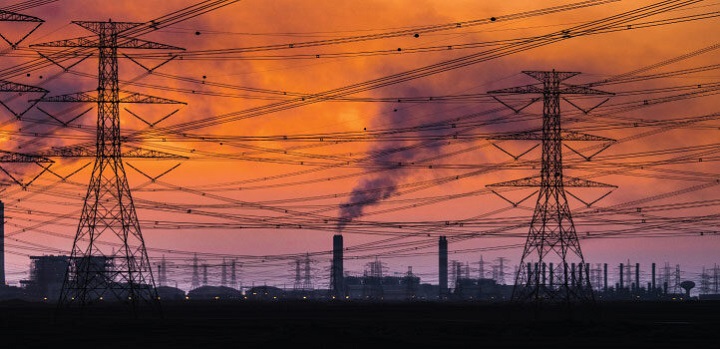
Electronic organic materials offer promise to support alternative and green energy sources to meet escalating global energy demands and strict environmental regulations. A KAUST-led team has now developed electron-transporting, so-called n-type, Organic Semiconductors that could help generate electricity from waste heat released by industrial processes and homes.
Thermoelectric generators that can convert temperature changes or gradients into electricity are highly suited for harnessing waste heat. These readily scalable devices are environmentally friendly and do not have any moving parts, which makes them resistant to wear.



Their efficiency in energy conversion hinges on minimizing the thermal conductivity of their components while maximizing their electrical conductivity and Seebeck coefficient, a direct measure of their ability to produce a thermoelectric current.
At the heart of thermoelectric generators are two electronically different materials, an n-type semiconductor and a hole-transporting (or p-type) semiconductor, which are joined at their ends to form a circuit. Therefore, the conversion efficiency of the generators depends on both types of semiconductor delivering optimal performance.
Organic thermoelectric materials have recently emerged as easier to process and less toxic than their cheaper and more abundant conventional inorganic counterparts. These new materials also present lower thermal conductivity, but their thermoelectric performance remains inadequate.
Typically, doped n-type Organic Semiconductors are not stable in ambient conditions and display lower electrical conductivities than their p-type equivalents, which have been widely investigated.
“One important challenge is to find n-type Organic materials with comparable performance to the best p-type Semiconductors,” says research scientist, Hu Chen, who led the study within the research group of Iain McCulloch.
The KAUST team devised a systematic approach to synthesize air-stable doped n-type Organic Semiconductors with high thermoelectric performance. The monomers comprised cyclic amides, or lactams, fused with naphthalene and anthracene cores, generating rigid conjugated polymers by a nontoxic metal-free acid-catalyzed polymerization.
“There is no rotational freedom along the backbone, which reduces energetic disorder and subsequently enhances electrical conductivity,” McCulloch says.
In this design, the electron-withdrawing lactam groups produced a highly electron-deficient backbone, stabilizing the polymer under ambient conditions.
Additionally, smaller cores led to larger electron affinity and, consequently, better thermoelectric performance in the polymers, “which had not been so strikingly demonstrated before this work,” McCulloch says.
Chen explains that larger cores have a lower density of electron-withdrawing groups, which cumulatively decrease the electron affinity.
These air-stable polymers have good commercial potential. The team is now planning to develop scalable processes to allow these materials to be integrated into thermoelectric generators.

