
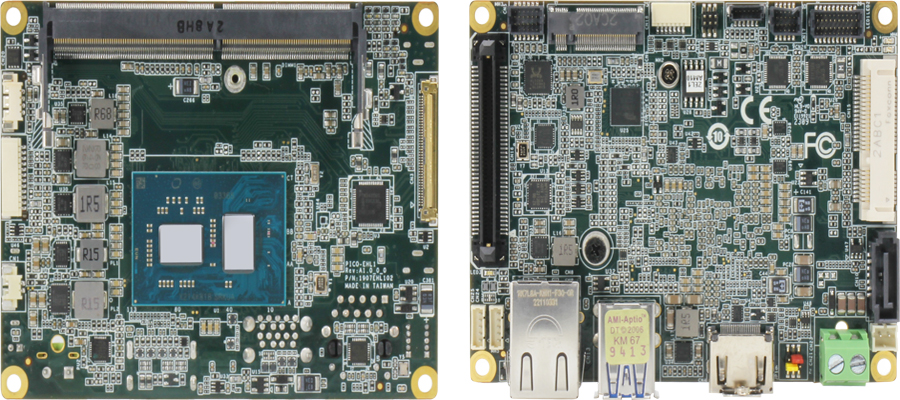
Illustrating board-space and power-efficiency, the PICO-EHL1 is offers quality in simplicity.
AAEON, a leading producer of single-board computers, has released the latest offering from its line of compact boards on the PICO-ITX form factor, the PICO-EHL1. Equipped with Intel Atom x6000E Series, and Intel Pentium and Celeron N and J Series Processors, the PICO-EHL1 is a lightweight, power-efficient board which the company has earmarked for low-cost applications that require flexible function, such as digital signage, smart lockers, and ATMs.




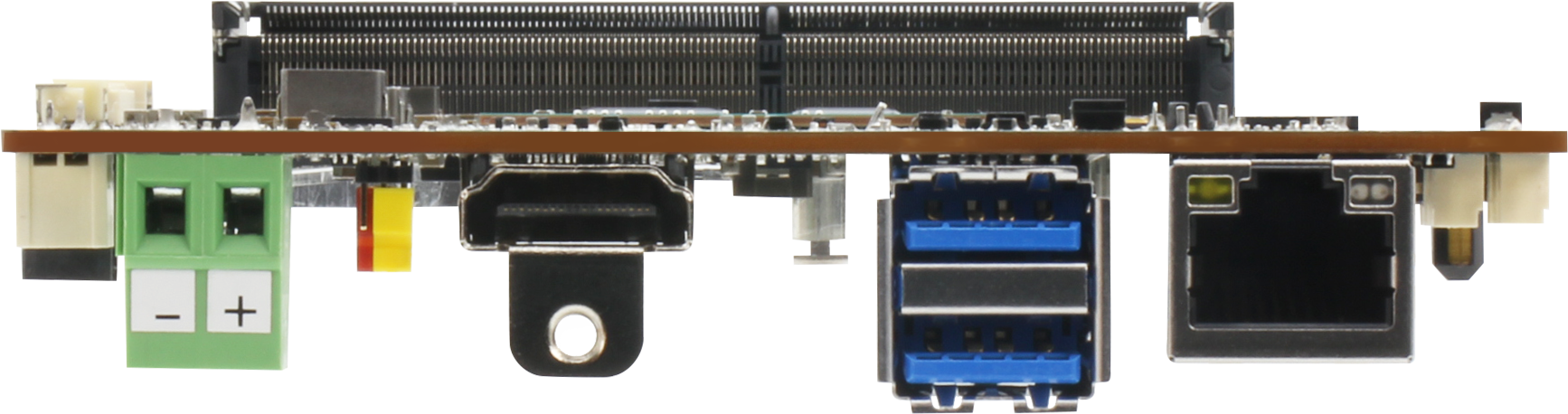
The PICO-EHL1’s display interface is particularly suitable to the aforementioned markets, with dual-channel LVDS and eDP via colay design being joined by full audio functionality thanks to its line-in, line-out, and microphone connectors. Supporting both Windows and Linux operating systems, the board has discrete TPM 2.0 compatibility for data security, making it suitable for deployment in ATMs.
Internal pin-headers, along with a BIO (Board to Board I/O) connector that grants access to additional PCIe, GPIO, and serial port functions give users a selection of interfaces to build with while avoiding unnecessary physical ports taking up board space. Consequently, the PICO-EHL1 maintains a small 3.94″ x 2.84″ (100mm x 72mm) form factor, despite being equipped with such a range of functions. Meanwhile, GbE LAN, HDMI 1.4b, and dual USB 3.2 Gen 2 ports make up the PICO-EHL1’s external I/O, providing a solid base from which to integrate peripheral devices.
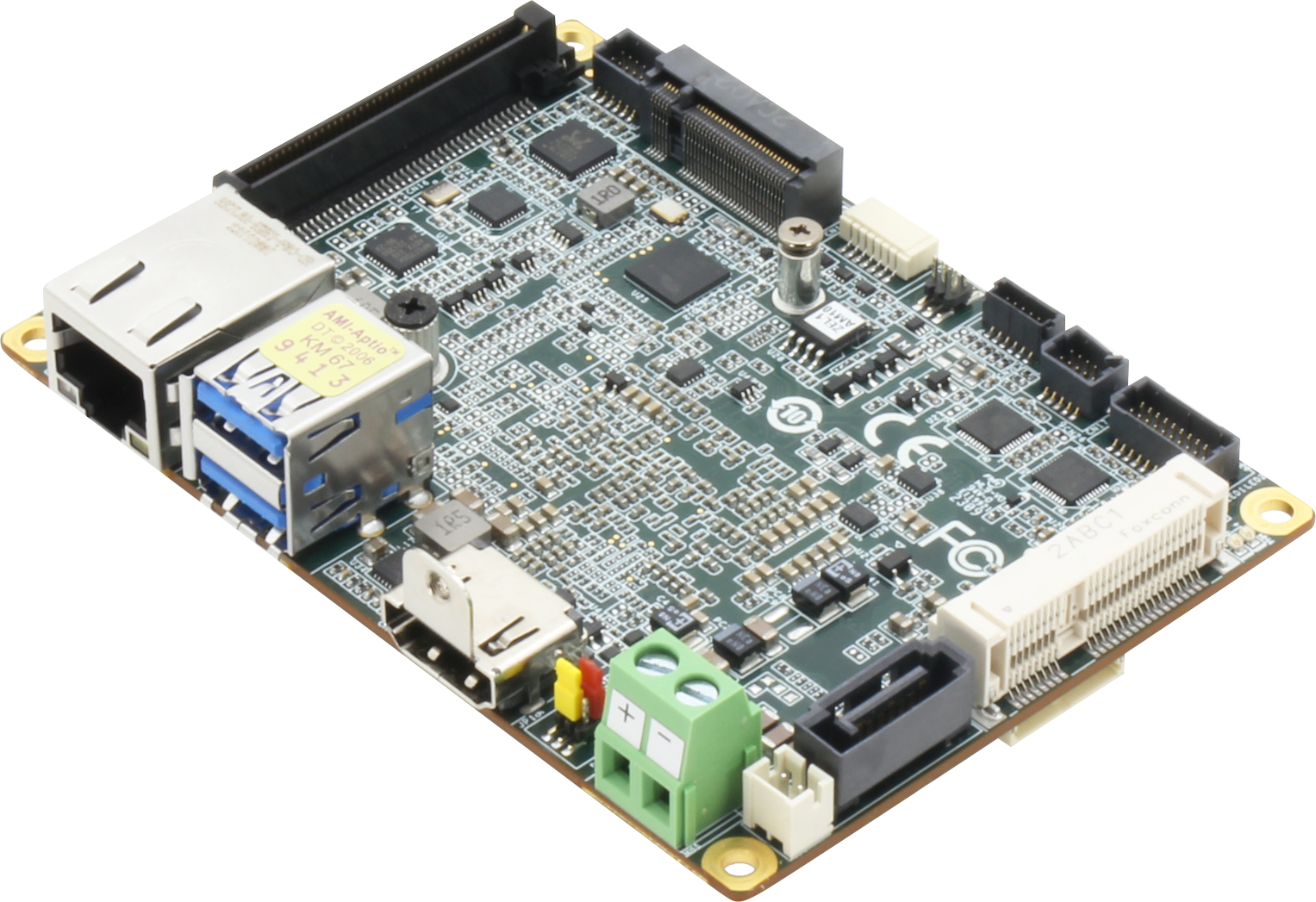
The PICO-EHL1’s expansion options show a vast improvement on its predecessor, hosting an M.2 2242 B-Key and full size mPCIe/mSATA slot for storage modules. One major change when compared to its predecessor is that the PICO-EHL1 supports 32GB of DDR4 system memory via a SODIMM slot, compared to system memory being onboard, as has previously been the case. The reason for this is to provide greater flexibility to users, allowing them to install memory modules to suit their application’s needs and budget.

