

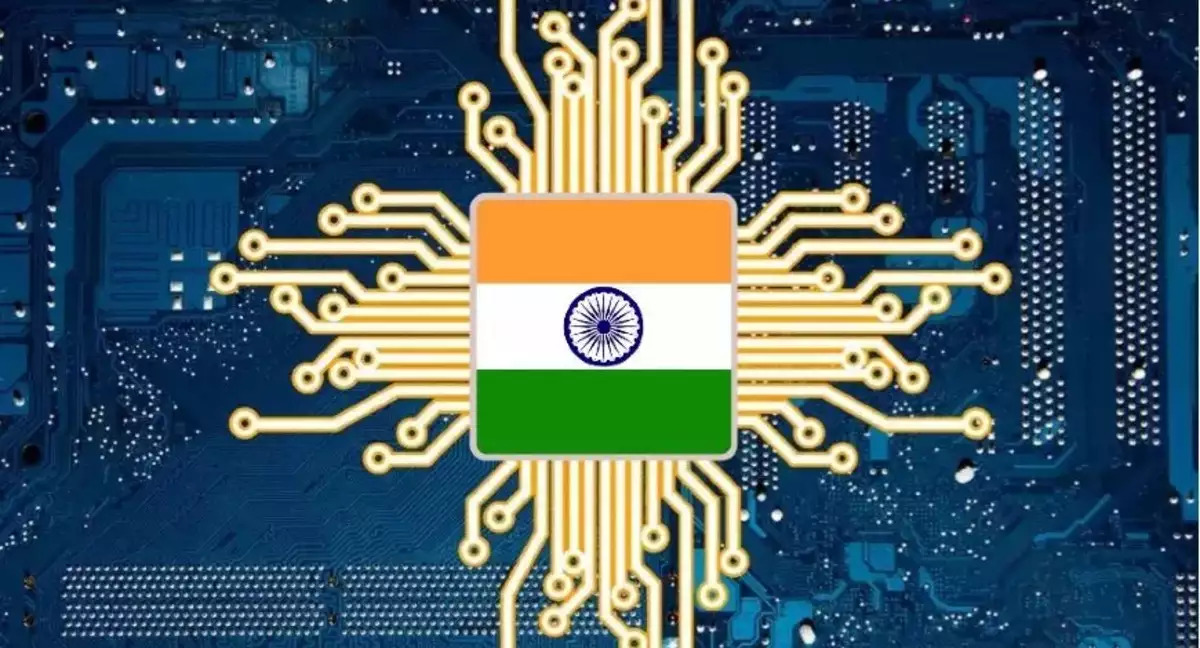
India’s economy is witnessing the much-awaited digital uprising. Under the vision of our Honorable Prime Minister Narendra Modi with a focus on ‘‘Atmanirbhar Bharat’, the current electronics industry in India is valued at $75 billion compared to $10 billion in 2014.
The target is to make it worth $300 billion by 2025-26. But to sustain this revolution and make it meaningful, India needs a comprehensive approach to become self-reliant because we can’t afford to spend billions of dollars on imports of electronic products. The country’s import expenditure for electronics is second only to its import bill for oil.



To achieve that, the Make in India initiative needs to take the centre stage. Electronics’ industries need to facilitate investment, accelerate innovation, and build state-of-the-art manufacturing infrastructure in the country. The industries need to fully utilise India’s human capital advantage and productivity. The indigenisation of electronics industry will also fuel the growth of semiconductors, which eventually will accelerate the digitisation of automotive, in the country. The Semicon India Program which was launched with an incentive outlay of $10 Billion with the vision to develop a sustainable semiconductor and display ecosystem in the country will surely help us come out as a semiconductor manufacturing hub and pave the way for India’s technological leadership in the industry.
National Policy on Electronics (2019), Production Linked Incentive Scheme for the Electronics Sector, Modified Special Incentives Scheme, Electronics Manufacturing Clusters (EMC) Scheme, and numerous other initiatives are made to encourage domestic manufacturing, localization of electronics manufacturing, attracting foreign direct investment, and boosting exports. Every other manufacturing sector is built on the electronics industry. The correct synchronisation of new electronics policy with other emerging industries is required.
Although India has started to pick up pace in domestic manufacturing, the domestic content addition is in the low technology category. High-tech components come from all across the world. There is still no established mobile manufacturing ecosystem. India needs to concentrate on domestic component manufacture. High R&D expenditure is imperative to meet the electronics industry’s future needs. Indian producers must be able to produce unique goods and generate demand for them.
Tremendous opportunities for increasing electronics manufacturing will come from consumer electronics, industrial sector, power electronics, renewable energy sector, and automotive sector. The emergence of new technologies like artificial intelligence, machine learning, Internet of things will create demand for new products. Now is the right time for India to step up its electronics hardware manufacturing capabilities and pair them with software progress to emerge as one of the world’s powerhouses in the electronics area.
India will need to achieve self-reliance in advanced electronics sectors. It is unfortunate that despite having taken an early lead in the eighties by setting up large scale integration and chip manufacturing facility in Mohali, India has languished in chip manufacturing. Every electronics product requires a chip of some sort. Although India has substantial capabilities in Chip design, we have no chip manufacturing capabilities. This situation must be addressed. Therein will lie the true success of the electronics policy.

