
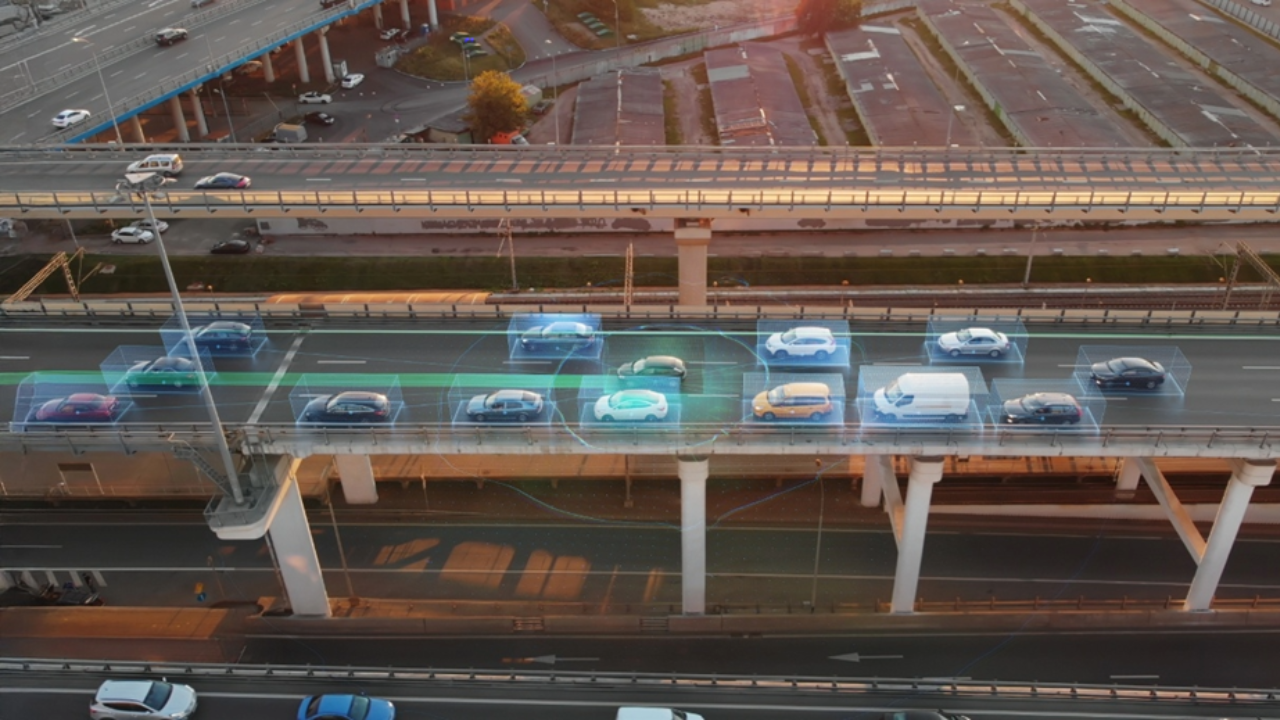
Courtesy: Nvidia
When the Society of Automotive Engineers established its framework for vehicle autonomy in 2014, it created the industry-standard roadmap for self-driving technology.




The levels of automation progress from level 1 (driver assistance) to level 2 (partial automation), level 3 (conditional automation), level 4 (high automation) and level 5 (full automation).
Predicting when each level would arrive proved more challenging than defining them. This uncertainty created industry-wide anticipation, as breakthroughs seemed perpetually just around the corner.
That dynamic has shifted dramatically in recent years, with more progress in autonomous driving in the past three to four years than in the previous decade combined. Below, learn about recent advancements that have made such rapid progress possible.
What Is Level 4 Autonomous Driving?
Level 4 autonomous driving enables vehicles to handle all driving tasks within specific operating zones, such as certain cities or routes, without the need for human intervention. This high automation level uses AI breakthroughs including foundation models, end-to-end architectures and reasoning models to navigate complex scenarios.
Today, level 4 “high automation” is bringing the vision of autonomous driving closer to a scalable, commercially viable reality.
Six AI Breakthroughs Advancing Autonomous Vehicles
Six major AI breakthroughs are converging to accelerate level 4 autonomy:
- Foundation Models
Foundation models can tap internet-scale knowledge, not just proprietary driving fleet data.
When humans learn to drive at, say, 18 years old, they’re bringing 18 years of world experience to the endeavour. Similarly, foundation models bring a breadth of knowledge — understanding unusual scenarios and predicting outcomes based on general world knowledge.
With foundation models, a vehicle encountering a mattress in the road or a ball rolling into the street can now reason its way through scenarios it has never seen before, drawing on information learned from vast training datasets.
- End-to-End Architectures
Traditional autonomous driving systems used separate modules for perception, planning and control — losing information at each handoff.
End-to-end autonomy architectures have the potential to change that. With end-to-end architectures, a single network processes sensor inputs directly into driving decisions, maintaining context throughout. While the concept of end-to-end architectures is not new, architectural advancements and improved training methodologies are finally making this paradigm viable, resulting in better autonomous decision-making with less engineering complexity.
- Reasoning Models
Reasoning vision language action (VLA) models integrate diverse perceptual inputs, language understanding, and action generation with step-by-step reasoning. This enables them to break down complex situations, evaluate multiple possible outcomes and decide on the best course of action — much like humans do.
Systems powered by reasoning models deliver far greater reliability and performance, with explainable, step-by-step decision-making. For autonomous vehicles, this means the ability to flag unusual decision patterns for real-time safety monitoring, as well as post-incident debugging to reveal why a vehicle took a particular action. This improves the performance of autonomous vehicles while building user trust.
- Simulation
With physical testing alone, it would take decades to test a driving policy in every possible driving scenario, if ever achievable at all. Enter simulation.
Technologies like neural reconstruction can be used to create interactive simulations from real-world sensor data, while world models like NVIDIA Cosmos Predict and Transfer produce unlimited novel situations for training and testing autonomous vehicles.
With these technologies, developers can use text prompts to generate new weather and road conditions, or change lighting and introduce obstacles to simulate new scenarios and test driving policies in novel conditions.
- Compute Power
None of these advances would be possible without sufficient computational power. The NVIDIA DRIVE AGX and NVIDIA DGX platforms have evolved through multiple generations, each designed for today’s AI workloads as well as those anticipated years down the road.
Co-optimization matters. Technology must be designed anticipating the computational demands of next-generation AI systems.
- AI Safety
Safety is foundational for level 4 autonomy, where reliability is the defining characteristic distinguishing it from lower autonomy levels. Recent advances in physical AI safety enable the trustworthy deployment of AI-based autonomy stacks by introducing safety guardrails at the stages of design, deployment and validation.
For example, NVIDIA’s safety architecture guardrails the end-to-end driving model with checks supported by a diverse modular stack, and validation is greatly accelerated by the latest advancements in neural reconstruction.
Why It Matters: Saving Lives and Resources
The stakes extend far beyond technological achievement. Improving vehicle safety can help save lives and conserve significant amounts of money and resources. Level 4 autonomy systematically removes human error, the cause of the vast majority of crashes.
NVIDIA, as a full-stack autonomous vehicle company — from cloud to car — is enabling the broader automotive ecosystem to achieve level 4 autonomy, building on the foundation of its level 2+ stack already in production. In particular, NVIDIA is the only company that offers an end-to-end compute stack for autonomous driving.

