
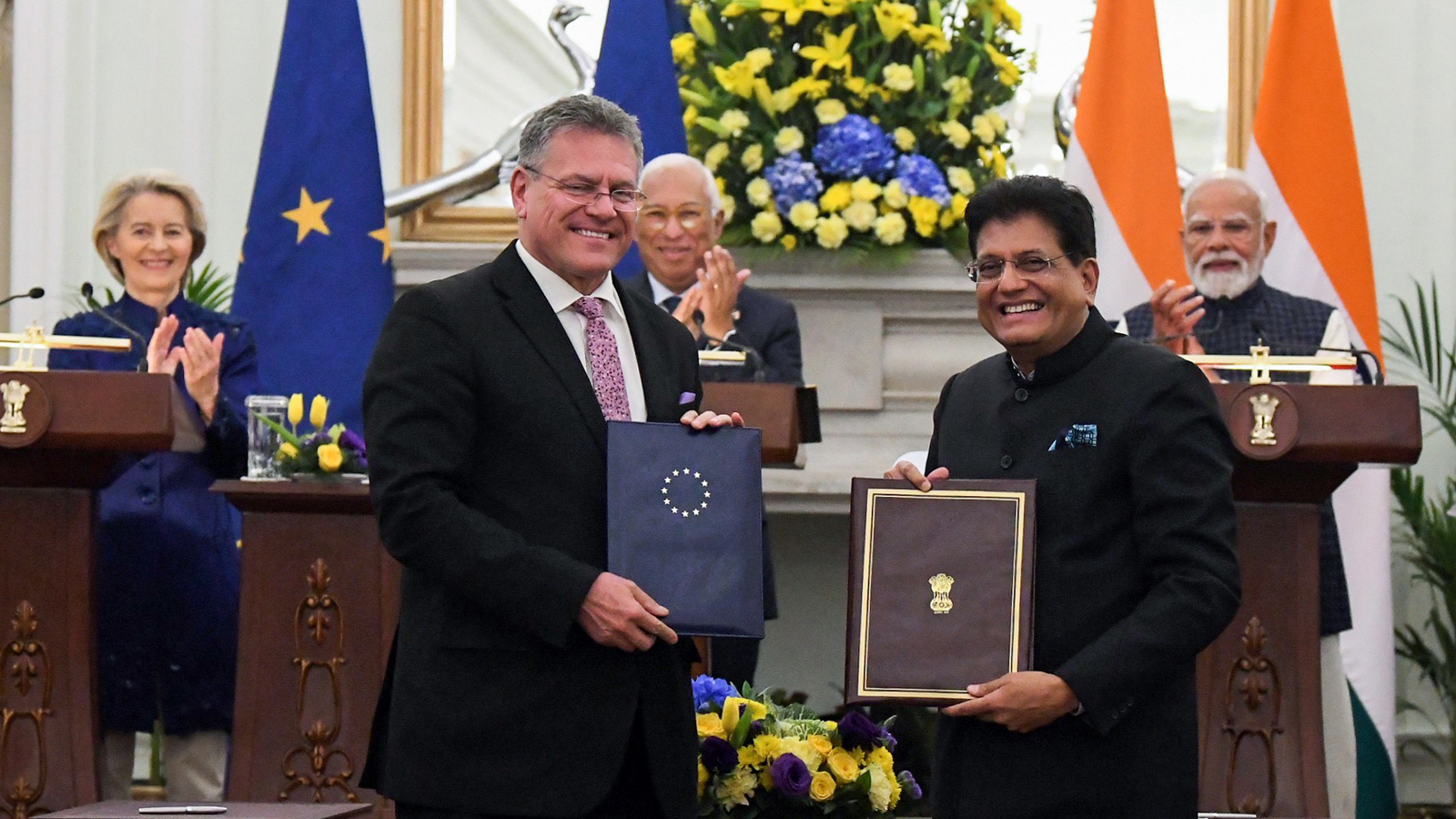
The India–European Union Free Trade Agreement (FTA) is poised to significantly reshape India’s electronics landscape, with industry estimates indicating it could scale exports to nearly $50 billion by 2031 across mobile phones, IT hardware, consumer electronics, and emerging technology segments—up from the current bilateral electronics trade of about $18 billion.
A Global Supplier




“The agreement aligns directly with India’s shift from scale-led domestic manufacturing to export-oriented integration with global value chains, while promoting inclusive growth across regions and skill levels,” says Pankaj Mohindroo, Chairman, ICEA
Emphsisisng on the significance of the FTA, he adds that in electronics, the FTA creates a credible pathway to build exports of nearly USD 50 billion by 2031 across electronic goods, including mobile phones, consumer electronics, and IT hardware. He further adds that the FTA carries the potential to exceed USD 100 billion in the following decade, anchored in manufacturing depth, job creation, innovation, and India’s emergence as a trusted global supplier.
Capitalsing a standards-driven market
At a time when global trade and supply chains are being reshaped by uncertainty and fragmentation, the India–EU FTA underscores a shared commitment to stability, predictability, and a trusted economic partnership. As the world’s fourth- and second-largest economies respectively, India and the European Union together account for nearly 25 percent of global GDP and close to one-third of global trade.
For India, the agreement goes beyond expanding trade volumes; it represents deeper engagement with one of the world’s most standards-driven markets, anchored in demonstrated capability, regulatory maturity, and institutional strength.
Preferential Access
The agreement gains added significance as global value chains increasingly prioritise resilience, diversification, and trusted partnerships. Under the FTA, over 99 percent of Indian exports by value are expected to receive preferential access to the EU market, sharply improving export competitiveness. With its scale, policy predictability, and expanding industrial base, India is well-positioned as a credible manufacturing partner for European lead firms seeking long-term stability beyond traditional supply centres.
Entry of Swedish Company ‘KonveGas’ into India
Amidst this positive environment, KonveGas, a Swedish company specializing in gas storage technology, has officially announced its entry into the Indian market. The fact that European Small and Medium Enterprises (SMEs) are now directly engaging with Indian industries is seen as a direct impact of the new trade policy.
The company has selected Delhi, Pune, and Gujarat for its initial phase of operations. These regions are India’s primary automotive and industrial hubs. Following the FTA, business opportunities in these sectors are expected to grow. The company aims to begin direct operations within the next six months.

