
Courtesy: Lattice Semiconductor
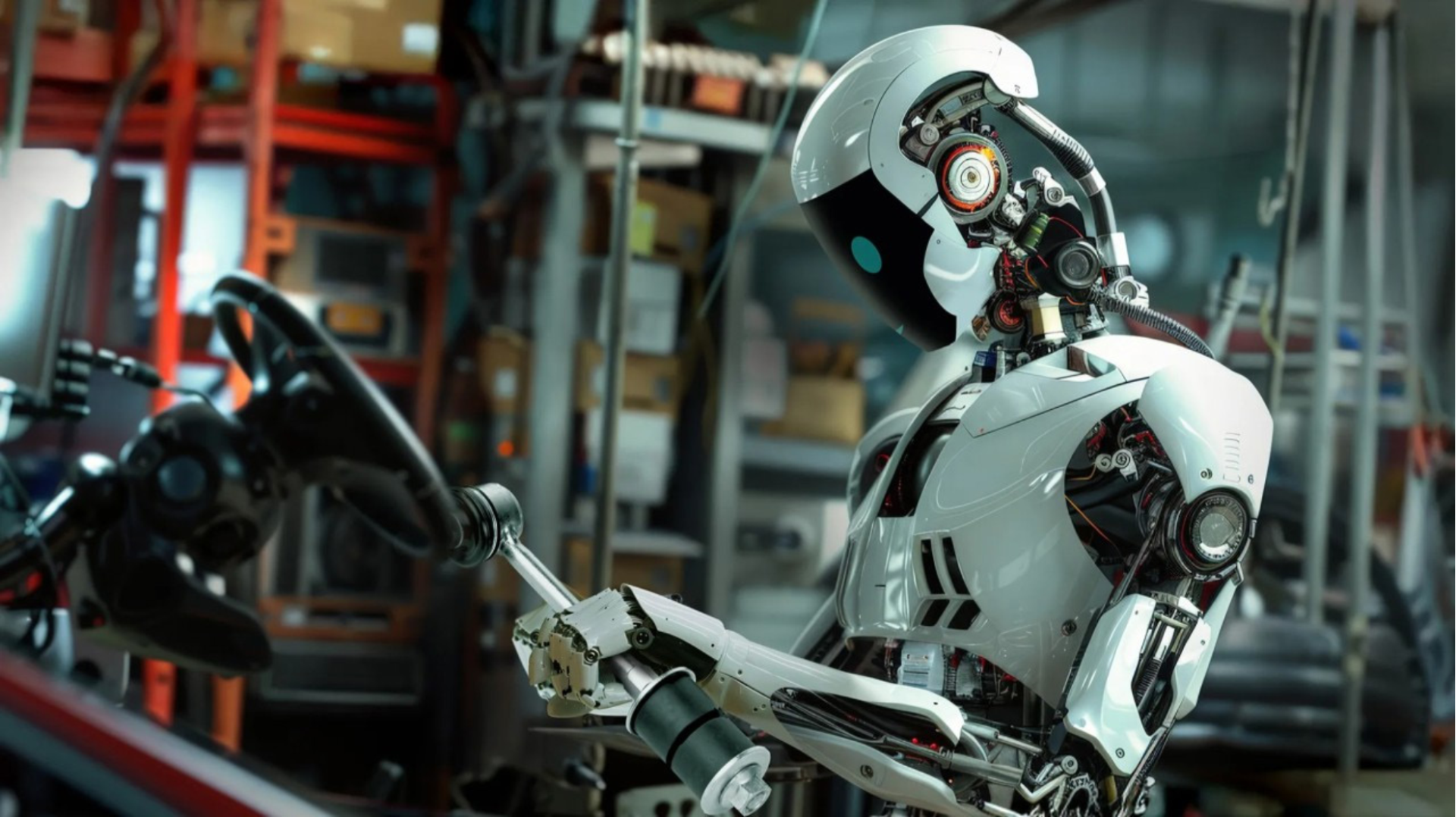
The humanoid robotics market is rapidly transitioning from experimental prototypes to early commercial deployments. What once belonged in research labs is now appearing in factories and controlled service environments, driven by advances in sensing, actuation, and edge intelligence.



Humanoids represent what many describe as the ultimate expression of physical AI — but the market is still early. “The market is still early, but it is moving quickly,” says Eric Sivertson, VP of the Security Business at Lattice. “We are seeing humanoid robotics transition from research and pilot stages into early commercial deployments. Humanoids represent the ‘physical AI’ ultimate instantiation, but adoption is not yet widespread — although the momentum is real.”
With companies such as Tesla, Boston Dynamics, Figure AI, and Agility Robotics pushing forward, analysts anticipate a significant inflexion point around 2026–2027.
But scaling humanoids to production-grade systems demands more than innovation. It requires trust.
Reliability Before Scale
Industrial buyers expect 99.99% uptime, seamless integration into human environments, and safe 24/7 operation. Yet developers continue to face challenges in reliability, dexterity, battery life, and real-world autonomy.
Sivertson notes that many prototypes still fall short of industrial expectations: “Utility is one of the most common concerns. Because the technology is still early, many prototypes and pilots fall short of industrial-grade expectations such as 99.99 per cent uptime, continuous 24/7 operation, and safe integration into human environments.”
Among the most persistent technical gaps are dexterity, failure-free operation, and energy efficiency. These challenges push developers toward hardware architectures capable of deterministic, low-latency control.
Determinism at the Hardware Layer
Humanoid systems require dense sensor fusion and sub-microsecond motor control loops. Variable latency is not acceptable when stabilising balance or controlling fine manipulation. Unlike CPUs and GPUs that execute instructions through pipelines, FPGAs implement functionality directly in hardware.
“Unlike instruction-based processors constrained by pipelines, FPGAs implement functionality directly in hardware. That enables critical operations to execute predictably within a single clock cycle,” explains Sivertson. This deterministic execution becomes foundational when motors, joints, and actuators must respond instantly and predictably under all conditions — including fault scenarios.
Security Is Now a First-Order Requirement
As humanoids move into human-shared spaces, cybersecurity becomes inseparable from physical safety.
Sivertson is unequivocal: “With humanoids, it’s impossible to separate safety and security.” A compromised humanoid is not simply a system failure — it can cause physical harm, exfiltrate enterprise data, violate privacy, or coordinate attacks across shared vulnerabilities.
He warns against applying legacy models: “It’s very easy to fall into a square peg in a round hole design fallacy. Humanoids are not traditional IT, industrial robotics, or consumer IoT — even though they incorporate elements of all three.”
Perhaps the most dangerous mindset is postponing security. “Security cannot be bolted on at the end. It must be considered throughout the design process and across the full lifecycle. The idea of ‘functionality first, harden later’ usually introduces more risk than intended.”
TPM-Anchored FPGAs and Hardware Root of Trust
To establish trust at scale, developers are increasingly adopting TPM-anchored FPGA architectures aligned with Trusted Computing Group specifications.
These architectures provide:
- Authenticated boot
- Per-node cryptographic identity
- Secure firmware updates
- Runtime attestation
- Hardware Root of Trust (HRoT)
Sivertson emphasises that TPM alone is not enough in dynamic humanoid systems: “In static systems, TPM-based attestation can sometimes be sufficient. In humanoids, it is only the beginning of an attestation-to-cyber-resilience chain. Active, real-time monitoring and immediate mitigation are also required.”
By combining TPM-based identity with FPGA-enforced deterministic control, developers can embed strong protections at the robot’s most critical physical interfaces. Lock-step redundancy, parallel fail-safe mechanisms, and real-time validation of attack surfaces further reduce cascading risks.
The Safety–Security Tension
One of the more subtle engineering challenges lies in the philosophical difference between safety and security systems.
“In a safety system, you monitor malfunctions and maintain a controlled course of action. In a secure system, if a breach occurs, the response is often to shut down or deny. While the monitoring mechanisms may be similar, the prescribed responses can be fundamentally opposed.” Designing humanoids requires setting clear precedence between these responses — without compromising either domain.
Building Trustworthy Physical AI
As humanoids evolve from pilots to scaled deployments, the competitive advantage will belong to platforms built on trusted foundations. Lattice Semiconductor positions its low-power, Root-of-Trust-enabled FPGAs at this intersection of determinism and embedded security — enabling developers to advance without sacrificing reliability or safety.
The potential of humanoids is enormous. But as Sivertson suggests, the responsibility is equally significant. The future of physical AI will not be defined solely by dexterity or autonomy — but by whether these machines can be trusted to operate safely in the real world.

