
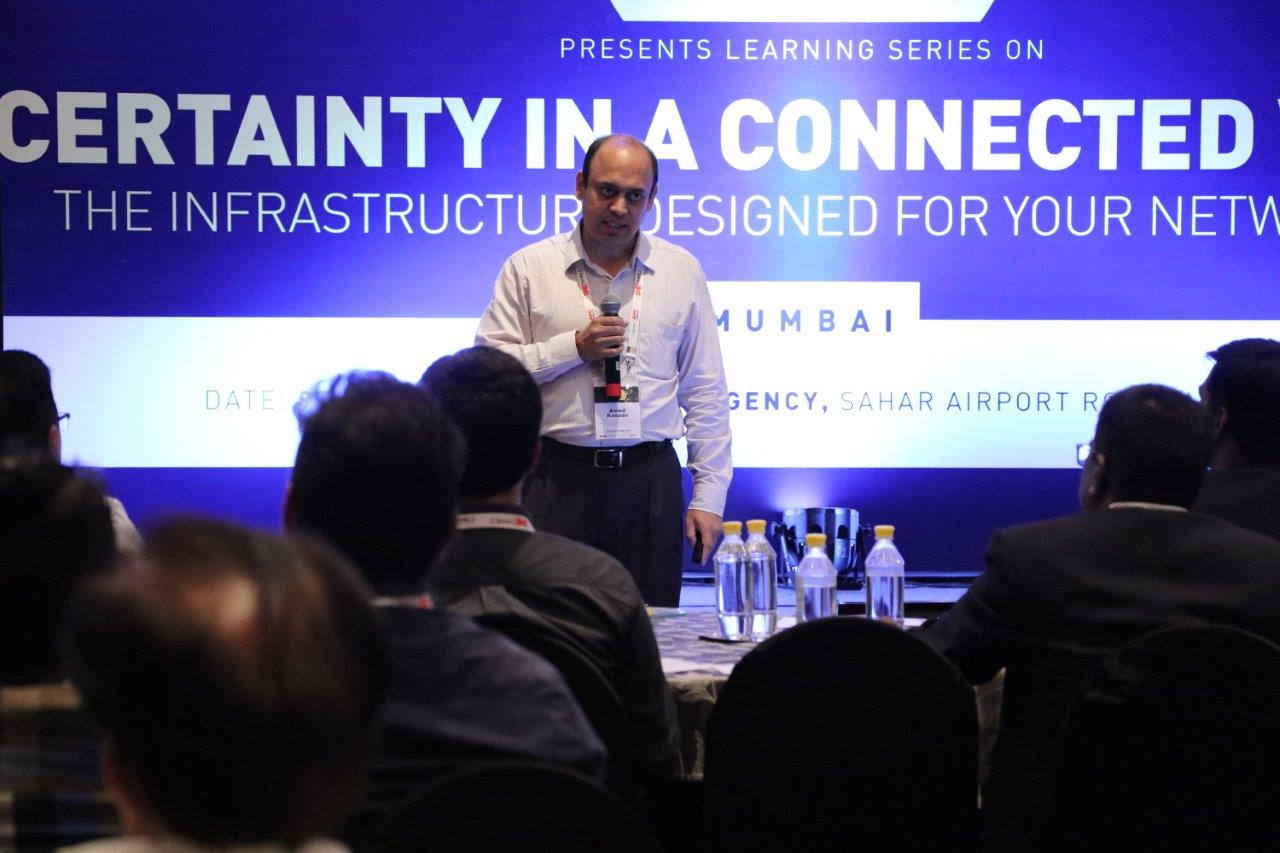
After Ahmedabad Schneider Electric 5 Cities SME Connect’s next stop is Mumbai. The rest of the 3 cities viz. Chennai, Bangalore and Delhi will be covered in next two months. The highlight of the event was to interpret the SMEs’ technology challenges and mitigate those challenges with a systematic approach.
Everyone knows that SMEs are handicapped by a limited set of resources and skill sets, therefore; there must be right architectural strategy and practice to mitigate those challenges. Power, cooling, racking and stacking are never taken seriously in any IT discussion but these are very important for the SMEs.




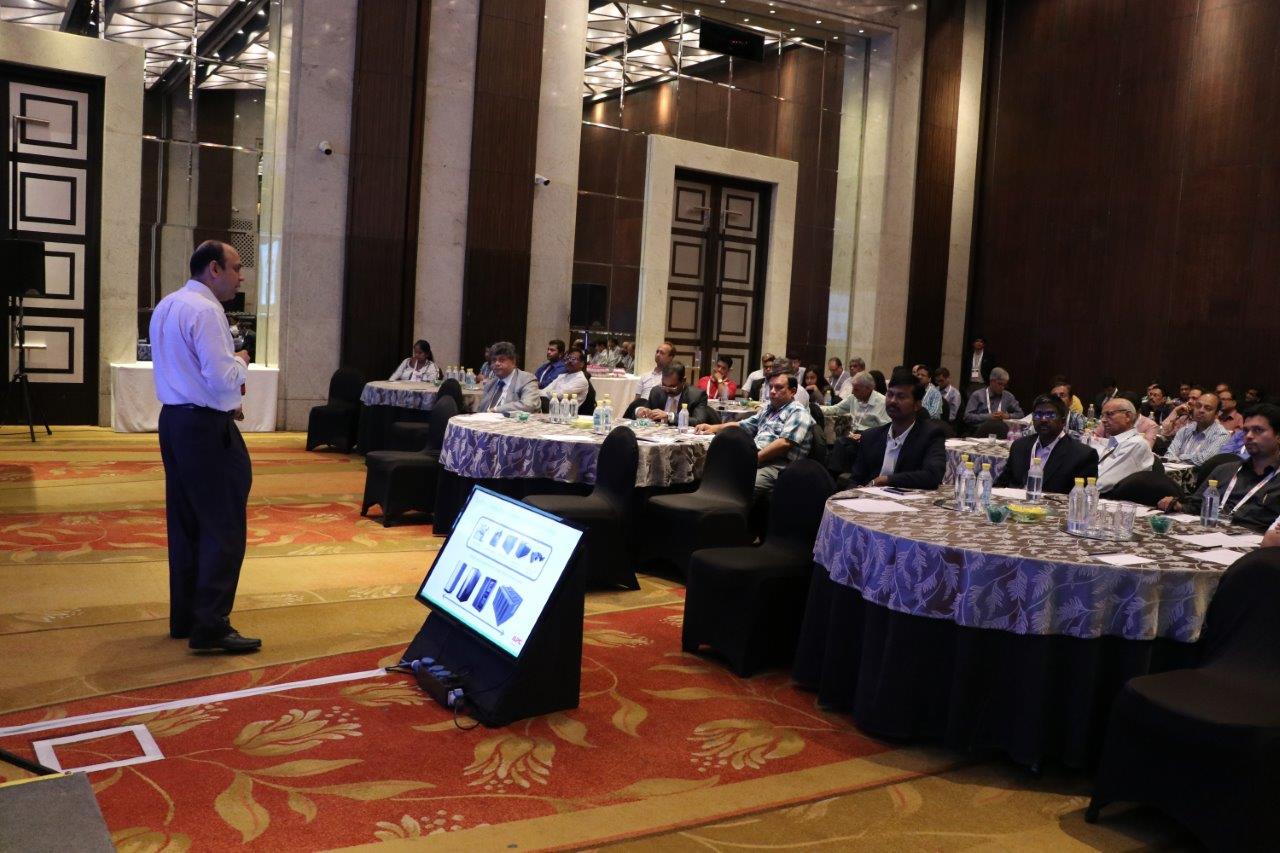
While Amod Ranade – General Manager, Data Center Business Development, IT Division, Schneider Electric, emphasized on the micro-data centres and Edge network are going to stay while the transition happens from the data centre centric approach to cloud-centric approach, he also said that the IT Managers and CIOs should create self-belief within themselves to create any strategy for the company.
At the same time, Rahil Patel – General Manager & CIO of Kalupur Commercial Co-operative Bank Ltd., Paresh Goswami – IT Head, Chiripal Poly Films Ltd., and B. Praveen Kumar – Head – Information Systems & Security, Ascendum KPS Private Limited enumerated about their own experience in the transformation process and advised the audience to take steps quickly because the time and technology are disruptive.
Amit Dave – Director, Microlink Solutions Pvt. Ltd., expressed his happiness about the positive attitude of the small and medium organizations and said that these organizations quite receptive to new ideas. Therefore, they are not small and medium organizations rather ‘smart and motivated enterprises’.
Sanjay Mohapatra, Editor, SME Channels said that the SMEs are becoming the lifeline for any country and for India, it is no exception. With make in India in place, SMEs’ role is becoming very very important. Besides, the government has already said that 20% of government and PSU’s procurement would happen from the SME sector. Therefore, it is important for small and mid-size organizations to adopt new technologies so that they can remain as relevant to the market.

