

Factories today operate as dense mechanical ecosystems, whether in automotive assembly lines or semiconductor fabrication units. Traditionally, each robotic and mechanical element performed predefined, deterministic functions within isolated automation cells. However, as shop floors become increasingly machine-intensive and interconnected, operational complexity rises proportionally. Managing these environments now requires more than mechanical precision—it demands architectural coordination across layers of control and intelligence.
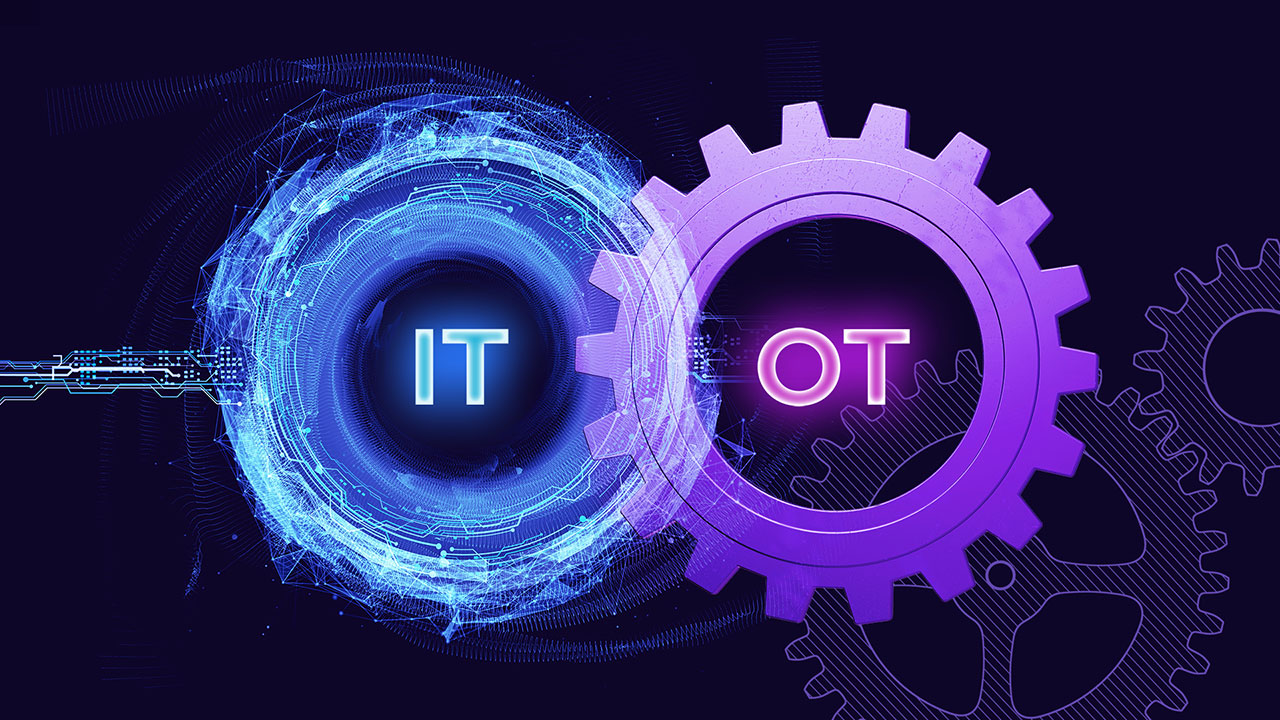
In this context, the convergence of Information Technology (IT) and Operational Technology (OT) is fundamentally reshaping robotics engineering. Data processing layers—analytics engines, business logic systems, and enterprise platforms—are no longer separated from operational control systems. At the same time, the physical layer, comprising sensors, actuators, servo drives, and Programmable Logic Controllers (PLCs), is becoming increasingly tightly integrated with edge compute and network infrastructure. Robotics systems are no longer designed as standalone motion units; they are engineered as nodes within a larger, connected control ecosystem.



“Traditional automation tools were built for a high-volume, low-variability environment. But today’s market demands agility,” says Ujjwal Kumar, Former Group President of Teradyne Robotics.
This architectural integration is shifting robotics engineering from a purely mechanical discipline toward system-level design—where communication protocols, deterministic networking, cybersecurity, and software orchestration are as critical as torque curves, kinematics, and payload specifications.
Adaptive Systems
At the core of this transformation lies the emergence of adaptive robotic systems. In practical terms, adaptability on the shop floor means the ability to reconfigure, scale, and modify operational behavior through software-defined control and network orchestration, rather than through mechanical redesign. Modern robots are no longer confined to fixed, pre-programmed routines. Equipped with AI models, IIoT connectivity, and high-resolution sensor feedback, they can interpret environmental inputs, process real-time data streams, and dynamically adjust execution parameters.
“The big difference is that traditional automation was a custom-made, perfect solution for one application. The new age of AI-integrated robotics has standard products serving multiple applications. You go into multiple applications through software and some end-of-arm tooling differences,” says Ujjwal Kumar, Former Group President of Teradyne Robotics.
As manufacturers pursue higher efficiency alongside greater product diversity, such adaptability becomes essential. Integrated control and data layers allow robots to transition between production tasks or product variants with minimal downtime, supporting high-mix manufacturing environments. Simultaneously, context-aware operations enable robotic systems to respond to signals from enterprise platforms such as ERP and MES, aligning execution with demand fluctuations, material availability, and downstream constraints.
The Build Architecture: Sensors, Control, and Communication Layers
To understand the engineering behind IT–OT convergence, it is useful to examine the architectural layers that define modern shop-floor robotics. Traditionally, industrial systems followed hierarchical models such as ISA-95, where field devices, control systems, and enterprise platforms operated in structured tiers with limited cross-layer interaction. Today’s robotic systems, however, are increasingly designed around a more unified Industrial Internet of Things (IIoT) architecture—where sensing, control, computation, and enterprise integration operate within a tightly interconnected framework.
“The groundbreaking automation innovations of the future won’t come from one single company but from close cross-technology ecosystem collaborations,” says Ujjwal Kumar, Former Group President of Teradyne Robotics.
At the foundation lies the physical and sensing layer. Modern robots are embedded with dense networks of encoders, force–torque sensors, high-resolution vision systems, vibration monitors, and environmental sensors—particularly critical in semiconductor manufacturing. Unlike earlier generations, where sensors primarily supported local closed-loop motion control, today’s sensing infrastructure generates continuous, time-synchronised data streams. These data flows serve a dual purpose: ensuring precision motion control while simultaneously feeding analytics and optimisation engines upstream.
Above this sits the control and communication layer, where deterministic execution remains paramount. PLCs, motion controllers, industrial PCs, and real-time operating systems govern microsecond-level synchronisation of servo drives and actuators. However, this layer has evolved from rigid, ladder-logic-driven hierarchies to hybrid architectures that combine deterministic control with networked intelligence. Industrial Ethernet, fieldbus systems, and increasingly Time-Sensitive Networking (TSN) ensure that motion commands and data packets coexist without compromising latency or jitter requirements. Control systems are no longer isolated—they are communicative nodes within a broader industrial network.
The next shift occurs at the edge. Edge computing nodes now preprocess high-frequency sensor data, execute AI inference models, and filter operational information before it propagates upward. Event-driven architectures and publish–subscribe communication patterns allow machines to update a shared operational state across the plant continuously. Rather than relying solely on hierarchical polling mechanisms, modern factories operate through near real-time data dissemination, enabling contextual awareness across production assets.
James Davidson, Chief Artificial Intelligence Officer, Teradyne Robotics, says, ” AI is transforming robots from tools into intelligent collaborators that can perceive, learn, and adapt.”
At the enterprise integration level, robotics systems increasingly interact with MES and ERP platforms, digital twin environments, and predictive maintenance engines. Data flow is no longer unidirectional. Demand signals, material constraints, and quality metrics can influence robotic execution parameters in near real time. This bidirectional exchange is the practical manifestation of IT–OT convergence—where business logic and machine logic intersect.
Underpinning all these layers is a security and infrastructure framework that ensures resilience. As robots become connected assets, cybersecurity, network segmentation, device authentication, and secure firmware management become integral engineering considerations rather than afterthoughts. Connectivity without security would undermine determinism and operational continuity.
Redefining the Core of Robotics Engineering
For decades, robotics engineering on shop floors was largely centred on mechanical excellence. Engineers focused on motion accuracy, payload capacity, repeatability, structural rigidity, and cycle-time optimisation. The primary goal was to design a robot that could execute a defined task with precision and reliability within a controlled cell.
That foundation still matters—but it is no longer enough. As IT–OT convergence reshapes shop floors, robotics engineering now extends far beyond mechanical design. Engineers must integrate advanced sensors, real-time communication networks, edge computing systems, AI-driven analytics, and enterprise software interfaces into the robot’s architecture. A robot is no longer just a mechanical arm with a controller; it is a connected, data-producing, and data-consuming system embedded within a larger digital ecosystem.
This means engineering decisions are no longer confined to gears, motors, and control loops. Network latency can influence motion stability. Data accuracy affects predictive maintenance outcomes. Software updates can modify operational behaviour. Cybersecurity vulnerabilities can interrupt production. Mechanical performance is now intertwined with software reliability and network integrity.
Physical AI equips robots with the capacity to perceive and respond to the real world, providing the versatility and problem-solving capabilities that are often required by complex use cases that have been out of scope until now,” says James Davidson, Chief AI Officer, Teradyne Robotics.
In practical terms, robotics engineers are moving from designing machines to designing intelligent systems. They must think about interoperability, data structures, communication protocols, and secure integration—alongside torque curves and kinematics. The robot is no longer an isolated automation asset; it is part of a coordinated production architecture that responds to real-time information from across the enterprise.
The shift is clear: robotics engineering is evolving from a purely mechanical discipline into a multidisciplinary field where mechanics, electronics, networking, and software operate as a unified whole.
Conclusion
As factories continue to evolve into connected, data-driven environments, robotics can no longer be engineered as standalone mechanical systems. The convergence of IT and OT is embedding intelligence, connectivity, and responsiveness directly into the core of robotic architecture. What was once a discipline defined by mechanical precision is now defined by system integration.
“Taking a modern Industry 5.0 approach requires prioritisation of adaptability, empowering line workers with robots that can be reprogrammed and redeployed as demand shifts, which is the biggest benefit of having these very flexible systems coming online quickly,” says Ujjwal Kumar, Former Group President of Teradyne Robotics.
The competitive edge will not belong merely to the fastest or strongest robots, but to those designed as intelligent, interoperable components of a unified production ecosystem. In this new industrial reality, robotics engineering is no longer just about motion—it is about orchestration.

