
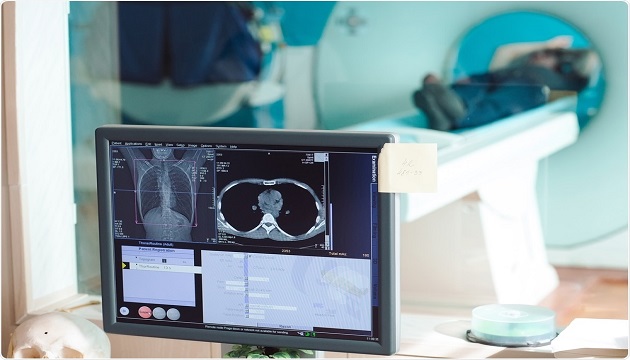
Artificial Intelligence has already started ruling the market in every aspect of technology ranging from smartphones to high scale machinery. AI in daily life has made the work as well as the daily activities very easy and efficient and is still doing the same in every sector of life. Medical diagnosis and treatments are very much influential with technology now a days. The diagnosis of so many diseases has attained maximum success and results with the implementation of technology in it.
Researchers have found that the computational intelligence have designed an unprecedented method that is capable of improving brain images obtained through magnetic resonance imaging using artificial intelligence.




This new model manages to increase image quality from low resolution to high resolution without distorting the patients’ brain structures, using a deep learning artificial neural network -a model that is based on the functioning of the human brain- that “learns” this process.
“Deep learning is based on very large neural networks, and so is its capacity to learn, reaching the complexity and abstraction of a brain”, explains researchers who thanks the activity of identification.
Published in the scientific journal Neurocomputing, this study represents a scientific breakthrough, since the algorithm developed yields more accurate results in less time, with clear benefits for patients. “So far, the acquisition of quality brain images has depended on the time the patient remained immobilized in the scanner.
According to the experts, the results will enable specialists to identify brain-related pathologies, like physical injuries, cancer or language disorders, among others, with increased accuracy and definition, because image details are thinner, thus avoiding the performance of additional tests when diagnoses are uncertain.
Nowadays, the ICAI Group of the UMA, led by Professor Ezequiel López, co-author of this study, is a benchmark for neurocomputing, computational learning and artificial intelligence. The Professors of the Department of Computer Science and Programming Languages Enrique Domínguez and Rafael Luque, as well as researcher Núria Roé-Vellvé, have also participated in this study.

