

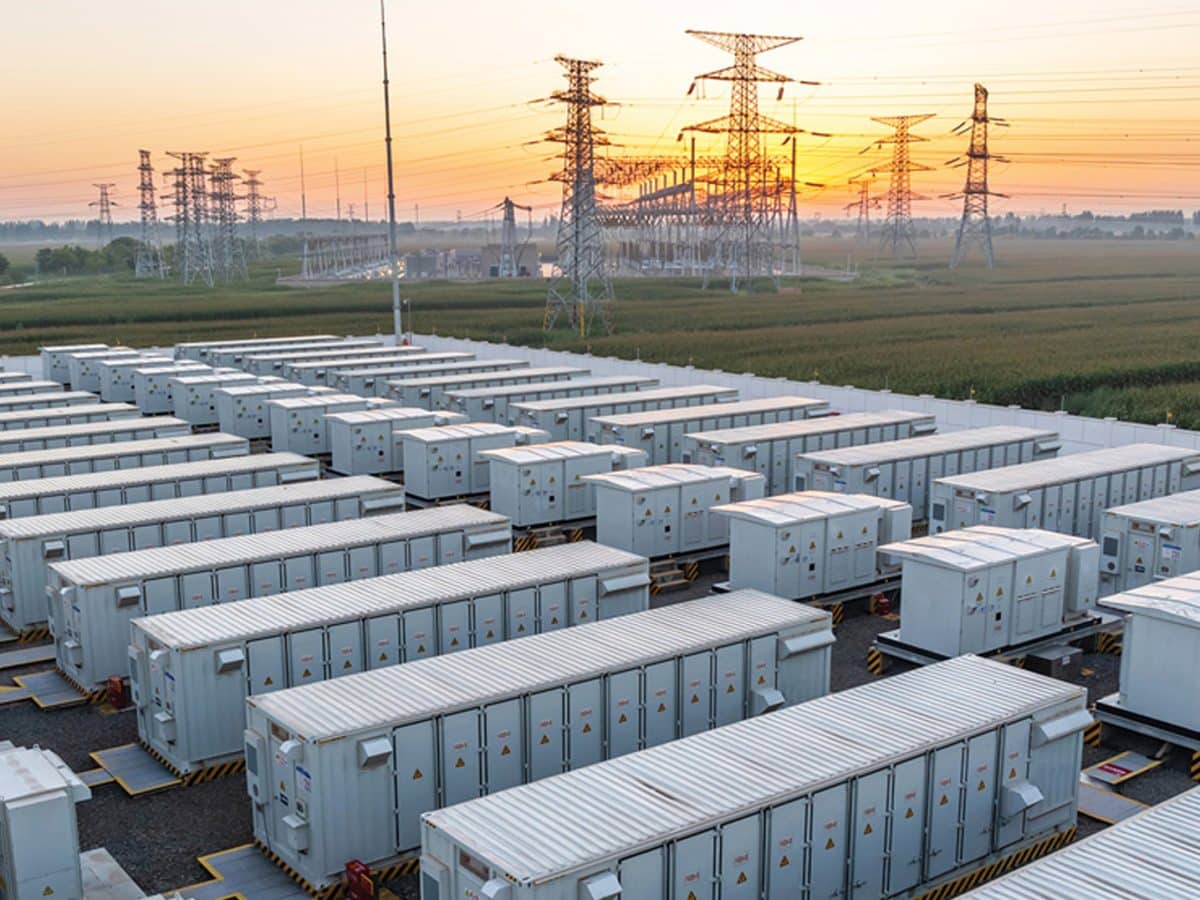
Driven by the need for alternatives to traditional lithium-ion solutions, India’s push for the indigenous iron-air battery system utility-scale testing is to begin at NTPC’s Simhadri Super Thermal Power Station (STPS) in Andhra Pradesh. To be executed under the aegis of the Atal Incubation Centre – Anna University (AIC-AU) and scheduled to commence in August 2026, the pilot will test deep-tech start up Meine Electric’s long-duration energy storage (LDES) solution.
From Iron and Air to Long-Duration Storage
Iron-air batteries generate stores and release electrical energy through an electrochemical reaction that undergoes oxidation and reduction reactions an iron-based negative electrode and utilizing oxygen contained in ambient air. Discharging occurs by oxidizing iron to produce electricity and during the charge step the iron-containing reaction products are reduced, regenerating iron. This chemistry adds an alternative approach to long-duration energy storage with the potential for high power or long cycle life applications beyond those readily delivered today by current lithium-ion technologies.


According to Meine Electric, the Fast Charge Long Discharge is a six-hour charge and eighteen-hour discharge cycle. In addition, Meine Electric’s technology was also independently tested by CES and evaluated on performance in terms of electrochemistry as well as operational durability and capacity retention.
Why It Matters for India’s EV Ecosystem
At present, the applications of the Simhadi pilot are more focused on stationary energy storage than on the EV traction applications, but it has future relevance to electric mobility since long-duration storage technology could enable the use of renewables, increase grid flexibility, and provide more reliable power supply.
In the future, with EV charging networks scaling up in India, large scale storage could eventually help charging infrastructure to balance the variations between renewable electricity generation and EV demand. This is especially the case in higher power charging hubs and corporate EV fleets.

