

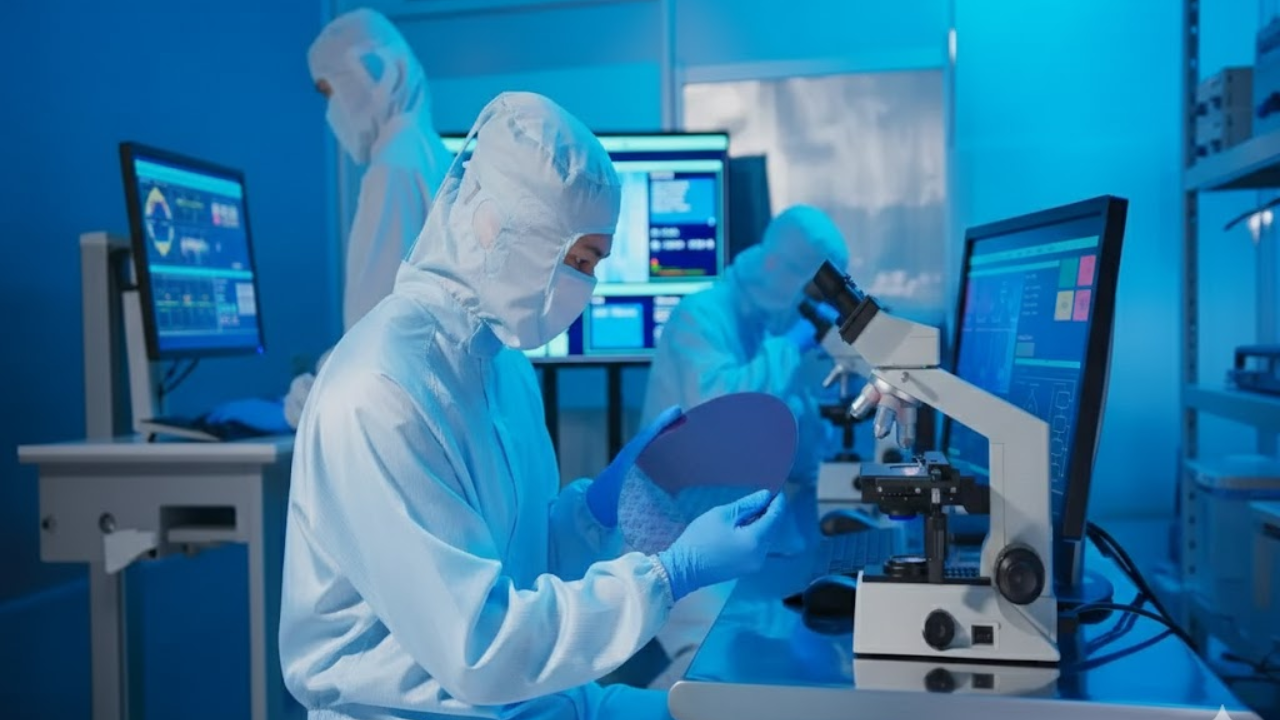
Speaking at the CNBC-TV18 and Moneycontrol UP Tech Next Electronics and Semiconductor Summit on December 2 in Lucknow, president of the India Electronics and Semiconductor Association (IESA), Ashok Chandak stated that the global chip industry faces a deficit of 700,000 workers by 2030, and this can be used as a potential opportunity by India to fill the urgent gap.
Highlighting this opportunity, Chandak also threw light on the existing lack of skill training curriculum. For this he suggested a two-step model, updating technical curriculum to meet future needs and building manufacturing-related training programmes as India scales chip production.



He also added that IESA has already begun discussions with institutes on curriculum reform.
As the advancement in the industry continues to grow, the skill set required also needs to be updates and modified accordingly. The assimilation of Ai and machine learning with the use of technologies like digital twin and AR/VR have opened up the potential for the large Indian population of engineers and scientists to fulfil the demand as India strides ahead on its own India Semiconductor Mission (ISM), wherein the first ‘Made In India’ chip is expected to roll out by the end of December 2025.

