

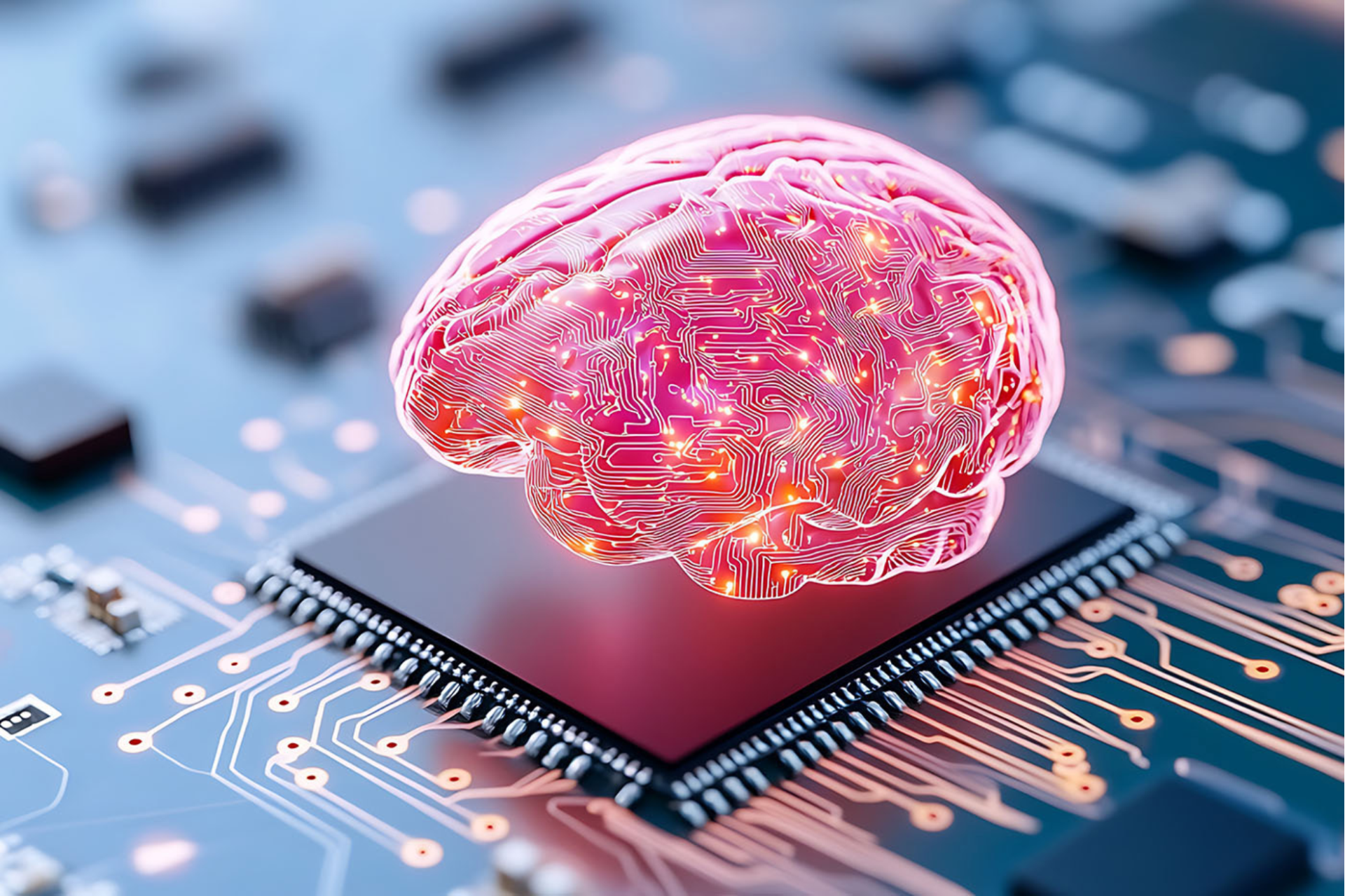
From data-center dreams to intelligence at the metal
Five years ago “AI” largely meant giant models running in faraway data centers. However, today the story is different, where intelligence is migrating to the device itself, in phones, drones, health wearable’s, factory sensors. This shift is not merely cosmetic, instead it forces the hardware designers to ask: how do you give a tiny, thermally constrained device meaningful perception and decision-making power? As Qualcomm’s leadership puts it, the industry is “in a catbird seat for the edge AI shift,” and the battle is now about bringing capable, power-efficient AI onto the device.



Why edge matters practical constraints, human consequences
There are three blunt facts that drive this migration: latency (milliseconds matter for robots and vehicles), bandwidth (you can’t stream everything from billions of sensors), and privacy (health or industrial data often can’t be shipped to the cloud). The combination changes priorities: instead of raw throughput for training, the trophy is energy per inference and predictable real-time behavior.
How the hardware world is responding
Hardware paths diverge into pragmatic, proven accelerators and more speculative, brain-inspired designs.
- Pragmatic accelerators: TPUs, NPUs, heterogeneous SoCs.
Google’s Edge TPU family and Coral modules demonstrate the pragmatic approach: small, task-tuned silicon that runs quantized CNNs and vision models with tiny power budgets. At the cloud level Google’s new TPU generations (and an emerging Ironwood lineup) show the company’s ongoing bet on custom AI silicon spanning cloud to edge. - Mobile/SoC players double down: Qualcomm and others are reworking mobile chips for on-device AI, shifting CPU micro architectures and embedding NPUs to deliver generative and perception workloads in phones and embedded devices. Qualcomm’s public positioning and product roadmaps are explicit: the company expects edge AI to reshape how devices are designed and monetized.
- In-memory and analog compute: to beat the von Neumann cost of moving data. Emerging modules and research prototypes put compute inside memory arrays (ReRAM/PCM) to slash energy per operation, an attractive direction for always-on sensing.
The wild card: neuromorphic computing
If conventional accelerators are an evolutionary path, neuromorphic chips are a more radical reimagination. Instead of dense matrix math and clocked pipelines, neuromorphic hardware uses event-driven spikes, co-located memory and compute, and parallel sparse operations — the same tricks biology uses to run a brain on ~20 W.
Intel, one of the earliest movers, says the approach scales: Loihi research chips and larger systems (e.g., the Hala Point neuromorphic system) show how neuromorphic designs can reach hundreds of millions or billions of neurons while keeping power orders of magnitude lower than conventional accelerators for certain tasks. Those investments signal serious industrial interest, not just academic curiosity.
Voices from the field: what leaders are actually saying
- “We’re positioning for on-device intelligence not just as a marketing line, but as an architecture shift,” paraphrase of Qualcomm leadership describing the company’s edge AI strategy and roadmap.
- “Neuromorphic systems let us explore ultra-low power, event-driven processing that’s ideal for sensors and adaptive control,” Intel’s Loihi programme commentary on the promise of on-chip learning and energy efficiency.
- A recent industry angle: big platform moves (e.g., companies making development boards and tighter dev ecosystems available) reflect a desire to lower barriers. The Qualcomm–Arduino alignment and new low-cost boards aim to democratize edge AI prototyping for millions of developers.
Where hybrid architecture wins: pragmatic use cases
Rather than “neuromorphic replaces everything,” the likely near-term scenario is hybrid systems:
- Dense pretrained CNNs (object detection, segmentation) run on NPUs/TPUs.
- Spiking neuromorphic co-processors handle always-on tasks: anomaly detection, low-latency sensor fusion, prosthetic feedback loops.
- Emerging in-memory modules reduce the energy cost of massive matrix multiplies where appropriate.
Practical example: an autonomous drone might use a CNN accelerator for scene understanding while a neuromorphic path handles collision avoidance from event cameras with microsecond reaction time.
Barriers: the messy middle between lab and product
- Algorithmic mismatch: mainstream ML is dominated by backpropagation and dense tensors; mapping these workloads efficiently to spikes or in-memory analog is still an active research problem.
- Tooling and developer experience: frameworks like PyTorch/TensorFlow are not native to SNNs; toolchains such as Intel’s Lava and domain projects exist but must mature for broad adoption.
- Manufacturing & integration: moving prototypes into volume production and integrating neuromorphic blocks into SoCs poses yield and ecosystem challenges.
Market dynamics & the investment climate
There’s heavy capital flowing into edge AI and neuromorphic startups, and forecasts project notable growth in neuromorphic market value over the coming decade. That influx is tempered by a broader market caution — public leaders have noted hype cycles in AI investing but history shows that even bubble phases can accelerate technological foundations that persist.
Practical advice for engineering and product teams
- Experiment now prototype with Edge TPUs/NPUs and cheap dev boards (Arduino + Snapdragon/Dragonwing examples are democratizing access) to validate latency and privacy requirements.
- Start hybrid design thinking split workloads into dense inference (accelerator) vs event-driven (neuromorphic) buckets and architect the data pipeline accordingly.
- Invest in tooling and skill transfer train teams on spiking networks, event cameras, and in-memory accelerators, and contribute to open frameworks to lower porting costs.
- Follow system co-design unify hardware, firmware, and model teams early; the edge is unforgiving of mismatches between model assumptions and hardware constraints.
Conclusion: what will actually happen
Expect incremental but practical wins first: more powerful, efficient NPUs and smarter SoCs bringing generative and perception models to phones and industrial gateways. Parallel to that, neuromorphic systems will move from research novelties into niche, high-value roles (always-on sensing, adaptive prosthetics, extreme low-power autonomy).
The real competitive winners will be organizations that build the whole stack: silicon, software toolchains, developer ecosystems, and use-case partnerships. In short: intelligence will increasingly live at the edge, and the fastest adopters will design for hybrid, energy-aware systems where neuromorphic and conventional accelerators complement not replace each other.

