

Courtesy: Keysight Technologies
The latest release of CODE V, version 2025.03, provides optical engineers with elevated design capabilities, additional learning resources, and better interoperability.




Improved design capabilities and workflow
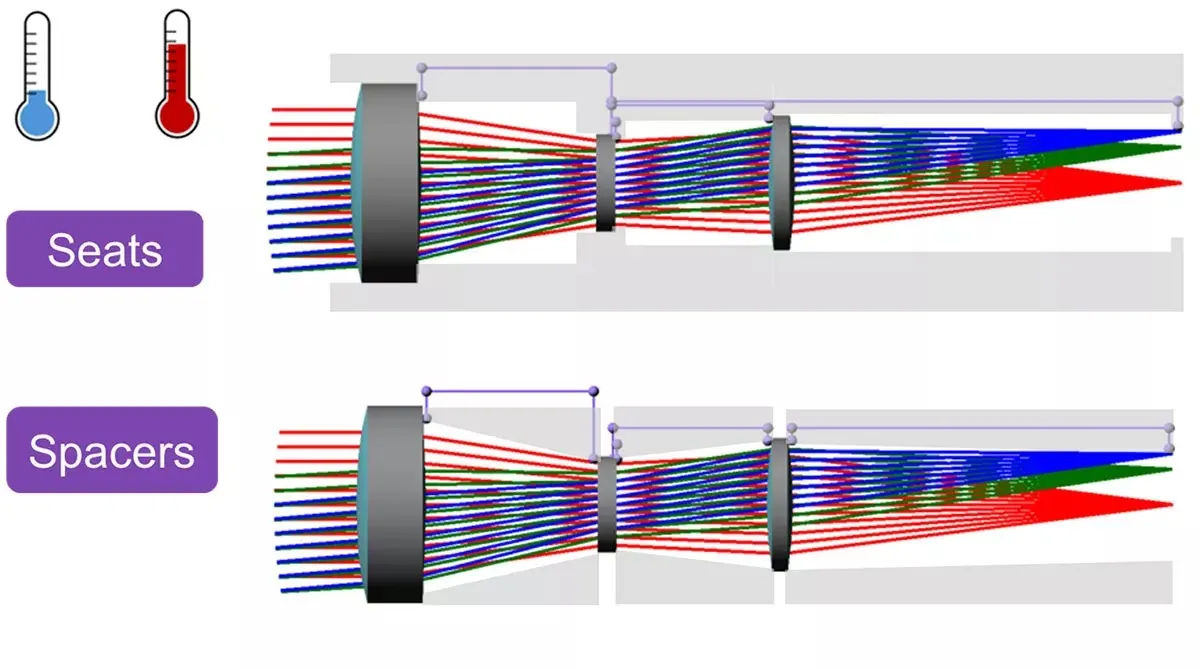
Multi-Environment Coupling (MECo) in CODE V 2025.03 significantly simplifies the modeling of multiple operational environments within an optical system that uses any combination of spacer-based, seat-based, and edge-mounted mounting techniques, or combinations of the techniques. Optical engineers can easily create athermalized lens designs that perform consistently across extensive temperature and pressure ranges. With new MECo macros, the process of visualizing environmental effects on optical systems is more streamlined than ever.
Hidden Lens Module expiration date
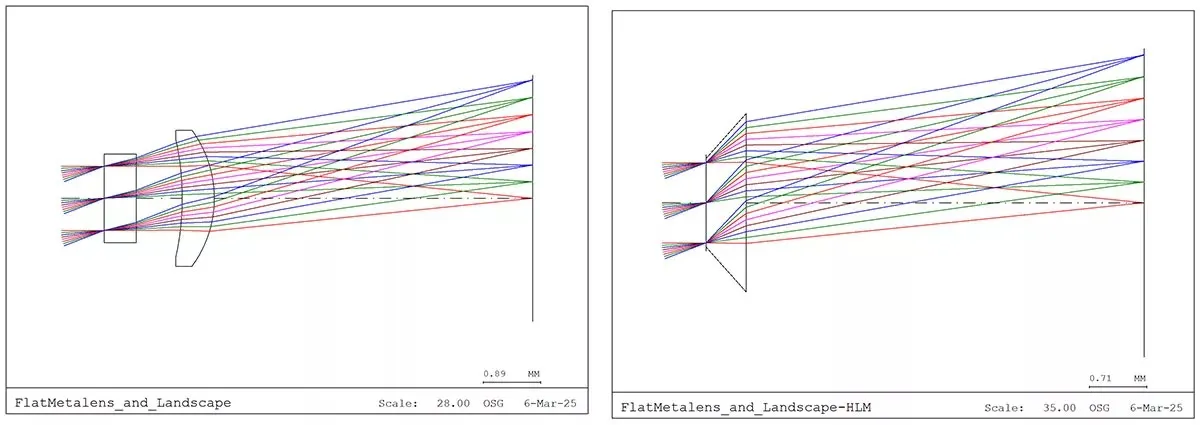
The updated Hidden Lens Module can now include meta optics data and an expiration date, ensuring that sensitive design information is securely shared. This feature allows users to share the capabilities of meta optic data without divulging the underlying design details. The expiration date feature is useful for controlling access to optical analysis data within a specified period, such as outlined in a non-disclosure agreement.
Expanded Example Model Library
To support the continuous learning and development of optical engineers, CODE V 2025.03 introduces 14 new example models. These models cover a range of topics, from MECo and sensitivity analysis to practical applications, providing valuable references for both novice and experienced users. The expanded Example Model Library facilitates quicker design initiation and a deeper understanding of CODE V’s capabilities.
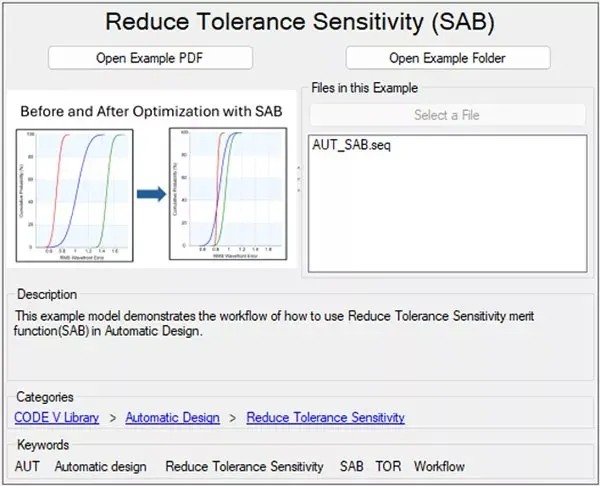
These example models are designed to teach users how to effectively use specific features, such as Global Synthesis for global optimization, Beam Synthesis Propagation to analyze diffraction-related characteristics, and SpecBuilder for setting up lens system specifications. They can also remind seasoned users of many techniques available to them in CODE V.
Improved interoperability
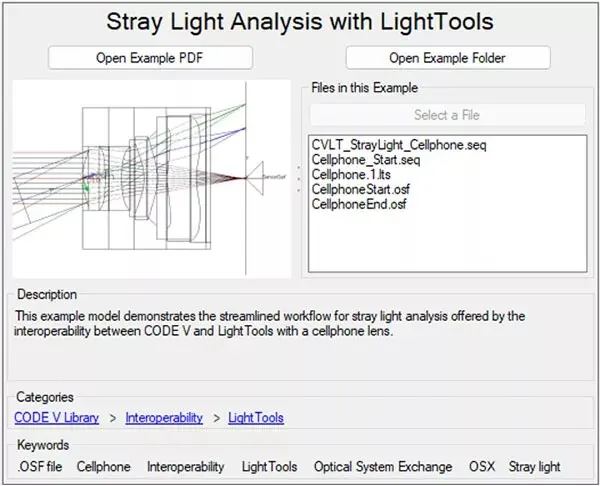
CODE V 2025.03 also brings improvements in interoperability, particularly in the areas of stray light and meta optics design. These enhancements enable more efficient and accurate transfer of model information, ensuring that optical designs can be seamlessly integrated with other systems and tools.
Additionally, the ability to handle new glass data updates from major manufacturers like CDGM, Hoya, and Ohara ensures that users have access to the latest materials for their optical designs. This update enables more precise modeling and simulation, leading to better overall design performance.
Conclusion
CODE V 2025.03 is a powerful update that significantly enhances the design capabilities, learning resources, and interoperability for optical engineers. With its advanced features and user-friendly enhancements, CODE V continues to be the preferred tool for achieving high-performance optical designs across diverse environmental conditions.

