
Author: Gunjan Malhotra, Director, Komaki Electric Division
India, the fifth-largest global automotive market, is expected to grow to the third-largest by 2030. The Indian Electric Vehicle (EV) industry is thriving, with sales of 8,38,766 units in the first seven months of 2023. Moreover, with 3 million registered EVs currently, India is projected to generate 10 million EVs annually by 2030.





These unprecedented developments in India’s burgeoning EV market are propelled by the significant contribution of the Internet of Things (IoT), Data, and connected technologies. On the other hand, the shift to software-defined vehicles (SDVs) further augments seamless connectivity with the induction of compatible protocols and hardware.
The automotive industry is transforming due to the software-defined vehicle and robust communications infrastructure. The connected car’s value lies in creating a more informed, intelligent mobility infrastructure, making travelling easier, less stressful, safer, and more sustainable. However, to combat growing Cybersecurity issues, it is crucial that automakers use upgraded protocols, encrypted channels, and authentication mechanisms to ensure confidentiality.
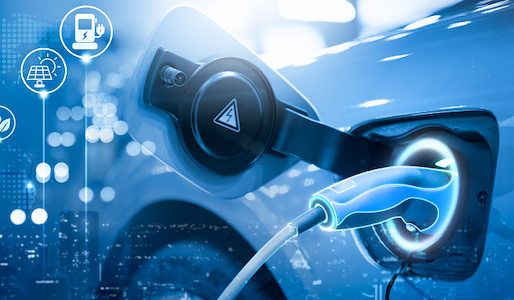
The EV industry can only thrive with a robust charging infrastructure, and in this sphere, IoT plays a path-breaking role. These charging stations work on connected devices integrated with third-party service providers, using protocols and cloud infrastructure for seamless charging operations. IoT combines OT and IT, focusing on digital transformation. EV charging consists of charging equipment, a mobile app, and a management platform. A single charging session generates telemetry data, including battery capacity, grid limits, power consumption, and troubleshooting data.
IoT in EV charging requires continuous monitoring and data presentation, enabling notifications for users in case of critical failures or updates. This benefits all stakeholders in the value chain, including EV drivers, Charge Point Operators (CPOs), and network operators. Key use cases include user authentication, charging app availability, automated operations, smart charging, remote management, and EVSE control.
The IoT-based infrastructure should also ensure secure transactions and billing, allow for automatic charging when energy rates vary during seasons, and enable Charge Point Operators to manage operations remotely. The IoT platform also collects data from various sensory nodes, analyzing important metrics like grid limit, energy tariffs, EV battery capacity, and state of charge, making it easier to control and manage a large fleet of charging infrastructure. Thereby, data is crucial for electric vehicles (EVs) as they form a connected network of devices, including cars, charging stations, smart meters, and IEDs.
These devices collect data on user habits, battery security, and grid charge management. OEMs collect data to improve user experience and design advanced technology for a seamless driving experience. For government and other stakeholders, data is essential for EV grid integration (EVGI) and providing support to smart cities and green infrastructure projects. Hence, there should be ample virtual space to store the data as millions of EVs are expected on the road in the next decade.
Road ahead
To achieve green milestones in the mobility sector, IoT is crucial for developing next-gen applications like smart charging and vehicle-to-grid, benefiting everyone from CPOs to grid suppliers. Being a forerunner in the IT sector, India is blessed with all those resources which could be helpful to push the EV industry with a robust IoT ecosystem for its safer and swifter transition.

