

A series of 3D printed metamaterials with unique microwave or optical properties, that goes beyond what is possible using conventional optical or electronic materials, has been developed by the researchers at Tuft University. The fabrication methods developed by the researchers show potential towards both, present and future, of 3D printing in order to expand the range of geometric designs and material composites which lead to devices with novel optical properties.
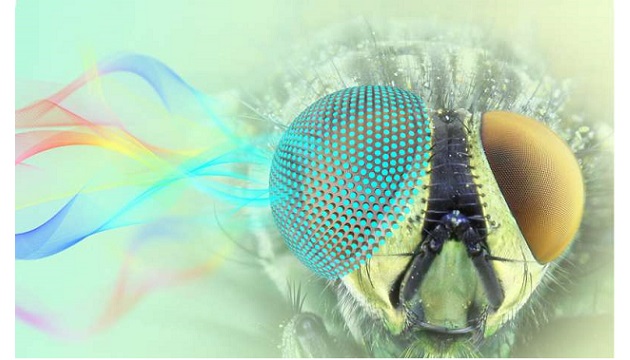
Inspired by the compound eye of a moth, researchers created a hemispherical device which can absorb electromagnetic signals from any direction at selected wavelengths.
The capabilities of the conventional materials is extended by the metamaterials in devices by using geometric features arranged in repeating patterns at scales smaller than the wavelengths of energy being detected or influenced. New developments in the 3D printing technology are creating possibility to develop many more shapes and patterns of metamaterials, and at ever smaller scales.




Researchers at the Nano Lab at Tufts explain about the hybrid fabrication approach using 3D printing, metal coating and etching to create metamaterials with complex geometries and novel functionalities for wavelengths in the microwave range.
For example, an array of tiny mushroom shaped structures was created, each holding a small patterned metal resonator at the top of a stalk. The particular arrangement permits microwaves of specific frequencies to be absorbed, depending on the chosen geometry of the mushrooms, and their spacing. Such metamaterials have their usages in applications like sensors in medical diagnosis and as antennas in telecommunications or detectors in imaging applications.
There are a number of technologies now available for 3D printing, and the current study utilizes stereolithography, which focuses light to polymerize photo-curable resins into the desired shapes.
As of now, a vast number of technologies are available for 3D printing, and the current study utilizes stereolithography, which focuses light to polymerize photo-curable resins into the desired shapes.
“The full potential of 3D printing for MEGOs has not yet been realized,” said Aydin Sadeqi, graduate student in Sankusale’s lab at Tufts University School of Engineering and lead author of the study. “There is much more we can do with the current technology, and a vast potential as 3D printing inevitably evolves.”

