HomeElectronicsSemiconductors and ChipsTiniest Microchips from Graphene 'Nano-Origami'

    Tiniest Microchips from Graphene ‘Nano-Origami’

    The Tiniest Microchips yet can be made from graphene and other 2-D-materials, using a form of “Nano-Origami,” physicists at the University of Sussex have found.

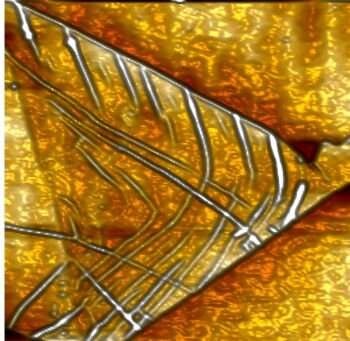
    This is the first time any researchers have done this, and it is covered in a paper published in the ACS Nano journal. By creating kinks in the structure of graphene, researchers at the University of Sussex have made the nanomaterial behave like a transistor, and have shown that when a strip of graphene is crinkled in this way, it can behave like a microchip, which is around 100 times smaller than conventional microchips.


    Prof Alan Dalton in the School of Mathematical and Physical Sciences at the University of Sussex, said, “We’re mechanically creating kinks in a layer of graphene. It’s a bit like nano-origami. Using these nanomaterials will make our computer chips smaller and faster. It is absolutely critical that this happens as computer manufacturers are now at the limit of what they can do with traditional semiconducting technology. Ultimately, this will make our computers and phones thousands of times faster in the future. This kind of technology—’straintronics’ using nanomaterials as opposed to electronics—allows space for more chips inside any device. Everything we want to do with computers—to speed them up—can be done by crinkling graphene like this.”

    Dr. Manoj Tripathi, research fellow in Nano-structured Materials at the University of Sussex and lead author on the paper, said, “Instead of having to add foreign materials into a device, we’ve shown we can create structures from graphene and other 2-D materials simply by adding deliberate kinks into the structure. By making this sort of corrugation we can create a smart electronic component, like a transistor, or a logic gate.”

    The development is a greener, more sustainable technology. Because no additional materials need to be added, and because this process works at room temperature rather than high temperature, it uses less energy to create.

    ELE Times Research Desk
    ELE Times Research Deskhttps://www.eletimes.ai
    ELE Times provides a comprehensive global coverage of Electronics, Technology and the Market. In addition to providing in depth articles, ELE Times attracts the industry’s largest, qualified and highly engaged audiences, who appreciate our timely, relevant content and popular formats. ELE Times helps you build awareness, drive traffic, communicate your offerings to right audience, generate leads and sell your products better.

    Related News

    Must Read

    Top Seven Tech Trends in the semiconductor sector for 2026

    By: STMicroelectronics In 2026, a new class of intelligent machines...

    Keysight launches next-gen Infiniium XR8 Oscilloscopes for faster analysis, clearer insights, and a compact design

     Keysight Technologies introduced its next-generation Infiniium XR8 Real-Time oscilloscopes,...

    R&S showcases its comprehensive embedded systems test solutions at embedded world 2026

    Rohde & Schwarz will present its advanced test and...

    Toxics Link study Finds a Long Road to Circularity in India’s E-waste EPR Model

    A new report by an environmental group, Toxics Link,...

    ESGDS’ AI platform slashes data processing time by 98% with MongoDB Atlas

    ESG Data & Solutions (ESGDS) is a fast-growing Indian...

    Keysight Unveils 3D Interconnect Designer for Chiplet and 3DIC Advanced Package Designs

     Keysight Technologies introduced 3D Interconnect Designer, a new addition to...

    Jodi Shelton, CEO of GSA – Launches A Bit Personal, a New Podcast Offering Rare, Candid Conversations with the Most Powerful Tech Leaders

    Jodi Shelton, Co-Founder and CEO of the Global Semiconductor Alliance and Shelton...

    Is SDV Really an Automotive or Just A Software-based machine That Moves?

    Speaking at the Auto EV Tech Vision Summit 2025,...