

Henkel Adhesive Technologies, the market leader in adhesives, sealants and surface treatments, has been actively developing and executing numerous initiatives geared towards sustainable, energy-efficient, lightweight solutions for the Automotive and Metals market in India. Anwesh Koley of ELE Times caught up with Manish Dave, Head of Industrials – India, Henkel Adhesive Technologies, to deep-dive into the company’s India initiatives and its completion of 150 years of operations.
ELE Times: Tell us about Henkel at Productronica this year. What is the company showcasing?


Manish Dave: We are very passionate about Electronica, and as you can see, we have a wide variety of offerings. Our business spans from data centres and AI—which obviously are seeing a lot of growth—to power and industrial automation, because all this data requirement now needs energy, and we supply solutions for that.
We also have aviation and avionics, which are growing significantly, alongside newer domains around life sciences and wearable items. Across all of these, we provide material solutions, whether it is circuit board protection or thermal materials to dissipate heat.
ELE Times: In terms of the current market for electronics in India, how do you perceive the Indian market vis-à-vis other Asian markets and from a global perspective? How do you see that?
Manish Dave: It depends upon the segment you talk about. For AI, we are behind; certainly, the US and China are far ahead. But India is catching up really fast. Over the last many months, I have continuously seen India coming in at number 3. It used to be maybe 5 or 6, with Japan, Germany, many European countries, and even South Asian nations ahead of us. If you look at Malaysia, Thailand—Thailand is really, really good—and Vietnam, India is certainly growing. We still have some work to do, so I would say a couple more years before we arrive on the global scene.
ELE Times: In terms of the latest innovations at Henkel that we are seeing, particularly in the AI domain, and then if you could talk about the defence sector which is also showing a lot of promise, please brief us about the initiatives at Henkel.
Manish Dave: For AI, for sure, there is data generation and heat management. An AI data centre would have servers and routers, and we are involved with all of them across the whole ecosystem. Our job is to make sure that piece of circuit board is protected—that you have underfills and conformal coatings, potting that protects it. And then for any heat on any active surface, we have our thermal interface materials that dissipate heat, keeping it at an optimal temperature. We see a tremendous amount of growth in data and AI, and I think India is probably at the cusp of getting into the lead at some point in time.
Defence is new for us, but there have been lots of announcements from the frontline objects, and Henkel is involved. Our Loctite products have been used on frontline objects onwards. From a structural strength perspective, I always say our products are used to bond primary and secondary structures on an aircraft flying at 24,000 feet, going 500 miles per hour, carrying 300 people. Our products play a very important role in that, delivering quality and innovation. We have several key innovations not just in electronics, but around structures—how to make them lighter—and composites are a big part of what we do.
ELE Times: In terms of current market dynamics and how you see India vis-à-vis other markets, there are also challenges the industry faces regarding process optimization. How does Henkel deal with that, and how does the cost factor feature in this?
Manish Dave: That is a very good question. What we have done in Bangalore is open an application centre, because we want to be closer to the customer and faster. The role of our engineers there is to welcome customers who bring in their challenges.
We had a recent case where they brought in a challenge, we worked together to find a solution, and within one week we delivered an end-to-end solution. That is really what we are trying to do: build our ecosystem to work with the epicentre here, working with both unicorns and established players.
ELE Times: The government is highly optimistic about semiconductors, not only in terms of products but also the investments coming up in recent years. What’s your take on the India Semiconductor Mission 2.0, the massive investments, and how do you see this sector going forward?
Manish Dave: I think this is the next big frontier for us. The government has done the right job of investing. You could argue we are a little late, but I think the speed at which India moves is what I am really enjoying.
I grew up in Ahmedabad, and I used to know this small town called Sanand. Now I go there and I see Tata Electronics and Tata Semiconductor, and it’s just breathtaking. There is massive potential, and public-private partnerships are playing a key role there. We are very actively involved on both sides of that, and NASSCOM is one area where we work very closely.
ELE Times: You mentioned PCBs and PCB designs. How critical is getting this technology right? Many manufacturers have been wary of introducing new technologies, preferring to continue with older ones due to the critical nature of the component. How do you see PCB design evolving, and what is your perspective?
Manish Dave: We are more focused on solutions to protect the circuit board and have seen the evolution of PCBs. I remember the early days—and I have been in the industry a long time across multiple roles—circuit boards went from being very small to massive boards for different subsystems, and now they are coming back down to smaller sizes, showing a tremendous amount of innovation.
For India, I think there is still a heavy reliance on China in terms of critical components. A lot of investment has gone into components and assembly being made in India, but not necessarily the raw materials required. If you look at a circuit board, there are so many materials required; I think bringing some of those in to achieve independence is the next big frontier. Then you can truly talk about cost, quality, and speed altogether.
ELE Times: Henkel has been part of the entire value chain in electronics. You talked about developing indigenous technology as of now and mentioned our reliance on China. What according to you can be the steps to increase self-reliance going forward?
Manish Dave: That’s an excellent question. One key factor is investment coming not just from the government, but from private players—the movement of capital is critical. I spent most of my life in the US, and I am convinced the entrepreneurial drive exists in India. However, people sometimes lack access to capital. How do they get access to that capital?
What I love about Bangalore and coming here is that we can find everything in one place: people with money, people with technology, and people with ideas and aspirations. Platforms like NASSCOM give them a chance to come together, and we work very closely with many corporations to help startups grow. We are still dependent on China, but if we keep doing what we are doing with no setbacks in our path forward. The next 10 years are going to be the golden 10 years for India.
ELE Times: Henkel is celebrating 150 years. Tell us about how this journey has been and how you expect the upcoming decades to be.
Manish Dave: It started with Fritz Henkel with a very small role in laundry—that’s where he started. Then he realized those sacks required adhesives, adhesives came into the picture, and now we are at a €22 billion public organization.
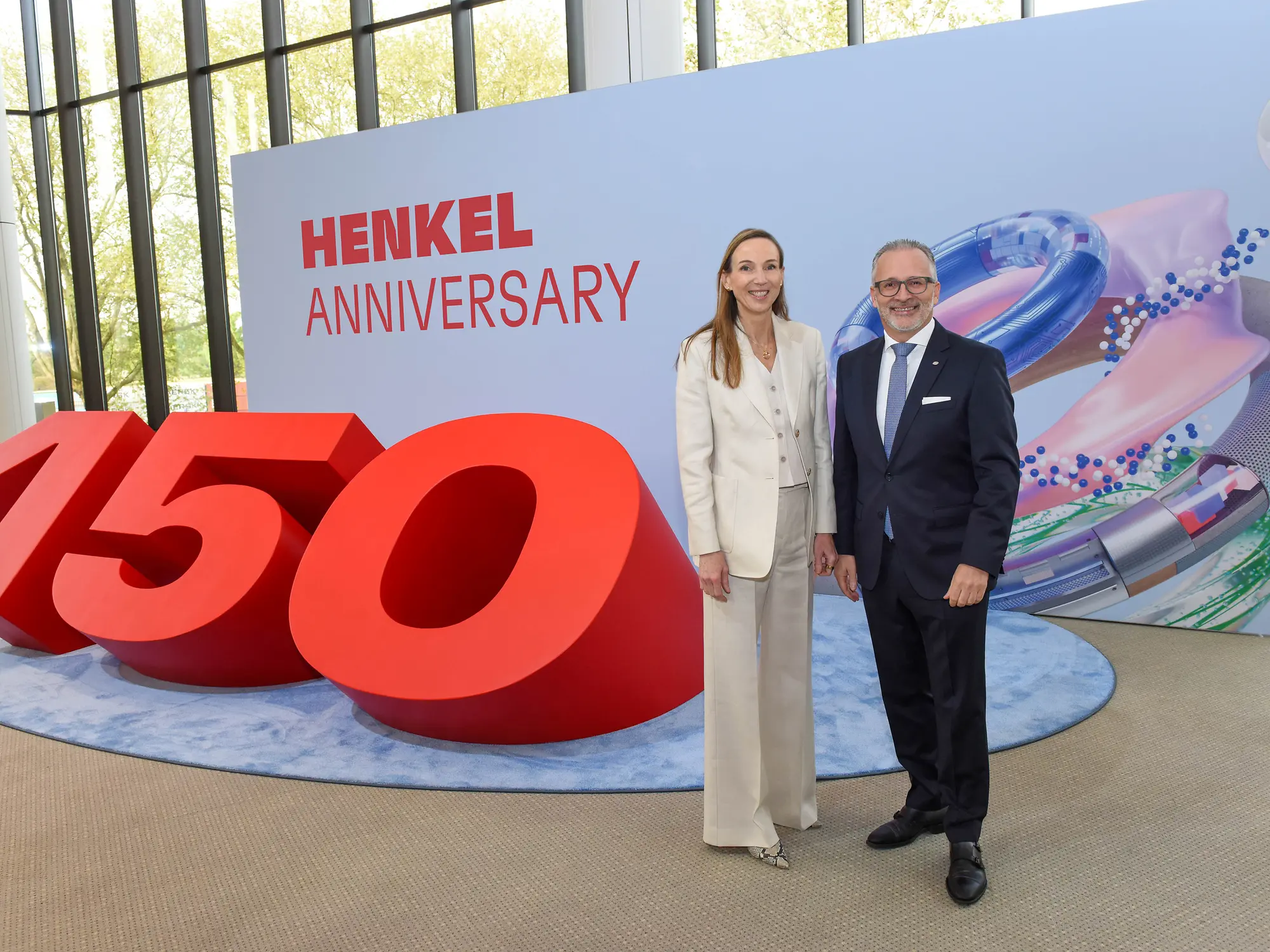
Henkel is celebrating 150 years this month across the world, and in India, the celebration will be in two weeks. We are very, very excited and really proud of an organization that’s 150 years rich. We don’t just look ahead another 150 years; our plan is always long term, always sustainable. Our mantra is “Pioneers at heart for the good of generations.” We really want to create enduring value for generations to come for the next hundreds of years.

