
As one of the largest emitters in the world, Indonesia has an important role to play in the global race to net-zero emissions. Sadly, the government only targets 2060 to achieve net-zero emissions in Indonesia, a longer timeframe than what is needed.
The less ambitious target is mainly due to fears that decarbonization would lead to economic losses and technical challenges in the energy system. The energy sector is set to achieve net-zero only in 2060, much later than other sectors.




Those fears, however, are ill-founded. Achieving zero-emission in the energy sector by 2050 is technically and economically possible, according to a study by the Institute for Essential Services Reform (IESR), LUT University and Agora Energiewende.
Which used one of the world’s most advanced energy models, is the first study that provides a pathway to achieve zero-emission in Indonesia’s energy system (power, transport, and industrial heat) by 2050 using 100% renewable energy.
The defining decade
What is unique about the study is that it shows how relying on 100% renewable energy could be reliable and affordable at the same time.
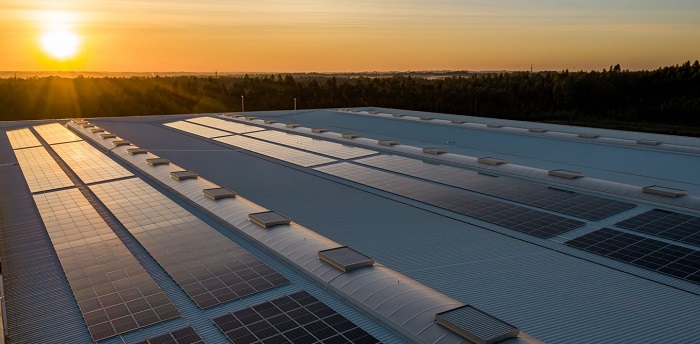
Thanks to advances in clean technologies in recent years, the costs of solar and wind power have been falling to a point where they are now cheaper than fossil power.
The same trend applies to battery technologies that have seen significant cost declines in the past decade. This makes electric vehicles (EV) more affordable and intermittency—inconsistency of power production—soon no longer an issue for solar and wind energy.
The study suggests Indonesia needs to start the transformation today and make revolutionary changes within this decade to stay on track for zero emission.
This decade is critical because it sets the emission trajectory for the next three decades. Achieving zero emissions by 2050, therefore, means that by 2030:

